You've Timed Your Kyoto Trip for Cherry Blossom Season. Now Make It Count.
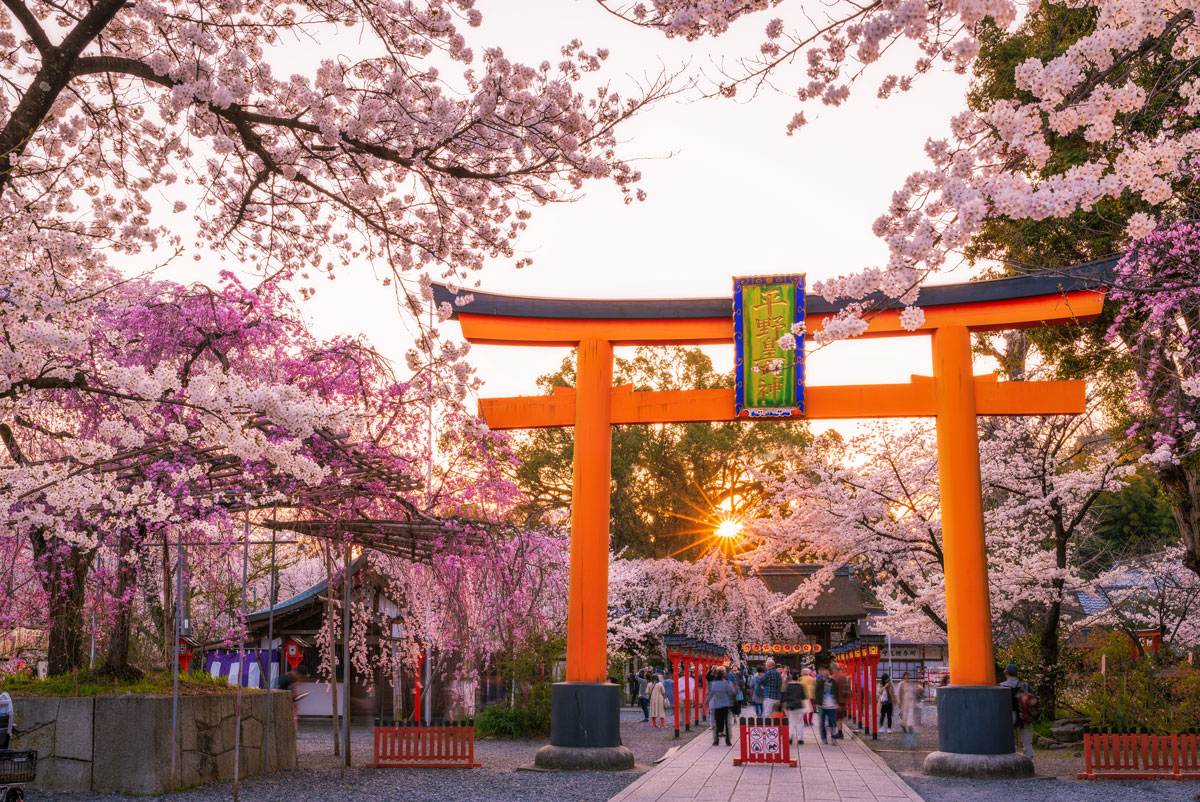
You planned this trip carefully. You checked the bloom forecasts. You booked accommodation months in advance — because anyone who's tried to find a decent Kyoto hotel in late March knows what that market looks like. You're arriving during the window when Kyoto is genuinely at its most beautiful, and you're not planning to waste it.
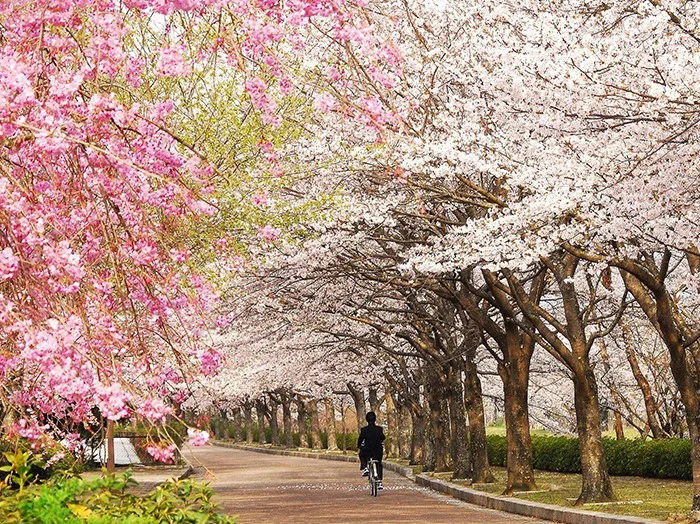
Kimono rental during sakura season in Kyoto is the thing that turns a great trip into an extraordinary one. The combination is not subtle: pale pink blossoms overhead, stone-paved lanes, a kimono fitted properly and worn well, Gion in soft spring light. It's the image most people have in their head when they picture Japan. Being inside it rather than photographing someone else in it is a different experience entirely.
This post is for the traveler who's already committed to cherry blossom season and wants to get the kimono rental part right. By the end, you'll know when to book, where to go once you're dressed, what to look for in a rental shop near Shijo Station, and what the spring experience at Kimono no Obebe actually delivers. Practical, specific, no fluff.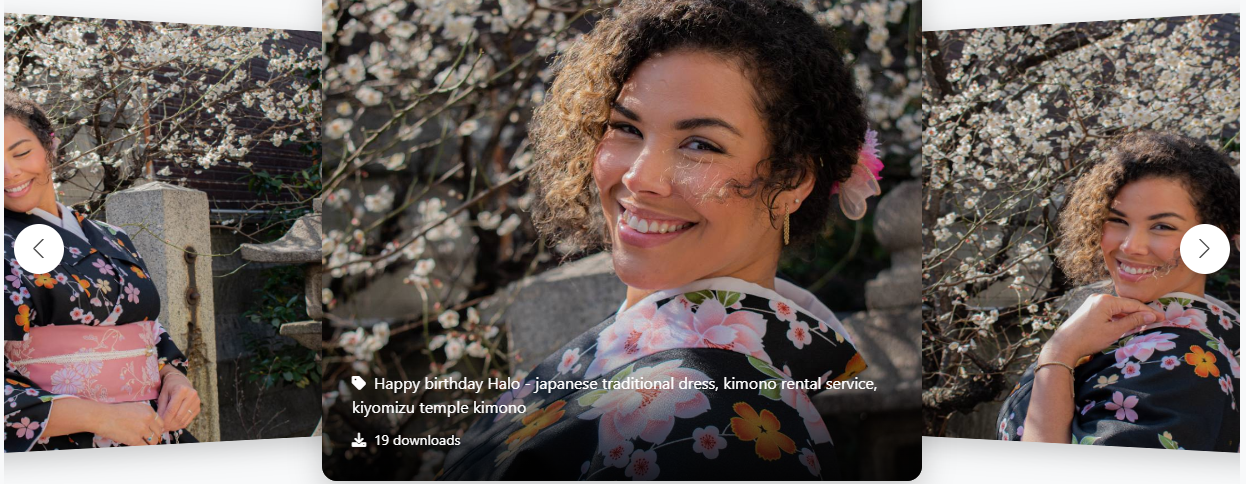
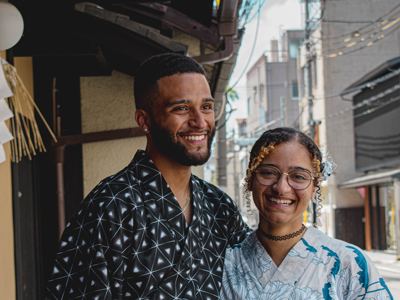
above images are from kimono no obebe photographs visit to see more (guest gallary)
photography prices and packages go through this link - https://kimononoobebe.love/planslist.php
When Does Cherry Blossom Season Actually Hit in Kyoto?
This is the question everyone asks, and the honest answer is: it varies by year.
In general, Kyoto's cherry blossoms peak between late March and mid-April. The Yoshino cherry (somei yoshino), which lines most of the city's famous walking routes, typically blooms for about two weeks. Peak bloom — when the trees are fully open — usually lasts only five to seven days before the petals start to fall.
The Japan Meteorological Corporation publishes bloom forecasts from January onward, and most Kyoto travel blogs track them closely. If your dates are flexible, watching the forecast and adjusting your arrival by a day or two can make the difference between peak bloom and late fall.
What most people don't know: the period just after peak bloom — when petals are falling — is also beautiful. Walking through Gion under a slow drift of sakura petals is arguably more atmospheric than peak bloom with the crowds. If you're visiting in mid-April, don't write off the experience just because the forecast says the peak has passed.
Why Spring Is the Best Season for Kimono Rental in Kyoto
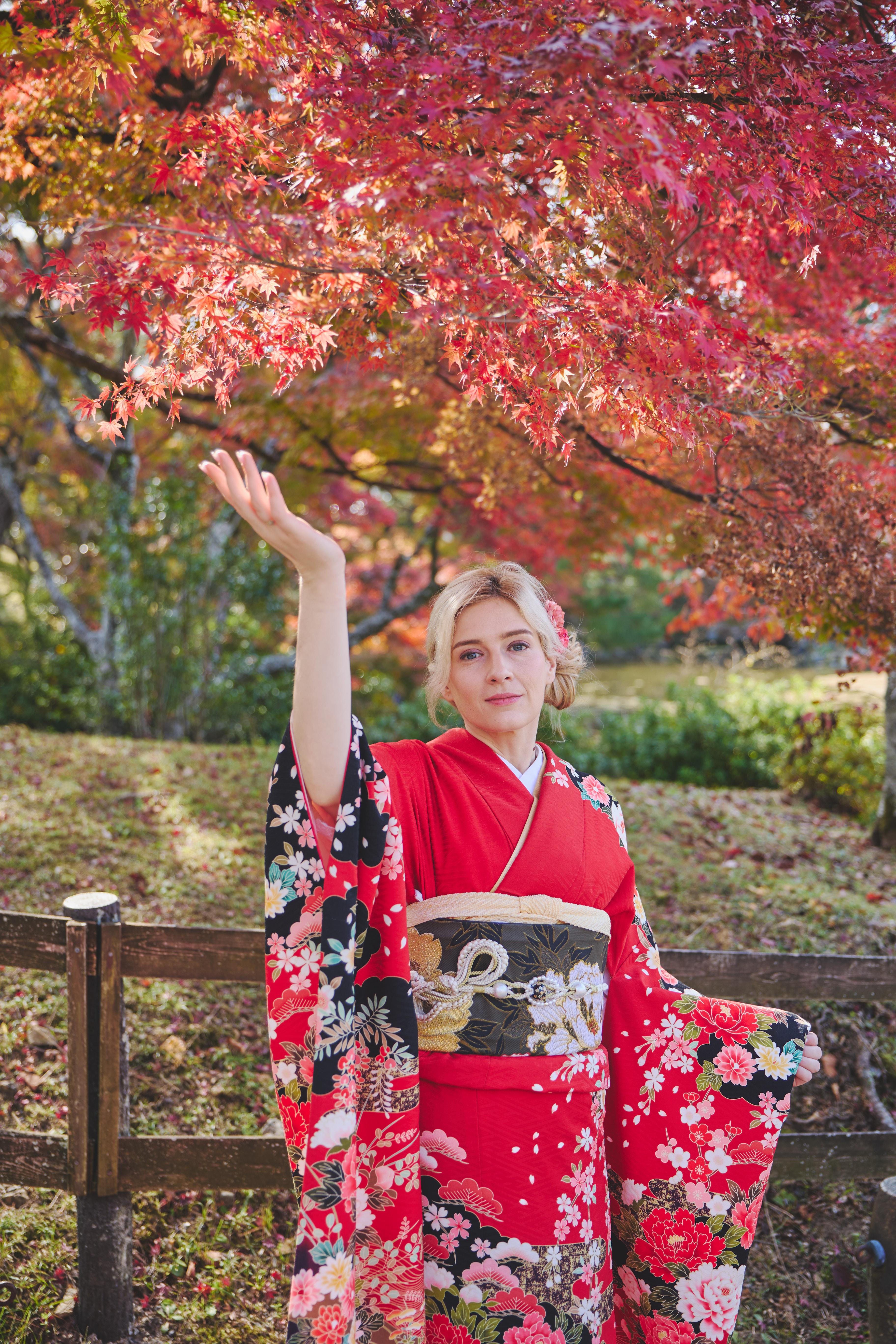
Every season in Kyoto has its case. But spring is the one that most people picture when they imagine this experience, and it earns that reputation.
The backdrop does most of the work. Cherry trees line the Shirakawa Canal — the small waterway just north of Gion — and the reflection
of blossoms in the water, with a kimono in the foreground, is one of those images that doesn't require any explanation. Maruyama Park, at the end of
Shijo-dori just past Yasaka Shrine, has a famous weeping cherry tree that becomes a gathering point during peak bloom. The approach to Kiyomizudera, through Ninenzaka and Sannenzaka, is lined with cherry trees that bloom against the wooden architecture.
Every one of those spots is walkable from Kimono no Obebe near Shijo Station. You don't need to plan transport. You get dressed, step outside, and walk into cherry blossom season.
The Most Important Thing About Spring Kimono Rental: Book Early
This cannot be overstated.
Cherry blossom season is the single busiest period in Kyoto's tourism calendar. Every hotel, restaurant, and experience in the city is operating at or above capacity during late March and April. Kimono rental shops near the popular sightseeing areas fill up weeks in advance — sometimes more than a month out for prime morning slots.
If you're visiting during peak bloom and you haven't booked your kimono rental yet, do it now. Morning slots — between 9am and 11am — are the most in-demand because the light is better and the sightseeing spots are less crowded. These go first.
Contact the team at Kimono no Obebe directly through the contact page here to check availability and confirm your slot. Don't leave this until you arrive in Kyoto — by then, the options are significantly more limited.
What Colors and Styles Work Best for Spring
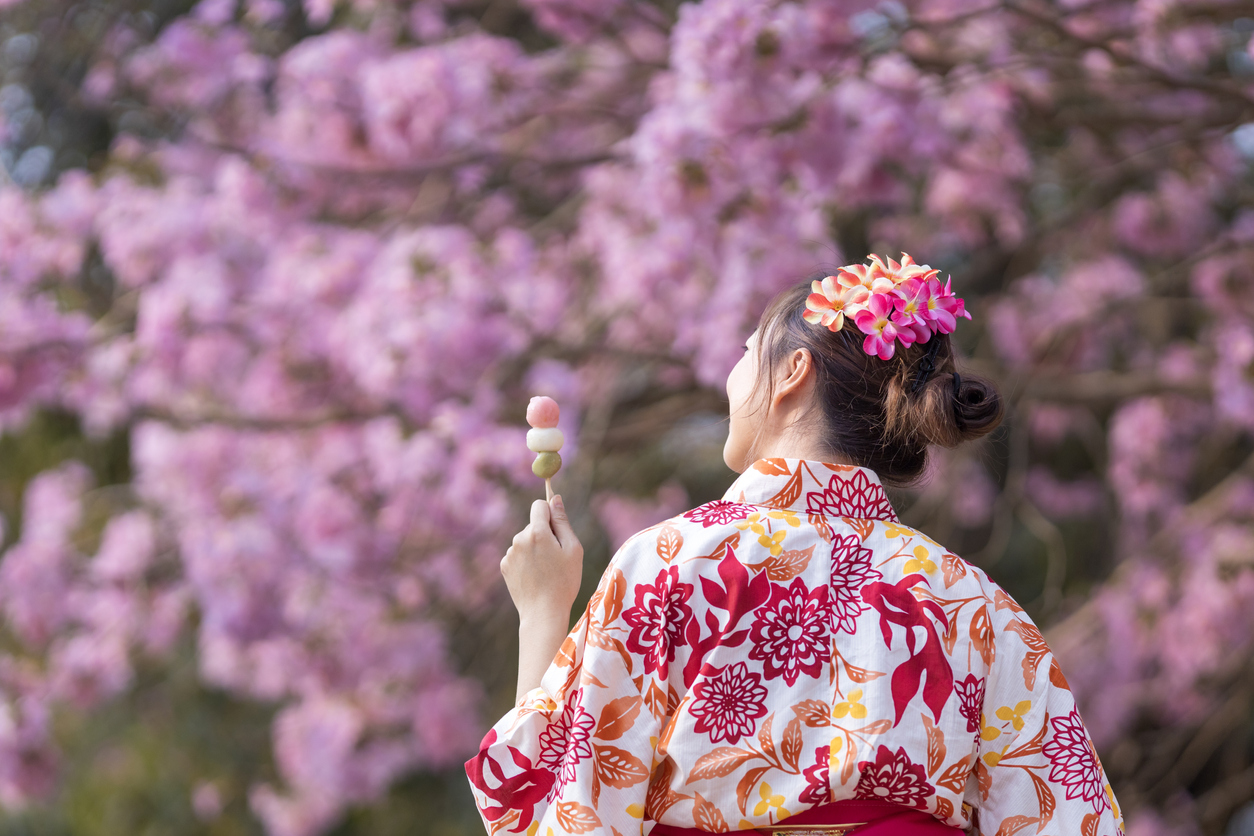
Spring is the season where kimono color choices matter most visually, because the backdrop has such a strong palette of its own — soft pinks, white blossoms, the pale green of new leaves.
Colors that work beautifully against cherry blossoms: deep navy, forest green, rich burgundy, mustard yellow, and dusty rose. These contrast against the pale sakura without competing with it. Lighter colors — soft lavender, ivory, pale sage — blend more gently into the spring palette for a softer overall image.
What to avoid if you want strong photos: colors that are too close to the pink of the blossoms themselves, which can make the whole image feel flat and undifferentiated. A deep indigo kimono against a wall of pale pink cherry trees photographs dramatically. A pale pink kimono against the same backdrop blends in — which may or may not be what you're going for.
The English-speaking staff at Kimono no Obebe can guide you through color choices with the season in mind. It's worth asking specifically — they know which combinations photograph well at which time of year, which is exactly the kind of local knowledge that's hard to get from a general blog.
Plans start from 1,900 yen, with the furisode option at 15,000 yen. The furisode, with its long sleeves and elaborate obi, photographs particularly well against cherry blossoms — the extra formality and visual drama of the long sleeves complements the season's backdrop. Full pricing is on the plans page here.
A Spring Kimono Morning — What It Actually Looks Like
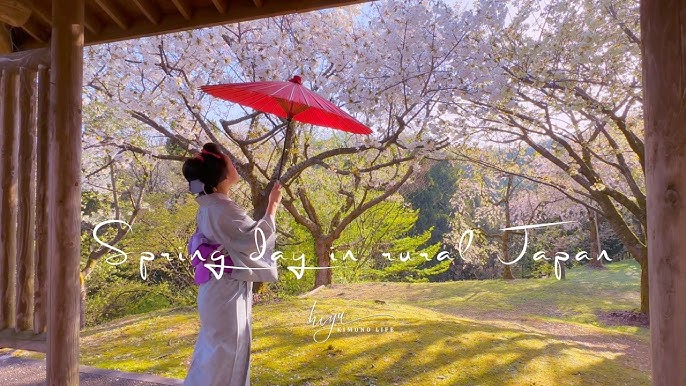
Here's a fictional but realistic picture of how a spring kimono day near Shijo Station tends to go when it's done right.
Imagine a couple visiting Kyoto for four days specifically for cherry blossom season. They've booked a 9am slot at Kimono no Obebe — the earliest available. They arrive before the neighborhood has fully woken up. She picks a deep forest green furisode with a gold obi; he goes with a charcoal haori set. They're dressed and outside by 9:40. The Shirakawa Canal is a five-minute walk east. They arrive before the tour groups. The weeping cherry trees are fully open, petals drifting into the canal water. The light is soft and directional. Their photographer — booked as an add-on — knows exactly where to position them along the canal and how to shoot with the trees in frame without the backdrop becoming overwhelming. By 11am they're walking through Hanamikoji before the crowds. By noon they're at Maruyama Park under the famous weeping cherry. The afternoon light on the way back through Pontocho is completely different from the morning. They return at 5:30 with photos that look like the ones they'd seen online and assumed were professionally staged.
(This is a fictional example — not a real customer account — but it's the kind of day that the location, timing, and photography combination makes genuinely possible.)
The Best Cherry Blossom Spots Walkable From Shijo Karasuma
Here are the specific spots worth prioritizing during a spring kimono day, in roughly the order of distance from the shop.
Shirakawa Canal — about 12 minutes east. A small canal running through the northern edge of the Gion district, lined with weeping cherry trees that hang directly over the water during peak bloom. One of the most photographed sakura spots in Kyoto that isn't completely overwhelmed with crowds, because it's slightly off the main tourist path. The combination of canal reflections, lanterns, and kimono makes this one of the strongest visual locations in the city during spring.
Hanamikoji Street — 10 minutes east. The most iconic lane in Gion, lined with traditional machiya townhouses. Cherry trees on the side streets branch over the stone pavement. Go early — before 10am if possible — and the alley has a quality that the midday crowds completely destroy.
Maruyama Park — 20 minutes east at the end of Shijo-dori, just past Yasaka Shrine. Home to Kyoto's most famous weeping cherry tree — a massive, multi-branched specimen that's lit up at night during blossom season and draws large crowds. Beautiful for photos in the morning, overwhelming by afternoon. Worth visiting on the way back through rather than making it the first stop.
Ninenzaka and Sannenzaka — about 25 minutes east of the shop. Stone-paved pedestrian streets leading toward Kiyomizudera, with cherry trees lining both sides. Slightly further but genuinely worth it during peak bloom. The combination of traditional wooden shops, stone pavement, and sakura overhead is extraordinarily photogenic.
Kamo River banks — 5 minutes west of Pontocho. Cherry trees line the banks north of Shijo-dori, and in full bloom the riverbanks become a gathering place for locals and tourists alike. More casual than Gion, but the scale of the blossom-lined river is impressive in its own way.
Spring Photography Sessions: Especially Worth It This Season
If there's one season where the professional photography add-on pays off most clearly, it's spring.
The challenge with cherry blossom photography in Kyoto is that everyone is trying to take the same photos at the same time. The spots are crowded. The light changes quickly. Getting a clean shot of a kimono against a full cherry blossom backdrop, without other tourists in the frame and with the light working in your favor, requires knowing exactly when and where to be.
Kimono no Obebe's photography sessions start from 10,000 yen.click here for prices The photographer knows the quieter angles on the Shirakawa Canal, the less-trafficked stretch of Hanamikoji, the moments when the light is right. The difference between those photos and phone camera shots from the middle of a tourist crowd is significant. Browse the guest gallery here to see spring results specifically.
One More Thing Worth Knowing About Spring Pricing
A lot of Kyoto kimono rental shops add a sakura season surcharge to their standard plans during cherry blossom period. It's understandable from a business perspective — demand is at its highest and they can charge more. But it means the price you see outside of peak season isn't the price you pay in April.
Kimono no Obebe keeps pricing flat all year. What's on the plans page is what you pay in peak bloom week, in January, and in November. No seasonal markup. For a trip where everything else in Kyoto is already running at premium prices — accommodation, food, transport — flat kimono rental pricing is genuinely useful to know.
Getting Here
Kimono no Obebe is a 2-minute walk from Shijo Station on the Hankyu Kyoto Line or Keihan Main Line. From Kyoto Station, take the Karasuma subway line to Shijo — five minutes. During cherry blossom season, trains into central Kyoto are busy in the mornings — build a few extra minutes into your journey time.
Follow @kyoto_kimonorental_noobebe on Instagram for recent spring guest photos and a real sense of what the experience looks like during sakura season. And book early — the shop's spring slots fill up, and a confirmed slot is the only thing standing between you and a kimono day in cherry blossom Kyoto.