You Have Seen the Photos. Now You Want the Real Thing.
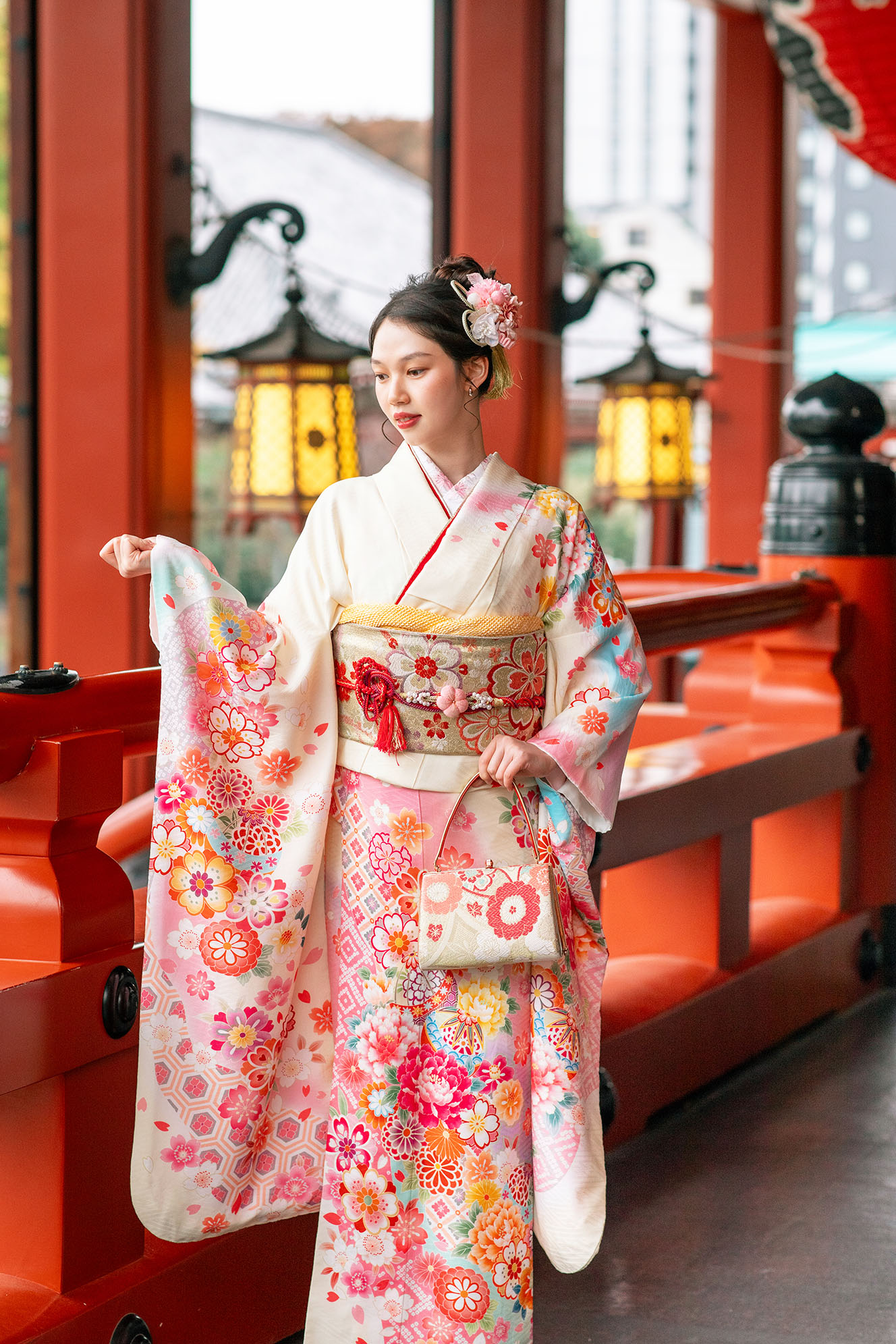
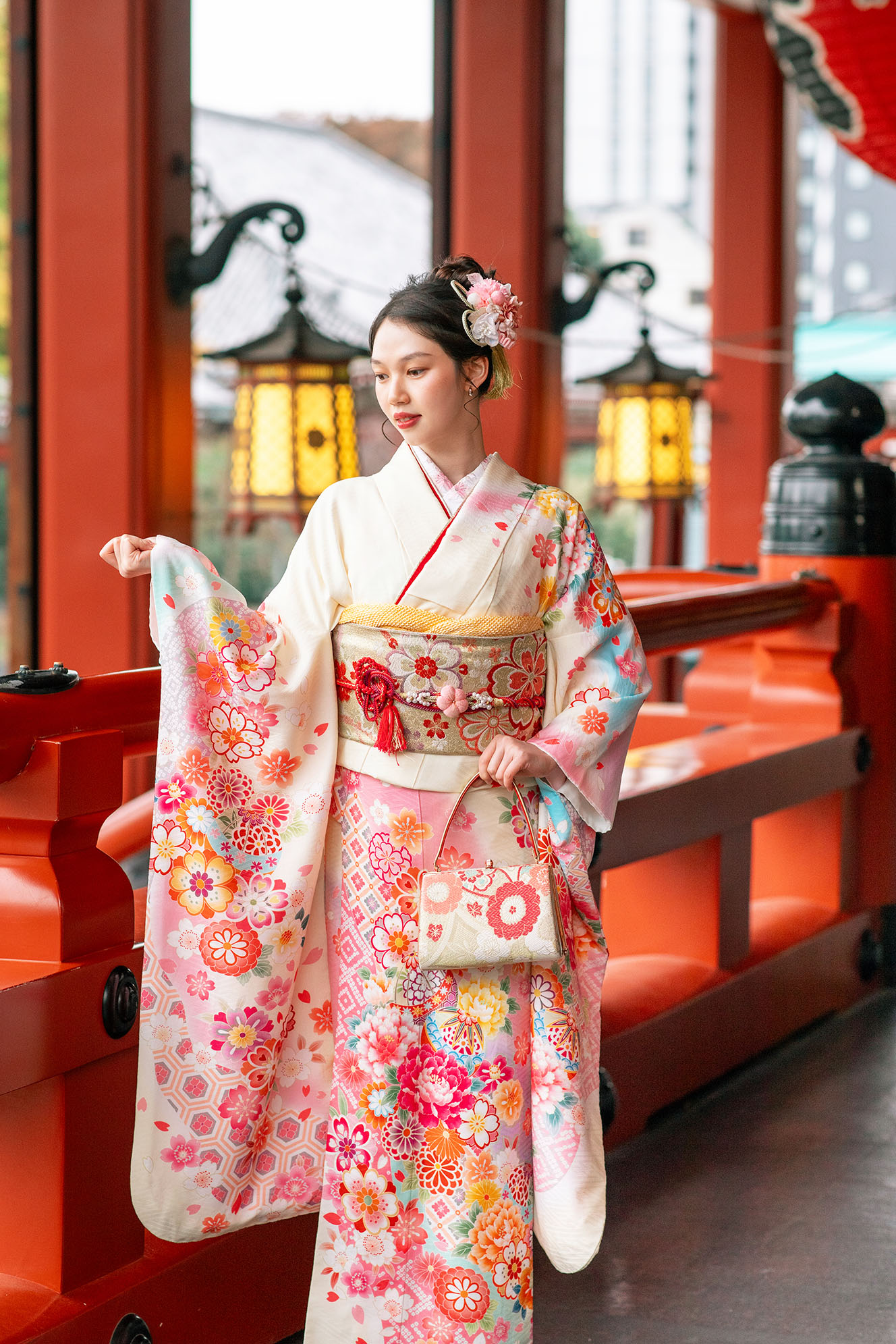
There is a specific type of kimono that stops people mid-scroll. Long sleeves that reach almost to the ground. Intricate fabric patterns — cranes, peonies, maple leaves — in deep jewel tones or soft pastels. An obi tied in a formal, structured bow at the back. The whole look unmistakably formal, unmistakably Japanese, and unmistakably beautiful.
That is the furisode. And it is the most visually impressive kimono style available for rental in Kyoto.
If you are visiting Kyoto and you want the full traditional kimono experience — not a casual everyday look but the real thing, the kind that photographs like a painting — the furisode is what you are looking for. This post covers everything you need to know before you rent one: what a furisode actually is, who wears it and when, what the rental process looks like at Kimono no Obebe near Shijo Station, what it costs, and which season makes the most of it. Start to finish.
What Is a Furisode, Exactly?
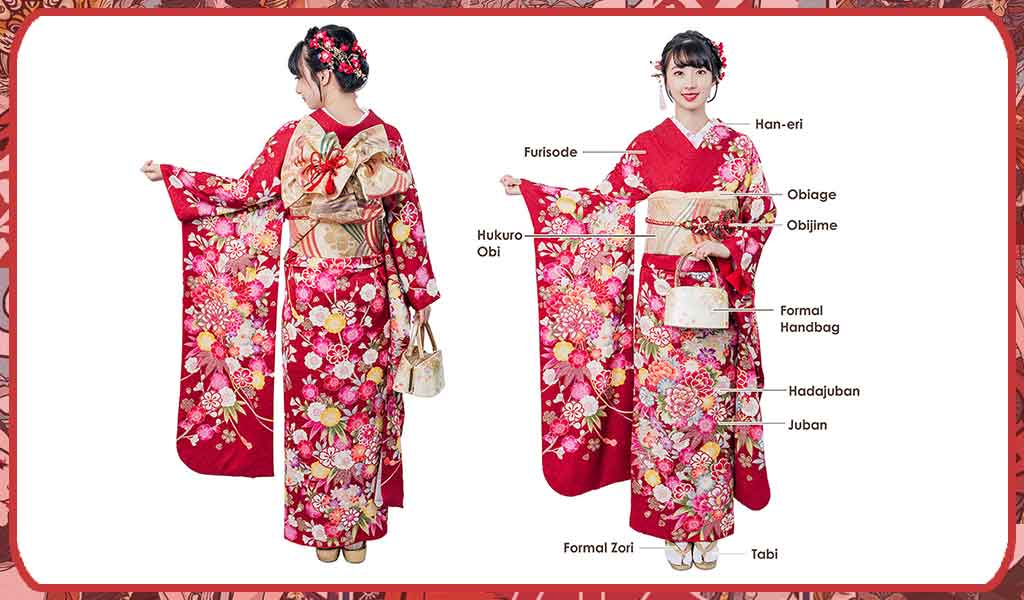
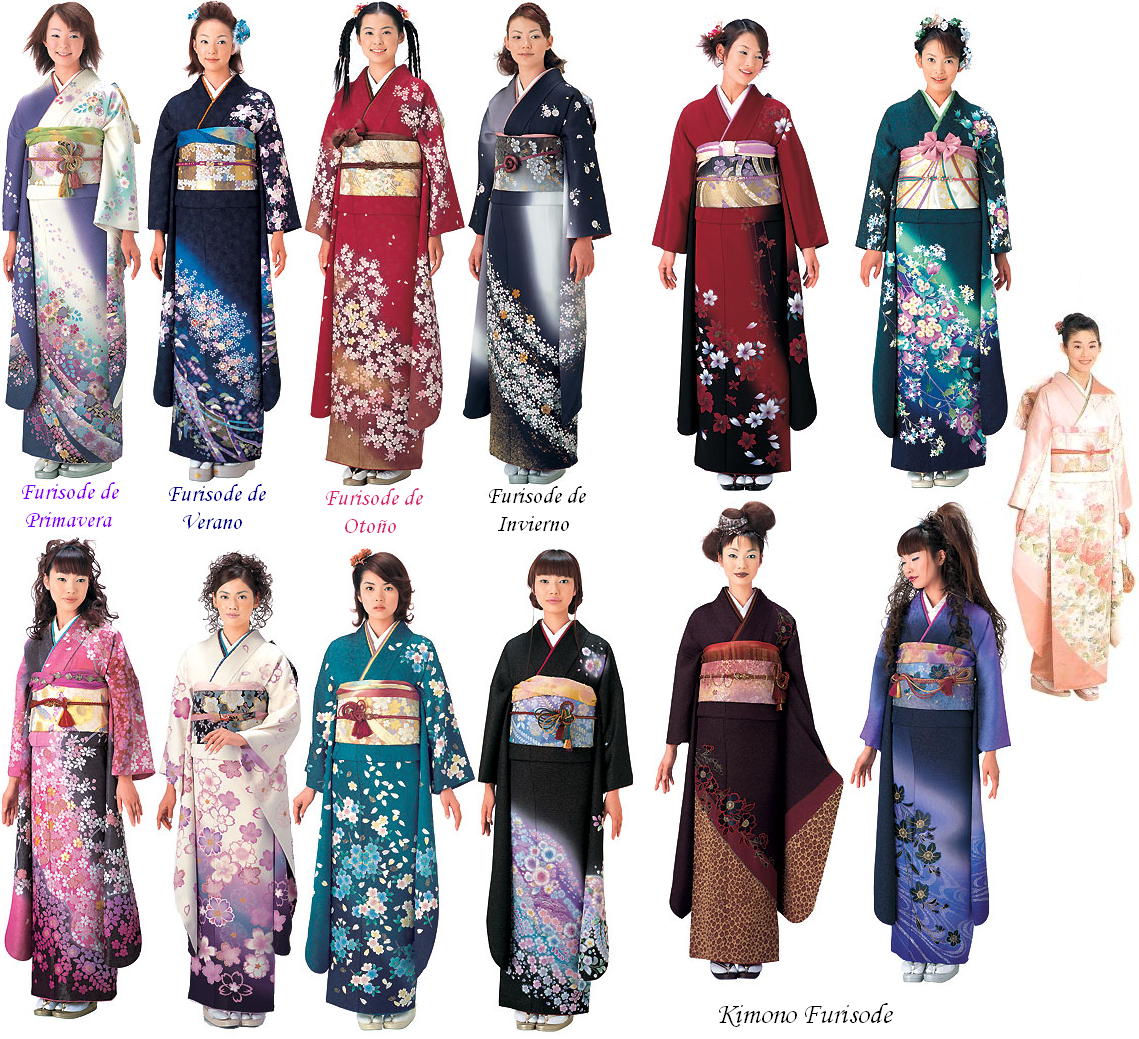
The word furisode literally means swinging sleeves — and that describes the most distinctive feature. While a standard adult kimono has sleeves that hang about 50 centimeters below the armhole, furisode sleeves can reach 100 to 114 centimeters. In some cases they almost touch the floor. When worn properly and captured in photos, those sleeves create a visual drama that no other kimono style produces.
Furisode are traditionally the most formal kimono worn by unmarried women. They appear at coming-of-age ceremonies, formal weddings (as guest attire), tea ceremonies, and other significant cultural occasions in Japan. The fabric is typically silk or high-quality synthetic silk, with elaborate hand-painted or woven patterns covering much of the surface area. Nothing about the furisode is understated.
For international visitors renting in Kyoto, the furisode is available regardless of marital status — the cultural convention around who traditionally wears it applies to formal Japanese occasions, not to tourist rental experiences. If you want to rent one, you can.
Furisode vs. Standard Kimono — What Is Actually Different
If you are comparing plans and wondering whether the furisode upgrade is worth it, here is the honest breakdown of what changes.
The sleeves. This is the defining difference and the one that matters most in photos. Standard kimono sleeves are contained and practical. Furisode sleeves are long, flowing, and expressive. In motion — walking, turning, gesturing — they move in a way that looks extraordinary on camera. In a still photo against a Gion alleyway or the Shirakawa Canal, they add a layer of visual complexity that a standard kimono cannot match.
The fabric and pattern. Furisode fabric tends to be more elaborate than standard rental kimono — more complex patterns, richer colors, higher quality material. The pattern typically covers the full surface of the garment rather than a simpler repeat or solid field.
The obi tying. A furisode is tied with a more elaborate obi style than a casual kimono — often a fukuro obi in a formal tateya musubi or otaiko variation. The back of the obi on a furisode is a considered, structured element of the outfit, not just a functional tie. It photographs well from behind and adds to the overall formality of the look.
The time to dress. Dressing in a furisode takes slightly longer than a standard kimono — plan for around 30 to 40 minutes. The extra time is in the obi tying and the accessory coordination, both of which are handled by the staff at Kimono no Obebe.
What Furisode Rental Looks Like at Kimono no Obebe
The furisode plan sits at the premium end of the rental range — 15,000 yen, which reflects the quality of the fabric, the complexity of the dressing, and the completeness of the accessories package. Full plan details are on the plans page here.
What is included: the furisode kimono itself, the formal obi, all accessories including obi-dome, obi-jime, tabi socks, zori sandals, and kinchaku bag, plus hair styling with kanzashi hairpins appropriate to the furisode formality level. Makeup is also available.
The English-speaking staff handle the full dressing process and coordinate the accessories to your specific kimono and obi combination. This matters for the furisode particularly because the elaborate nature of the outfit means there are more coordination decisions to make — the hairpin style, the obi pattern, the collar color — and having someone who does this every day producing the right combination is what makes the finished look work.
Pricing is the same year-round. No seasonal premium during cherry blossom season or autumn foliage. That is worth knowing because those are the two seasons when furisode rental demand peaks and some shops adjust their prices accordingly.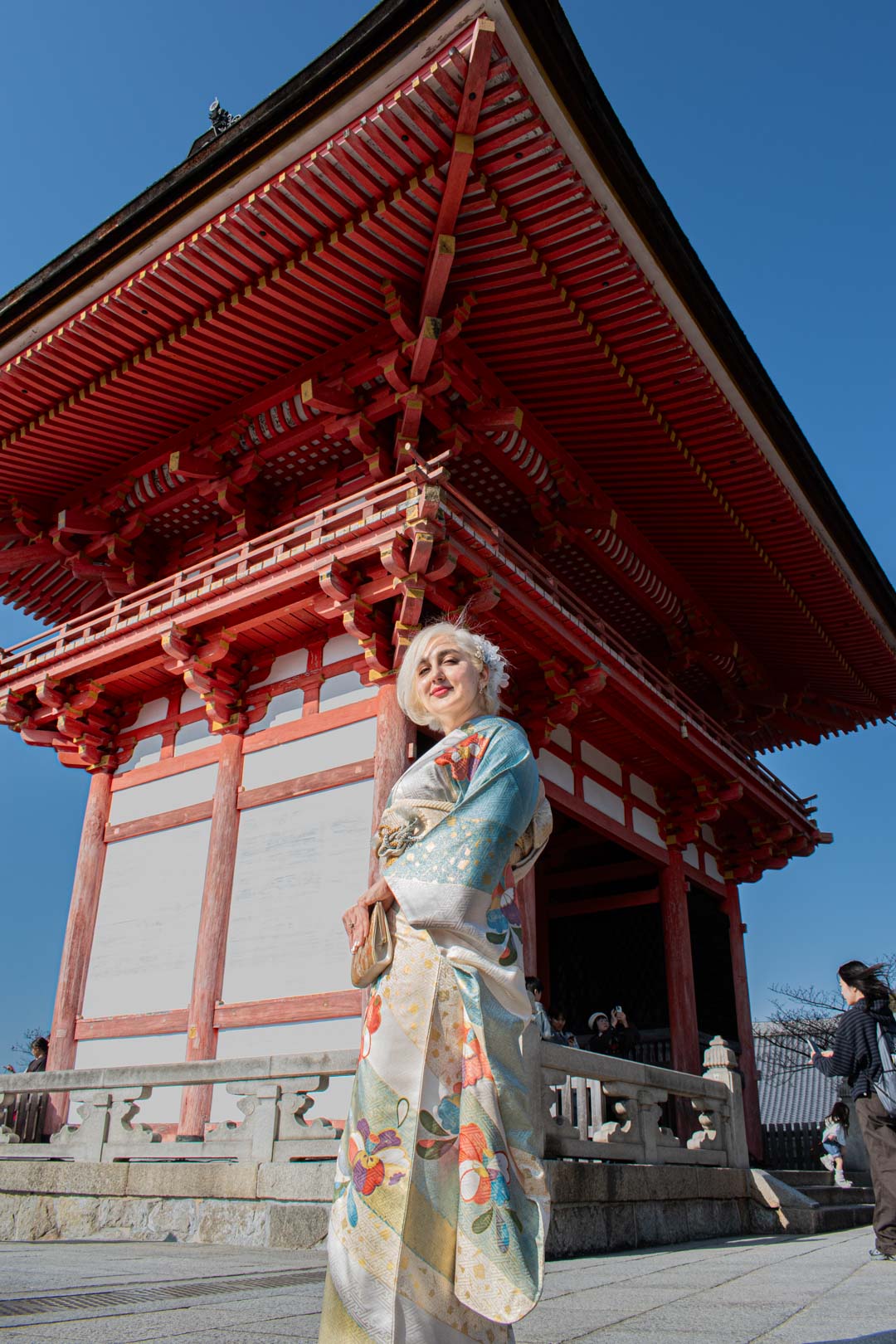
A Furisode Day in Kyoto — What It Actually Feels Like|
Here is a fictional but realistic picture of what a furisode rental day looks like from the inside.
Imagine a woman visiting Kyoto alone, specifically to do this. She has wanted to wear a furisode since she first saw one in a photo years ago — the long sleeves, the elaborate fabric, the whole picture. She books the furisode plan at Kimono no Obebe for an October morning. She arrives at 9:30am. The staff walks her through the available furisode options — she picks a deep indigo with silver and gold crane patterns, almost floor-length. The obi is a formal ivory with a woven pattern that the staff says complements the crane motif. The dressing takes 35 minutes. Her hair is styled up formally with gold kanzashi pins. She steps outside at 10:10am into the Gion neighborhood in early autumn light, the maple trees just beginning to turn. She has booked the photography add-on. The photographer takes her through the Shirakawa Canal first, then the quieter backstreets of Hanamikoji, then the approach to Yasaka Shrine. Three hours later she returns to the shop. The photos look like something from a magazine spread. She is not exaggerating when she says it was the best day of the trip.
(This is a fictional example, not a real customer account. But it captures what the furisode experience is designed to deliver.)
Photography and the Furisode: A Natural Combination
If you are renting a furisode, you almost certainly care about how the photos look. The two things go together — nobody rents the most visually dramatic kimono available and then settles for awkward phone camera shots in a tourist crowd.
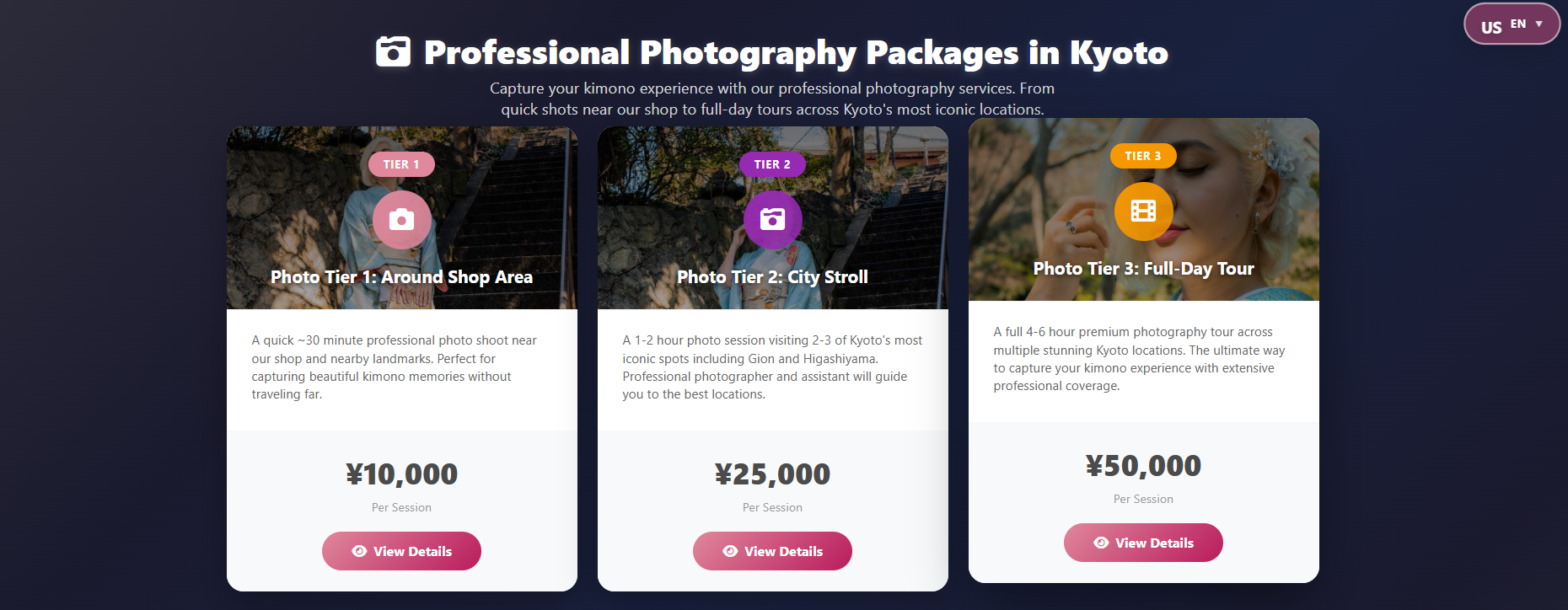
Kimono no Obebe offers professional photography sessions starting from 10,000 yen. A photographer meets you after dressing and takes you through Gion, the Shirakawa Canal area, and the most photogenic backstreets nearby — the spots with good light, the angles that capture the full length of the furisode sleeves, the moments of natural movement that make formal dress look like it belongs rather than like a costume.
The furisode is particularly well-suited to professional photography for one specific reason: the sleeves. In a still posed shot, the sleeves hang. In motion — walking slowly, turning to look at something, stepping around a corner — they move in a way that a static snapshot almost never captures. A photographer who is following you and shooting candidly gets those moments. A phone camera on a tripod does not.
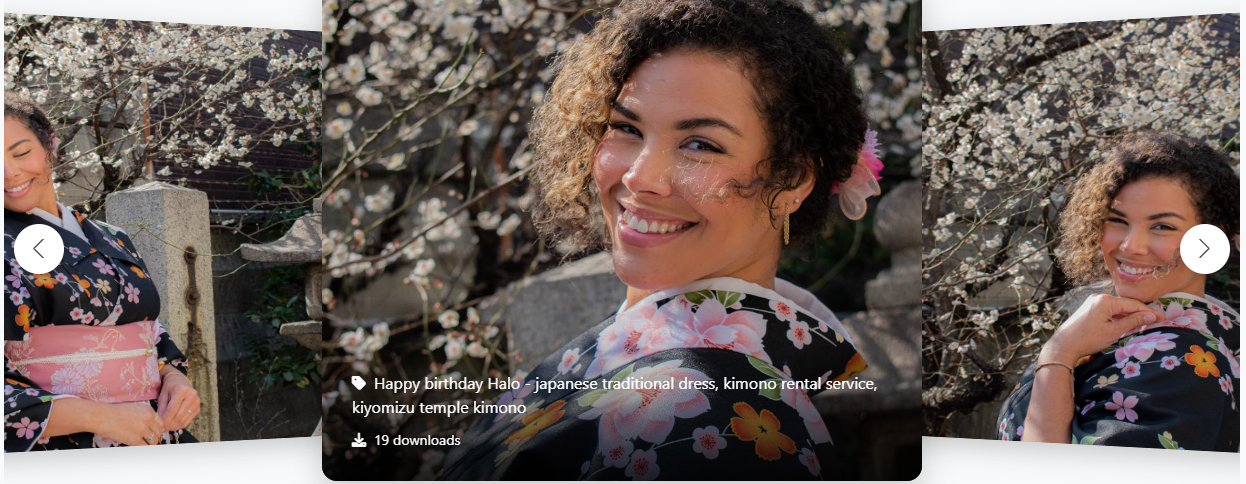
Browse the guest gallery here to see furisode results specifically. The difference between a furisode with professional photography and a standard rental with a phone camera is visible immediately.
Which Season Makes the Most of a Furisode
The furisode photographs well in every season, but some seasons make more of it than others.
Autumn (October-November) is the season most photographers and styling professionals point to as the strongest match for furisode rental. The rich, jewel-toned fabrics that characterize premium furisode — indigo, burgundy, forest green, deep gold — contrast dramatically against red and amber maple leaves. The afternoon light in November is warm and directional. The combination produces images with a depth and color richness that spring photographs, with their pale pink palette, do not match in the same way.
Spring (March-May) is the peak season for furisode rental by volume. Cherry blossoms against a furisode backdrop is the iconic image most visitors are chasing, and it earns that reputation. Pale-colored furisode — soft gold, dusty rose, ivory — photograph particularly well against sakura. Book your slot well in advance for spring — April especially fills up fast for premium plans.
Winter (December-February) is the underrated choice. A furisode in deep fabric against a quiet winter Gion, without the crowds of peak season, has an atmospheric quality that busy seasons cannot replicate. New Year in Kyoto — with Hatsumode at Yasaka Shrine — is arguably the most culturally appropriate context in which to wear a furisode, since it is traditionally the occasion for formal dress in Japan. Being dressed in a furisode at Yasaka Shrine on January 1st is not a tourist activity. It is participating in something.
Summer (June-August) is the least typical season for furisode, given the heat of Kyoto summers. If you are visiting in summer and want the most elaborate option, it is possible — the dressing takes place indoors and the shop is air conditioned — but lighter plans or yukata options are more comfortable for a full day of outdoor walking.
How to Book and What to Ask
The furisode plan at Kimono no Obebe is the premium option and benefits from advance booking more than the standard plans. If you are visiting during spring or autumn — the two peak seasons — book your slot at least two to three weeks ahead. For spring, earlier is better.
When you contact the team, it is worth mentioning that you are interested in the furisode plan specifically, and if you have a preferred color direction or pattern style, sharing that gives the staff time to prepare options that match your preferences. Reach the team through the contact page here.
For a real look at furisode rental results across seasons, styles, and photography add-ons, the @kyoto_kimonorental_noobebe Instagram is the most useful preview. The about page here has more on the shop and what the experience is built around.
The furisode is the most dramatic kimono you can wear in Kyoto. If you are going to do a kimono rental and you want to do it at the highest level — the kind that produces photos you will still look at in ten years — this is the plan. It is worth booking properly, doing the photography, and giving yourself the morning for it. Kyoto in a furisode is exactly as good as it looks.