There Are Dozens of Kimono Rental Shops in Kyoto. Here Is How to Actually Compare Them.
You have done the search. Kimono rental Kyoto. Fifty results. Shops with similar photos, similar price ranges, and descriptions that all say roughly the same things: wide selection, friendly staff, great location near Gion.
So how do you actually choose?
This video is for kimono delivery Click here for browse kimono delivery prices and information
This post is going to give you a real framework for comparing kimono rental shops in Kyoto — the factors that genuinely affect the quality of your experience, not the ones that look good in a bullet point on a booking page. By the end, you will know exactly what to look for, what the differences between shops actually mean in practice, and why Kimono no Obebe near Shijo Station consistently comes up as a top option for international visitors doing this comparison seriously.
Fair warning: this post is written by Kimono no Obebe. We are going to be transparent about that throughout. We will give you honest, useful comparison criteria — and yes, we believe our shop holds up well against them — but we are not going to pretend we are a neutral third party. You deserve to know who is writing this.
The Five Factors That Actually Matter When Comparing Kimono Rental Shops
Forget the stock photos of smiling staff and generic descriptions of traditional craftsmanship. Here are the five things that determine whether your kimono rental day is genuinely good or quietly frustrating.
1. Location Relative to Where You Actually Want to Go
This is the factor most travelers underweight and then regret.
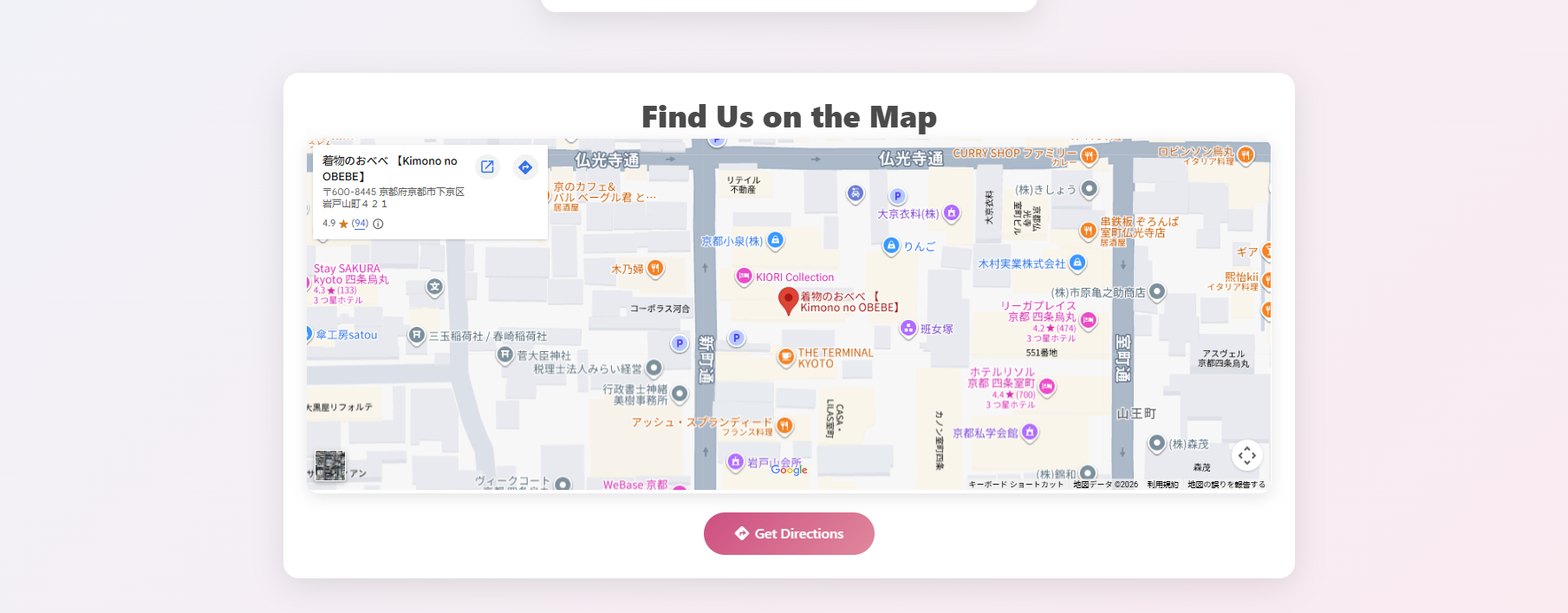
The kimono rental experience is only as good as what you can do while dressed. If your shop is a 20-minute bus ride from Gion, you are burning daylight — and spending time on public transport in sandals — before you have even started. The best location for kimono rental in Kyoto is walking distance from the main sightseeing areas: Gion, Pontocho, the Shirakawa Canal, Yasaka Shrine, Nishiki Market.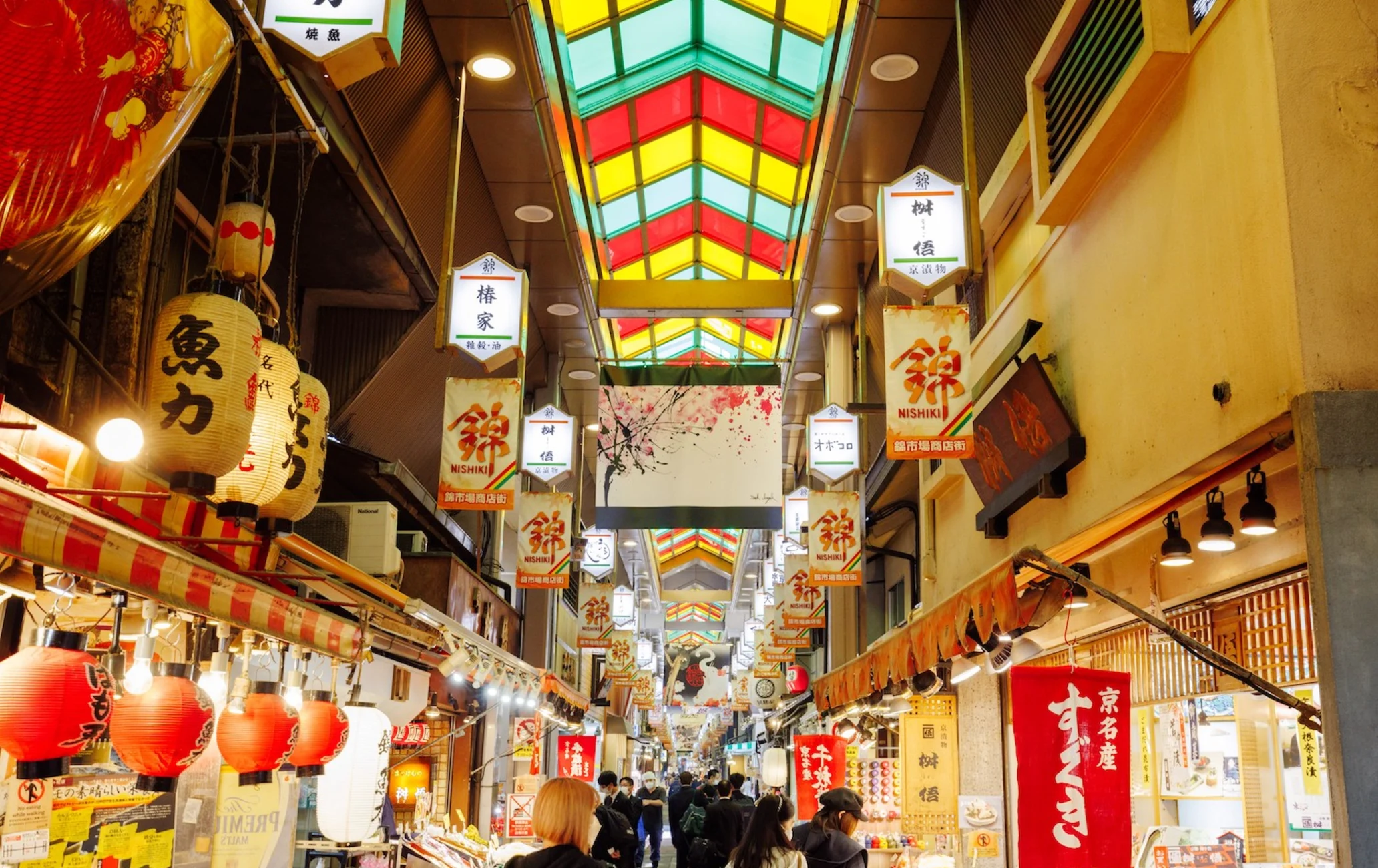
Kimono no Obebe is a 2-minute walk from Shijo Station and sits at the edge of the Gion district. You step outside dressed and the neighborhood begins. That is the location benchmark worth measuring other shops against.
When evaluating any shop, ask specifically: how far is it on foot from Hanamikoji Street? From the Shirakawa Canal? From Yasaka Shrine? If the answer involves a bus or a taxi, that is time out of your kimono day.
2. Language Support — Real Support, Not Just a Translation Card
contact kimono rental shop click here for contact information
A lot of Kyoto kimono rental shops list English support as a feature. What that means in practice varies significantly.
At the low end, it means a laminated menu of options with English labels. At the high end, it means staff who actually speak English — who can explain why they are recommending a particular obi for your kimono, answer questions about what each accessory does, and communicate during the dressing process so you understand what is happening rather than just standing while things happen to you.
The difference matters more than it sounds, especially for first-timers. A lot of the nervousness around kimono rental comes from not knowing what to expect. A staff member who can actually talk you through the process eliminates most of that.
At Kimono no Obebe, English-speaking staff are part of the standard experience, not an exception. Multi-language support is also available for guests whose first language is not English. When comparing shops, look for reviews from international visitors that specifically mention communication — not just star ratings.
3. Pricing Transparency — What Is Actually in the Price
This is the factor that creates the most frustration among Kyoto visitors who did not research carefully enough before booking.
Some shops list a base rental price that covers the kimono alone. The obi, kanzashi hairpins, tabi socks, sandals, and bag are itemized separately. Hair styling is an add-on. The price climbs during cherry blossom season and autumn foliage. By the time you finish checking out, you have paid significantly more than the price that attracted you in the first place.
When comparing shops, look for this specifically: does the listed price include the obi? Does it include hair styling? Is there a seasonal surcharge? These are direct questions worth asking before you book, not assumptions to make based on what sounds reasonable.
At Kimono no Obebe, the price on the plans page is the price for the complete outfit — kimono, obi, all accessories, tabi socks, sandals, and hair styling. Pricing is flat year-round. No sakura surcharge in April, no autumn foliage markup in November. Plans start from 1,900 yen up to 15,000 yen for the furisode. What you see is what you pay.
4. Quality of the Dressing Experience
Please watch this video. It shows how the kimono dressing process works, so you can get an idea of how convenient it is for the person wearing the kimono
The kimono is only as good as the dressing. A poorly tied obi, a mismatched accessories combination, a collar sitting at the wrong angle — these are the details that separate a kimono that looks right from one that looks like a rental.
This is hard to assess from a shop website. The best signals are in reviews — specifically reviews that mention details. Not just good experience but the obi pattern was matched to the kimono, the hair took 20 minutes and the result was traditional and elegant, the staff noticed the collar was slightly off and fixed it before we left. Specific detail in a review means the experience was specific enough to be memorable.
Photos in reviews are even more useful than written descriptions. Look at the full look: is the obi tied correctly and cleanly? Is the collar positioned properly? Do the accessories coordinate or just coexist? The photo tells you more than the star rating.
At Kimono no Obebe, the dressing is handled by experienced staff who coordinate the accessories to your specific kimono — not a one-size-fits-all approach. Hair styling is included as part of the experience, not an afterthought. You can see the results across different styles and seasons in the guest gallery here.
5. Photography Options
Click here to go though the photography packages and information this is the chepest and greate photography options in kyoto 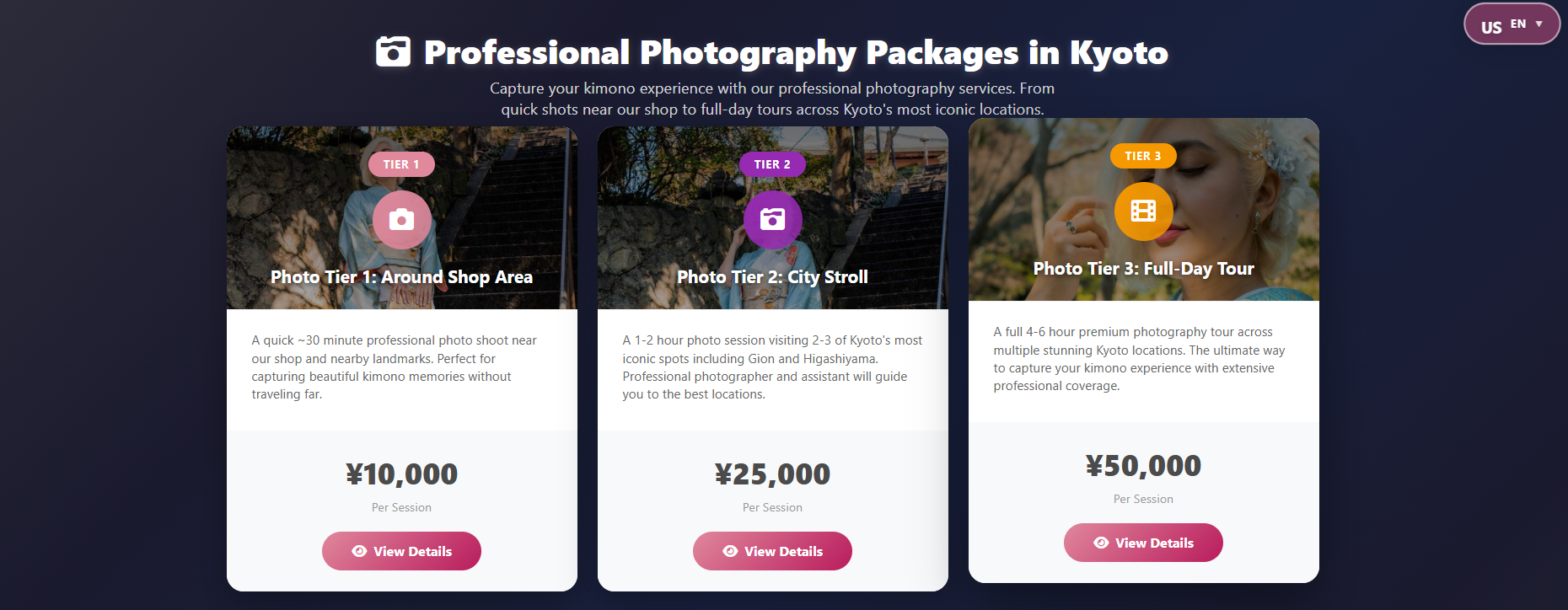
For most travelers visiting Kyoto specifically for the kimono experience, photos are a significant part of the point. Whether you are documenting the trip for yourself, sharing it, or want a set of images that actually capture what the day felt like — the quality of the photos matters.
Some shops offer photography as an add-on. Some do not. Among those that do, the quality range is significant. A photographer who knows which alley in Gion gets good morning light, who shoots candid movement rather than stiff posed shots, and who understands how to frame a furisode sleeve in motion produces completely different results from someone pointing a camera at you against a generic backdrop.
Kimono no Obebe offers professional photography sessions from 10,000 yen. A photographer joins you after dressing, takes you through the best spots near Gion and Pontocho, and shoots while you actually experience the neighborhood rather than performing for the camera. The guest gallery shows real results across seasons and plan levels. When comparing photography add-ons at other shops, ask specifically: where do they take you? How long is the session? Do they shoot on-location in Gion or in a studio?
A Fictional Comparison — What Choosing Poorly Actually Costs You
Here is a fictional scenario that captures what this comparison looks like in practice when one traveler does the research and another does not.
Imagine two friends both visiting Kyoto in April, staying in the same hotel near Shijo. They both want to do kimono rental on the same day. One books the first shop that comes up in search — reasonable price, nice photos on the website. The other spends 20 minutes checking the five factors above and books Kimono no Obebe. On the day: the first friend discovers her shop is a 15-minute walk from Gion, the accessories are itemized separately, and the staff cannot answer her questions in English. She still has a decent time. The second friend walks two minutes from the station, pays the price she was quoted, gets dressed by staff who explain every step in English, and walks directly into cherry blossom Gion by 10am. Same city, same day, completely different experience. The difference was 20 minutes of research.
(This is a fictional example — not a real account — but it reflects the genuine difference that comparison shopping makes for this particular experience.)
these are some revies for kimono no obebe they have 4.9 google ratings 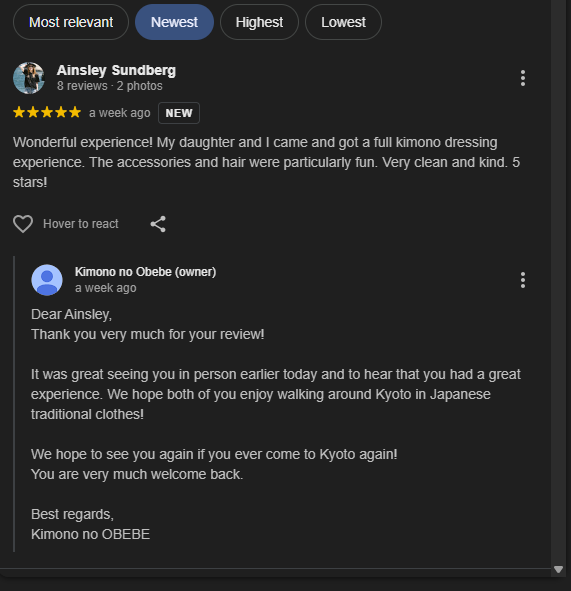
A Quick Seasonal Note for Comparison Shopping
One factor that affects the comparison differently by season: pricing surcharges. During cherry blossom season and autumn foliage — the two most popular times to visit Kyoto — many kimono rental shops in the Gion and Shijo area add a seasonal premium to their standard plans. This affects the comparison significantly if you are visiting during these periods.
Shops that advertise a base price but apply a sakura surcharge in April effectively have two different price structures. When comparing costs for a spring or autumn visit, always ask specifically whether the quoted price applies during peak bloom or peak foliage.
Kimono no Obebe applies no seasonal surcharge at any time of year. The price you see on the plans page in January is the same price you pay in April. For spring and autumn visitors, this simplifies the comparison: one less thing to check.
The Comparison Summary
If you apply the five factors above to any kimono rental shop in Kyoto, you get a clear picture of what you are actually booking. Here is how Kimono no Obebe sits against them:
Location: 2-minute walk from Shijo Station, direct walking access to Gion, Pontocho, Nishiki Market, Yasaka Shrine, and the Shirakawa Canal. No transport needed once you are dressed.
Language support: English-speaking staff as a standard feature, not an exception. Multi-language support available.
Pricing transparency: Complete outfit price listed on the plans page, accessories included, hair styling included, no seasonal surcharge. Plans from 1,900 yen to 15,000 yen for the furisode.
Dressing quality: Experienced staff, full accessory coordination, hair styling with kanzashi, guest gallery available to preview results.
Photography: Professional photography sessions from 10,000 yen, on-location in Gion and surrounding areas, candid shooting style.
For questions or to check availability, reach the team through the contact page here. For real results across seasons and plan levels, the @kyoto_kimonorental_noobebe Instagram is the most honest preview available. And for background on the shop, the about page here gives you the full picture.
The best kimono rental shop in Kyoto is the one that scores well on the factors that actually matter for your specific trip. Use this framework to compare honestly — including against us — and you will make the right call.