You Are Ready to Book. Here Is What to Know Before You Do.
You have picked your dates. You have figured out Kyoto's train system well enough to get around. You know roughly what kimono rental involves and you have decided you are doing it. Now you just need to actually book.
This is the stage where most travelers make one of a few predictable mistakes — booking too late for peak season, choosing the wrong time slot for the photos they want, not asking the right questions before arrival, or assuming things are included that are not. None of these mistakes are catastrophic, but they all take something away from the experience.
This post is specifically about booking well. Not which shop to choose — that is a separate question — but how to approach the booking process itself so that when you walk into Kimono no Obebe near Shijo Karasuma, everything is already sorted and the day goes exactly the way you planned it.
By the end, you will have a clear checklist of what to confirm before you book, when to book for each season, what the best time slots are and why, and what to tell the shop in advance to get the most out of the experience. Practical, specific, no filler.
Tip 1: Book Earlier Than You Think You Need To
This is the single most important booking tip, and it applies more aggressively than most people expect.
Kyoto is one of the most visited cities in Japan. The Shijo-Karasuma area sits at the center of the city's most popular sightseeing district. And kimono rental — particularly from shops with English support, professional photography options, and good reviews — fills up well in advance of the dates that matter.
Here is what earlier actually means by season.
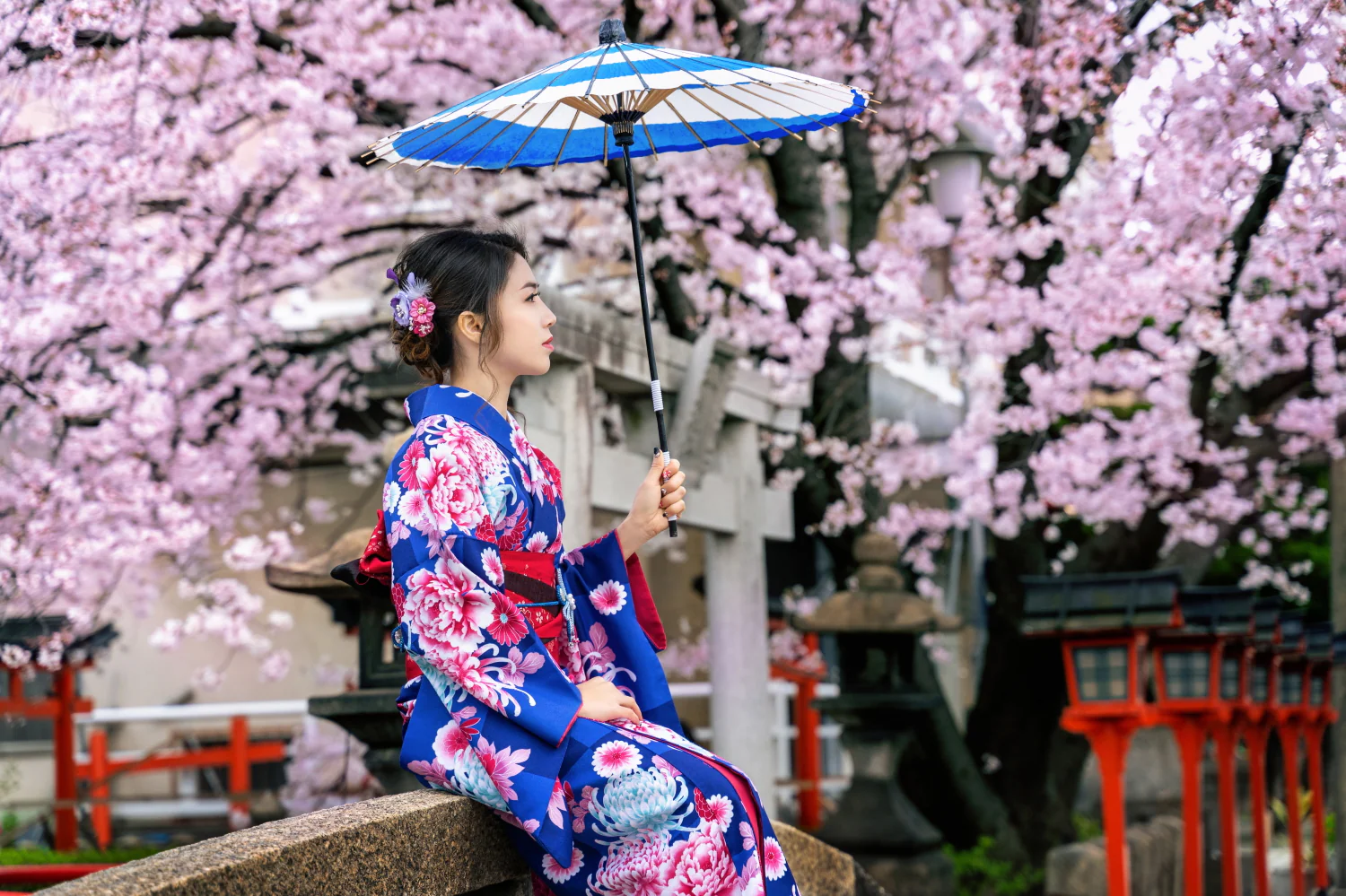
Cherry blossom season (late March to mid-April) is the most in-demand period of the year. Morning slots — 9am to 11am — at well-reviewed shops near Gion can fill up three to four weeks in advance during peak bloom week. If you are visiting in April and you have not booked yet, do it today. Not next week. Today.
Autumn foliage season (late October to mid-November) is the second most popular period. Similar dynamics to spring, slightly less extreme but still competitive for prime morning slots. Two to three weeks in advance is a safe lead time for most dates in this window.
Golden Week (late April to early May) is a domestic holiday period in Japan when the country travels heavily. Kyoto during Golden Week is extremely busy. Book four or more weeks in advance if your visit overlaps with this period.
Regular season — outside these windows — is more forgiving. A week's notice is usually sufficient. Same-day booking is sometimes possible in January and February, though confirming in advance is always the better approach.
The contact page for booking is at kimononoobebe.love/contact. Do not wait until you arrive in Kyoto to sort this out — by then, the options are significantly more limited.
Tip 2: Book a Morning Slot
If you have a choice of time, take the morning.
There are three reasons morning slots consistently produce better experiences than afternoon ones.
First, the light. Photography in Kyoto's Gion district is significantly better in the morning hours than midday or afternoon. The light is softer, more directional, and creates depth in photos that the flat overhead light of noon does not. If photos matter to you — and they usually do — morning light is the professional's choice every time.
Second, the crowds. The main sightseeing areas near Shijo Karasuma — Hanamikoji Street, the Shirakawa Canal, the approach to Yasaka Shrine — fill up with tour groups from about 10:30am onward. A 9am rental slot gets you dressed and into these spaces before the crowds build. By the time the tour buses arrive, you are already deep into the neighborhood.
Third, the full day. A morning slot gives you the maximum amount of dressed time before you need to return the kimono. You get the morning light, the quieter streets, a full afternoon to wander as far as Ninenzaka or Chion-in, and still return comfortably before closing time.
At Kimono no Obebe, morning slots are the most in-demand. If early availability matters to you, mention it when you contact the shop to confirm the best opening time available for your date.
Tip 3: Tell the Shop Your Context Before You Arrive
This is the tip most people skip and then wish they had not.
When you contact Kimono no Obebe to book, a two-sentence description of your situation changes what the staff prepares for you. Are you visiting for a wedding? They will know to recommend more formal options. Are you a solo traveler specifically planning for photographs? They will factor that into how they advise you on plan level and photography timing. Are you bringing your own kimono and just need the dressing service? They need to know that in advance.
Here is a fictional but realistic example of how this makes a difference.
Imagine two travelers both booking a mid-range kimono plan for late November. One books without context — just the date, the plan level, and a name. The other mentions in their message that they are visiting Kyoto for the first time, it is autumn, they love deep colors, and they are planning to walk toward the Higashiyama temples after getting dressed. When the second traveler arrives, the staff has already pulled several options in deep jewel tones that would photograph well against the autumn foliage on the Higashiyama path. The first traveler gets a good experience. The second one gets a good experience that was prepared for them specifically.
(This is a fictional example — not a real account — but it reflects how a small amount of advance communication genuinely changes what the shop can do for you.)
Tip 4: Know What Is and Is Not Included Before You Arrive
Arriving at a kimono rental shop expecting one thing and finding another is a frustrating way to start a day. This is entirely avoidable with one simple step: read the plans page before you book.
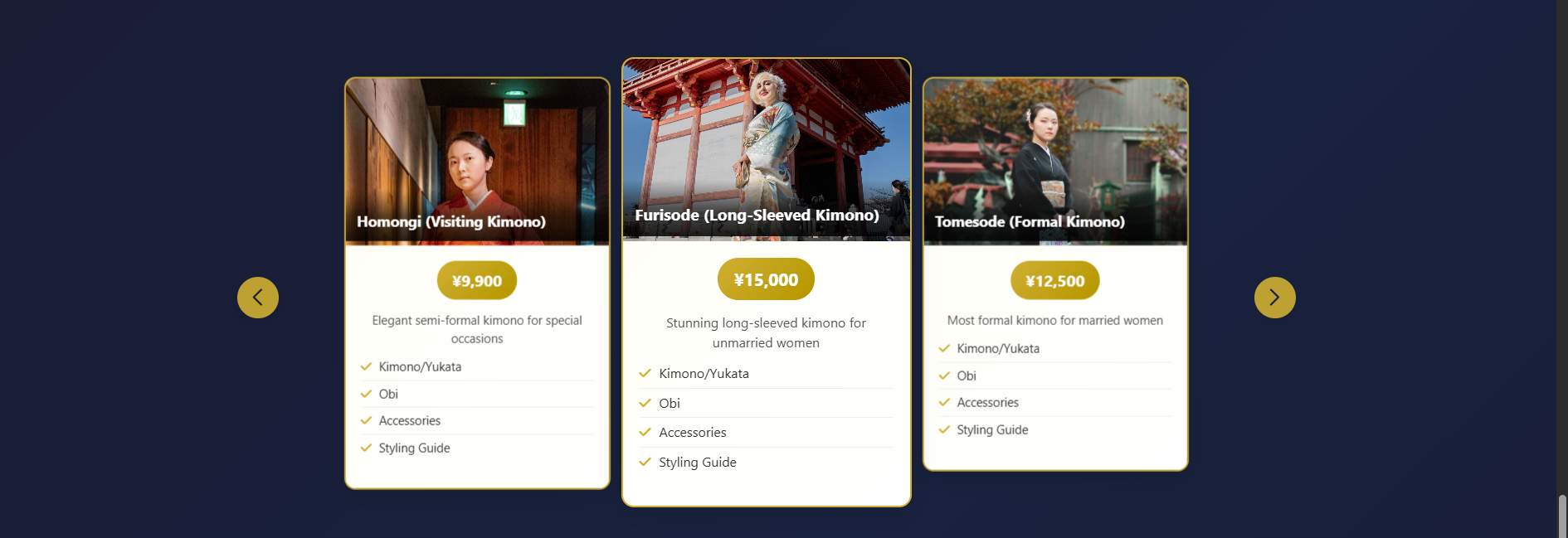
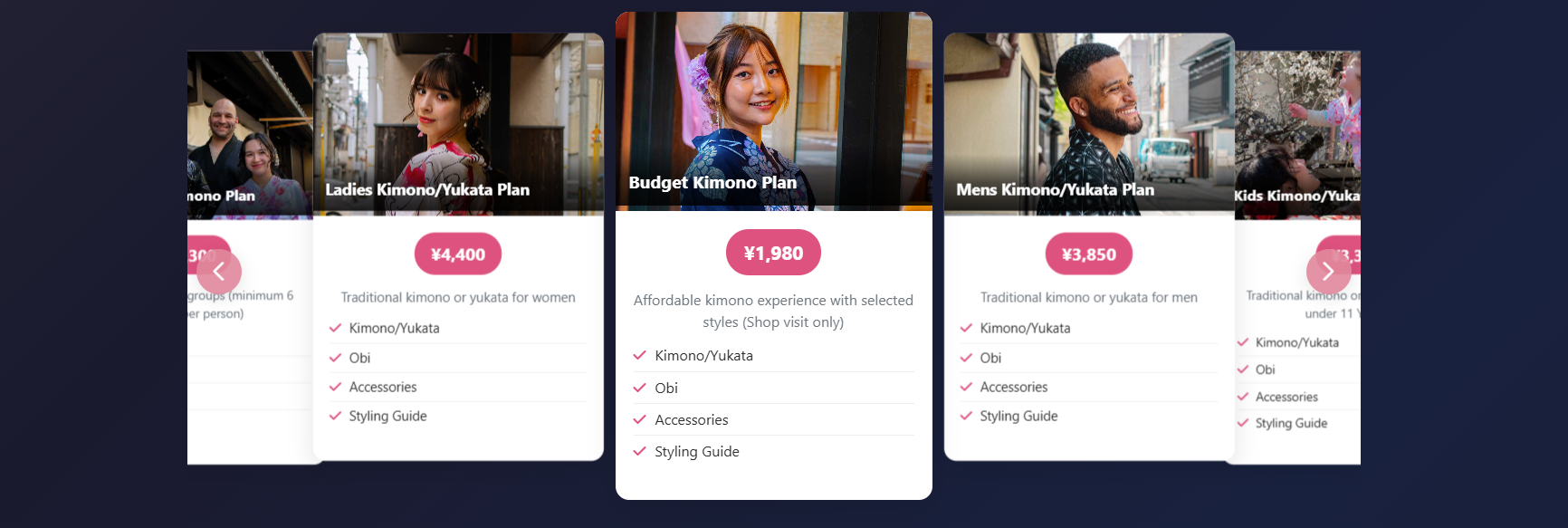
At Kimono no Obebe's plans page, the complete breakdown of what each plan includes is listed clearly — kimono, obi, accessories, hair styling, and the price for the photography add-on. No surprises at checkout. No hidden seasonal surcharge in April or November. The price is the same year-round.
When comparing shops, ask specifically: is hair styling included? Are accessories — obi, sandals, tabi socks — included in the base price or added separately? Is there a seasonal surcharge during cherry blossom or autumn foliage period? These three questions will tell you almost everything you need to know about the true cost of any rental.
Tip 5: Book the Photography Session at the Same Time as the Rental
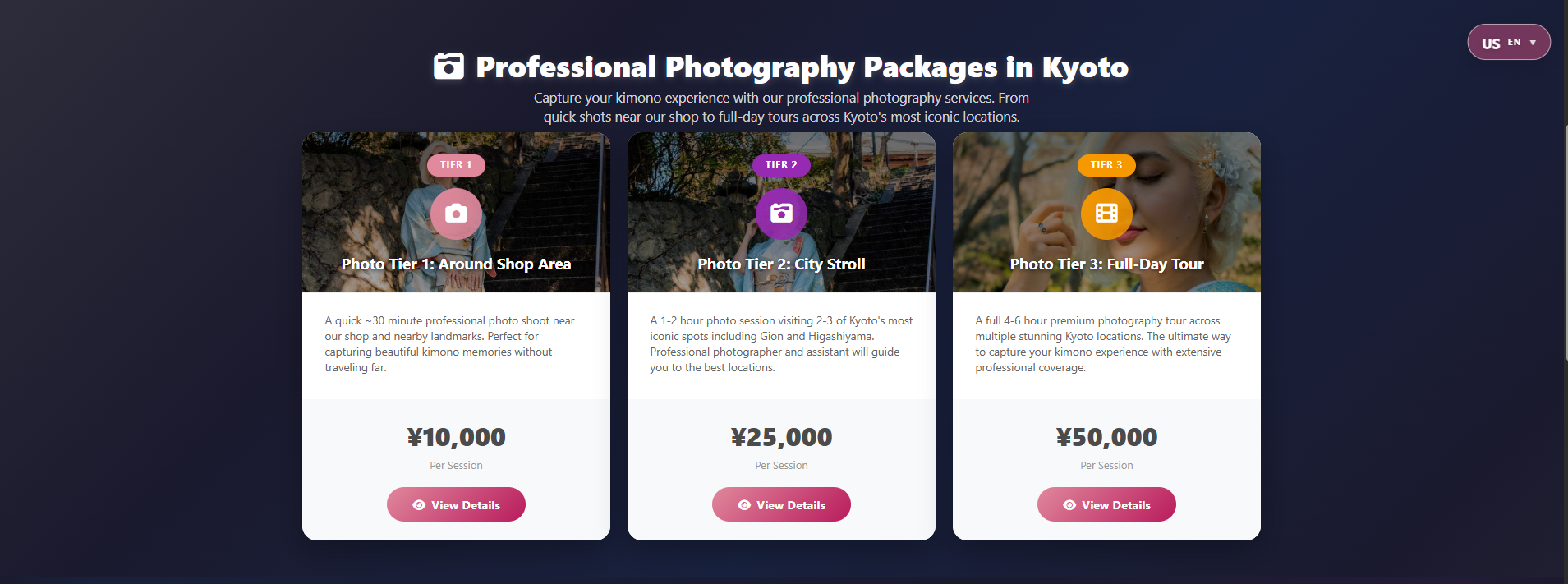
If you are considering the photography add-on — sessions start from 10,000 yen at Kimono no Obebe — book it at the same time as the rental, not as an afterthought on the day.
Booking both together allows the shop to coordinate the photographer's availability with your dressing slot, plan the routing through Gion and the surrounding area in advance, and ensure the timing works for the light conditions you want. A photographer who knows you are aiming for the Shirakawa Canal at 10am in early November will position you accordingly. One who is added at the last minute is working with less information.
Photographs from the guest gallery at kimononoobebe.love/our_guests.php show what coordinated photography looks like across seasons and plan levels. Browse these before you book to get a realistic sense of what is possible.
Tip 6: Prepare the Right Things to Wear Underneath
This one sounds minor and is not. What you wear to the shop on the day affects how quickly and cleanly the dressing process goes.
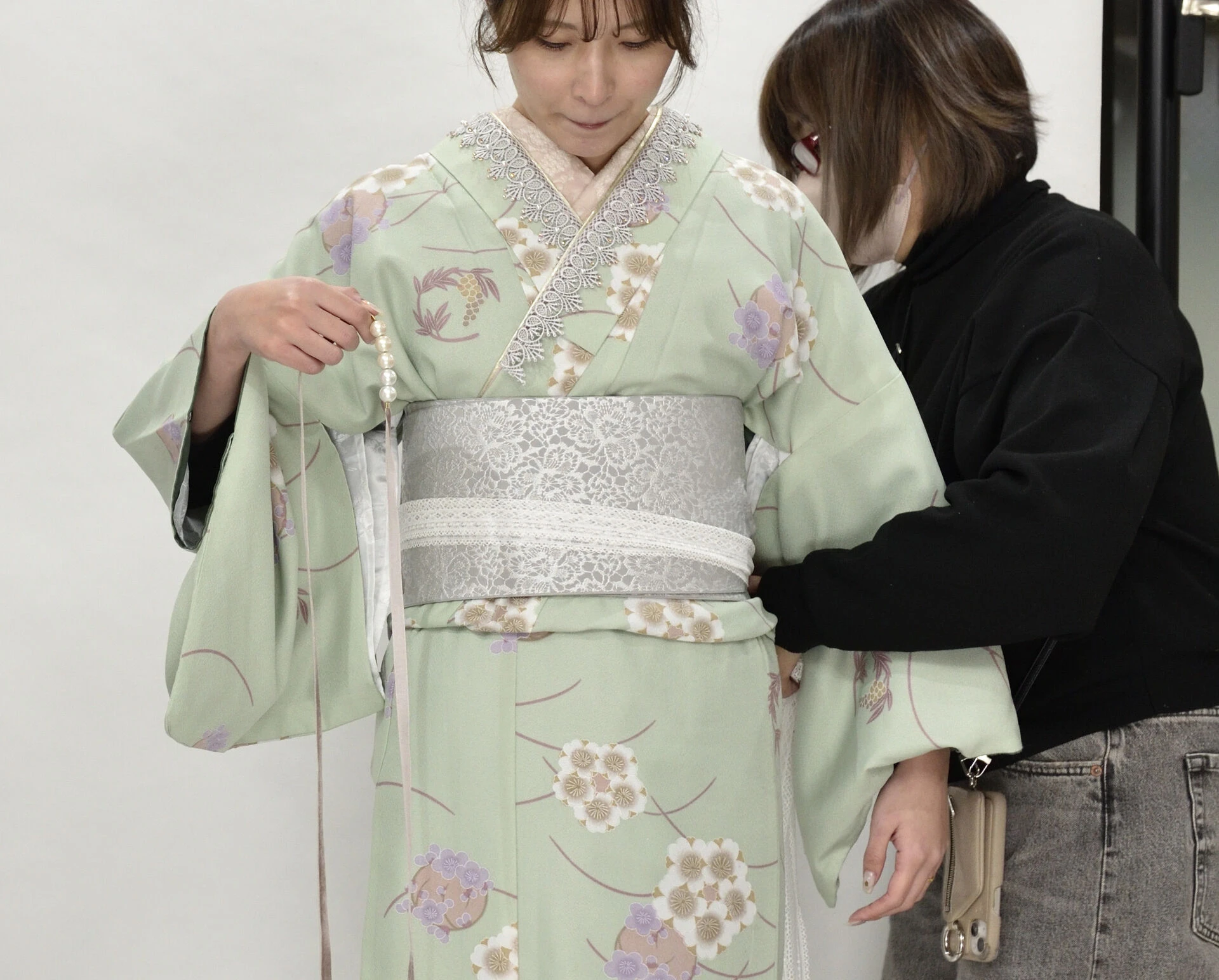
Wear a thin V-neck or low-cut top underneath — something that will not show at the collar or bunch under the kimono. Avoid thick sweaters, wide collars, or anything with significant bulk. For trousers, anything thin and close-fitting works — the kimono covers everything from the waist down.
In cold weather, a thin thermal undershirt is completely fine. The staff works around it. Kyoto winters are genuinely cold and no one expects you to freeze for the aesthetic. Just keep it thin so the obi can be tied properly without fighting extra bulk.
Bring shoes you can slip in and out of easily. You will be changing into zori sandals at the shop and back into your regular shoes when you return. Simple slip-ons or low trainers make this faster for everyone.
Tip 7: Build Buffer Time Into Your Schedule
The dressing process takes 20 to 30 minutes for a standard rental, slightly longer for a furisode or a plan that includes makeup. Add a few minutes for choosing between options, a few more for any adjustments, and you are looking at approximately 30 to 40 minutes from arrival to walking out the door.
Do not schedule anything immediately after the shop that has a hard start time. Give yourself the full getting-dressed window plus a few minutes of breathing room. Arriving dressed in Gion at 10:10am rather than exactly 10am is not a problem. Arriving at 10:30am when you had told someone you would meet them at the Shirakawa Canal at 10:15am is.
The same principle applies at the end of the day. Return time at most shops is around 6pm. Build your afternoon so you have a natural return point rather than having to cut short something you were enjoying to make it back in time.
Tip 8: Follow Up If You Have Specific Requests
Color preference, a specific style you saw in a photo, a size concern, a question about whether a particular obi style is available for the furisode plan — these are all questions worth asking before the day, not during it.
The team at Kimono no Obebe is reachable through the contact page here and the English-speaking staff can address specific questions clearly. Following up in advance means the shop can prepare options for you rather than presenting everything fresh on the day.
For ongoing updates, recent guest photos, and a real sense of the seasonal experience, @kyoto_kimonorental_noobebe on Instagram is worth following before your visit. The about page here gives you more background on the shop if you want it.
A well-booked kimono rental day in Kyoto is a completely different experience from a last-minute one. The photos are better. The outfit is better. The day flows without friction. Eight tips, all actionable, none of them complicated. Do them and the day takes care of itself.