You Are Here for the Temples. The Kimono Day Needs to Work Around That.
A lot of Kyoto itineraries put temple visits and kimono rental in two separate boxes. Temple day on Tuesday, kimono day on Wednesday. Different areas, different logistics, different experiences.
That is one way to do it. But it misses what happens when you combine them.
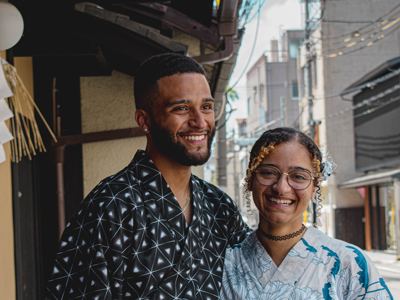
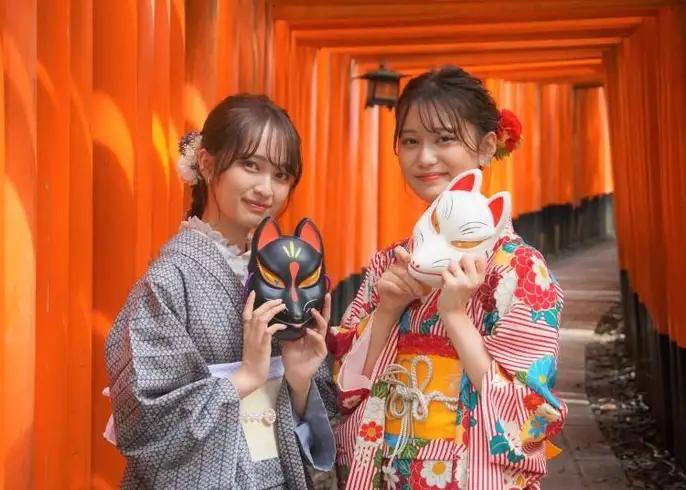
Visiting Kyoto's temples and shrines in a properly fitted kimono — walking the stone-paved approach to Yasaka Shrine, standing at the entrance to Kennin-ji, sitting in the moss garden at a quiet sub-temple off the main tourist path — is a qualitatively different experience from the same visit in jeans and trainers. The garment connects you to the context in a way that Western clothes simply do not. You are not a tourist passing through. You are dressed for the place you are in.
This post is for the traveler who wants both — the temple visits and the kimono — and wants to build a day that genuinely delivers on both without compromising either. By the end you will know which temples are walkable from a rental shop near Shijo Station, what to think about when combining kimono rental with temple visits, what Kimono no Obebe offers, and how each season transforms the temple experience specifically.
Which Temples Are Actually Walkable from Shijo Karasuma in a Kimono?
This is the practical core of the post, so let's be specific.
Kimono no Obebe is a 2-minute walk from Shijo Station, on the edge of the Gion district. From there, several of Kyoto's most significant temples and shrines are reachable on foot — without transit, without changing sandals, without any of the logistical friction that comes from crossing the city while dressed.
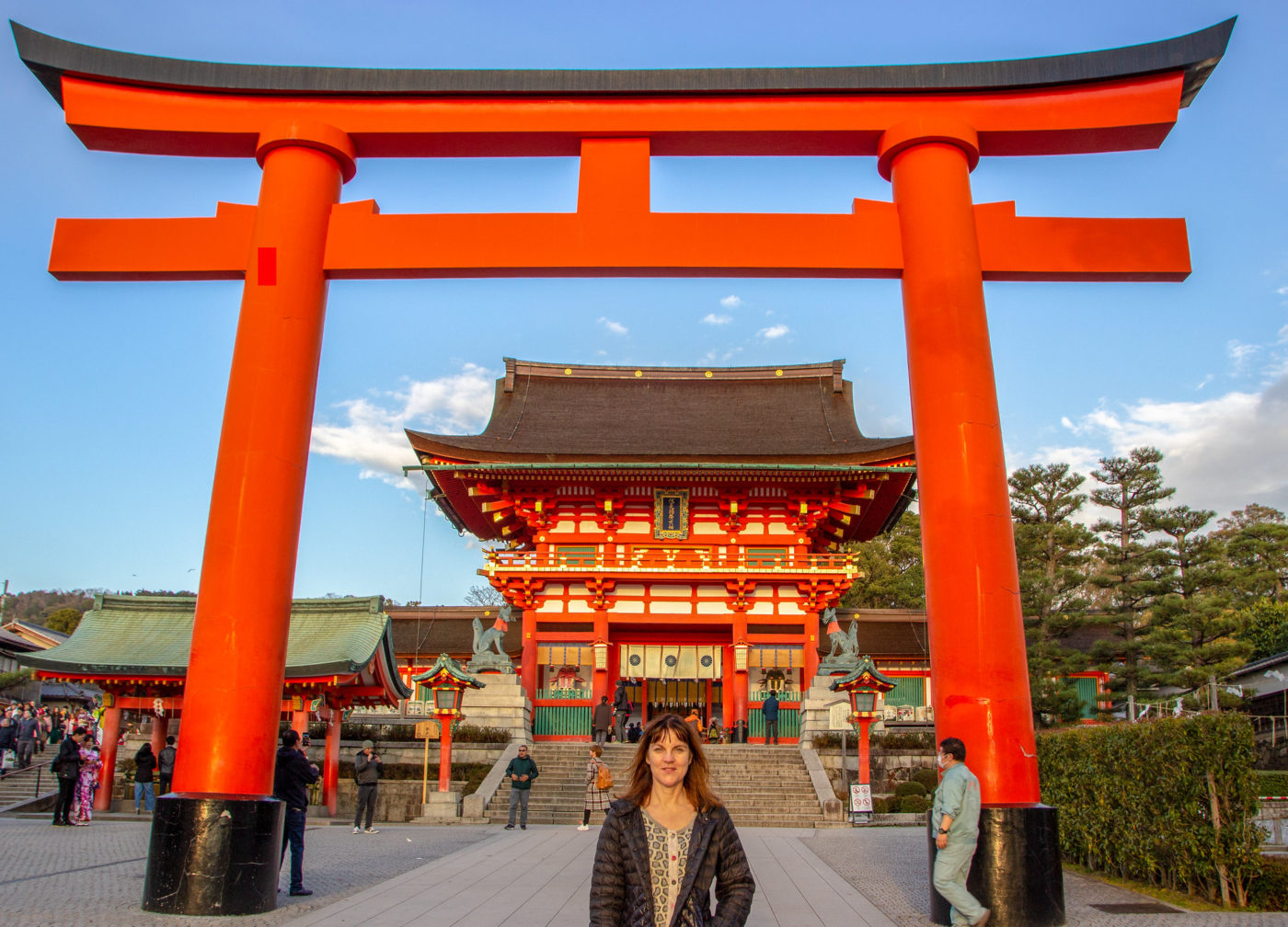
Yasaka Shrine — 15 minutes east along Shijo-dori. One of Kyoto's most important Shinto shrines, with a large vermilion gate at the western entrance and an expansive inner courtyard. The stone approach along Shijo Street in a kimono is one of the most specific Kyoto experiences available. The shrine is free to enter and open at all hours. This is the first stop on most temple-focused kimono days from Shijo.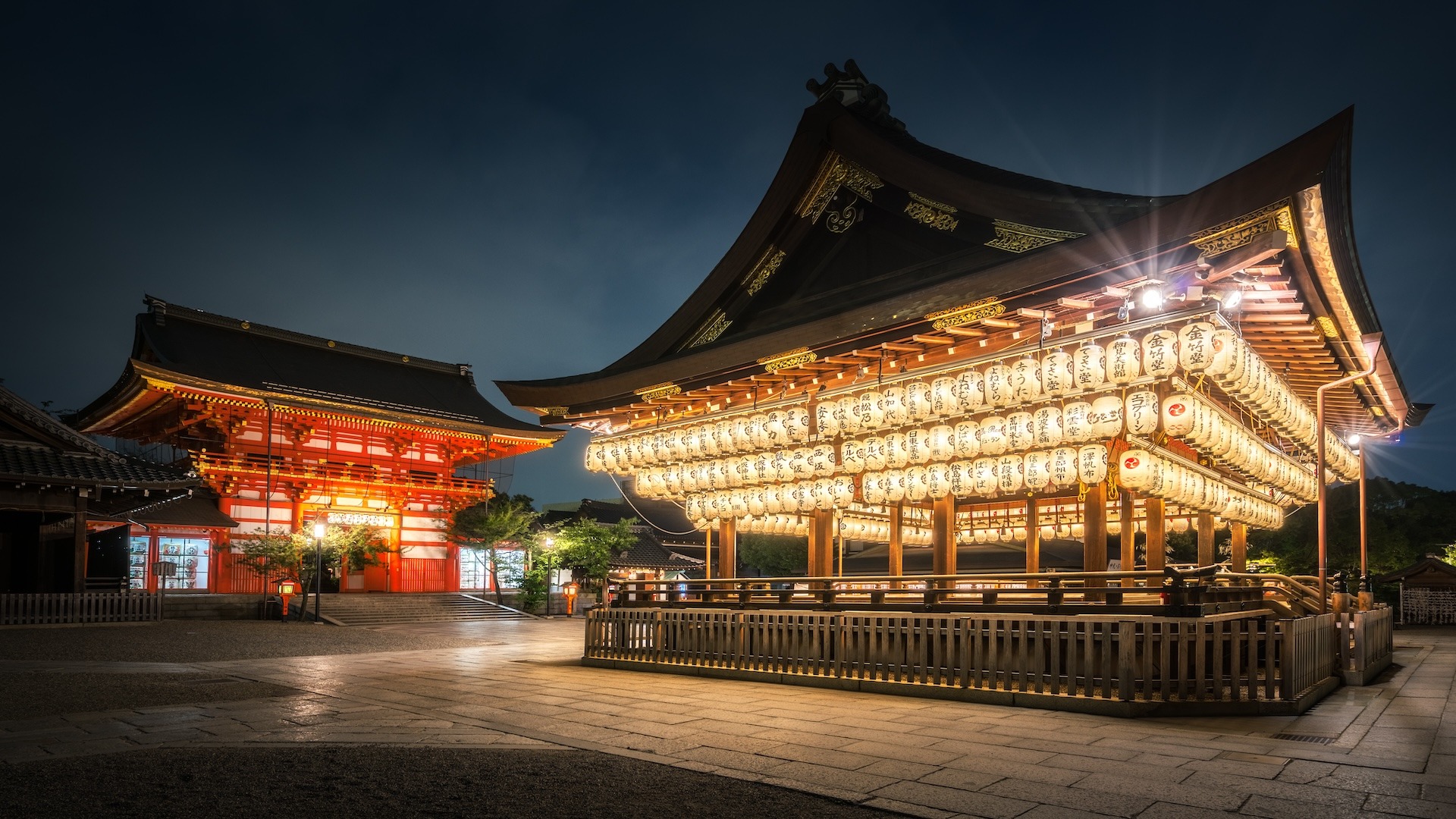
Kennin-ji — about 15 minutes on foot, just south of Hanamikoji in Gion. Kyoto's oldest Zen temple, founded in 1202. Less visited than the major tourist temples, which means you can walk the garden and the tatami corridors in relative quiet. The famous twin-dragon ceiling painting in the main hall is one of the more arresting things in the city. Wearing a kimono inside a functioning Zen temple, in a space that has looked roughly the same for eight centuries, is the kind of combination that is hard to articulate but immediately felt.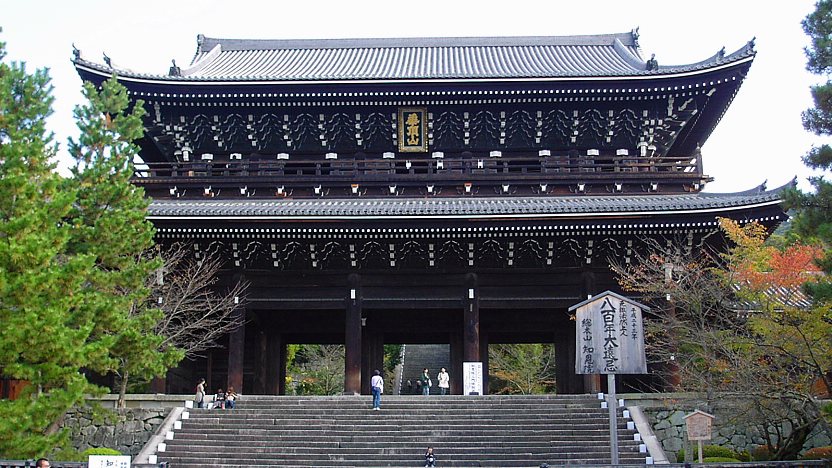
Chion-in — about 25 minutes east, just north of Maruyama Park. One of the largest temple complexes in Japan — the main gate (Sanmon) is the largest wooden gate in the country. The approach on foot from Gion in a kimono is a serious uphill walk, but the scale of the complex justifies it. Worth planning for if you have a full day and reasonably comfortable sandals.
Shoren-in — about 20 minutes northeast of the shop, near Chion-in. Quieter than most of the major Higashiyama temples, known for its enormous camphor trees at the entrance and its garden. Less photographed, more atmospheric. A good choice for travelers who want to avoid peak tourist density while still being somewhere genuinely beautiful.
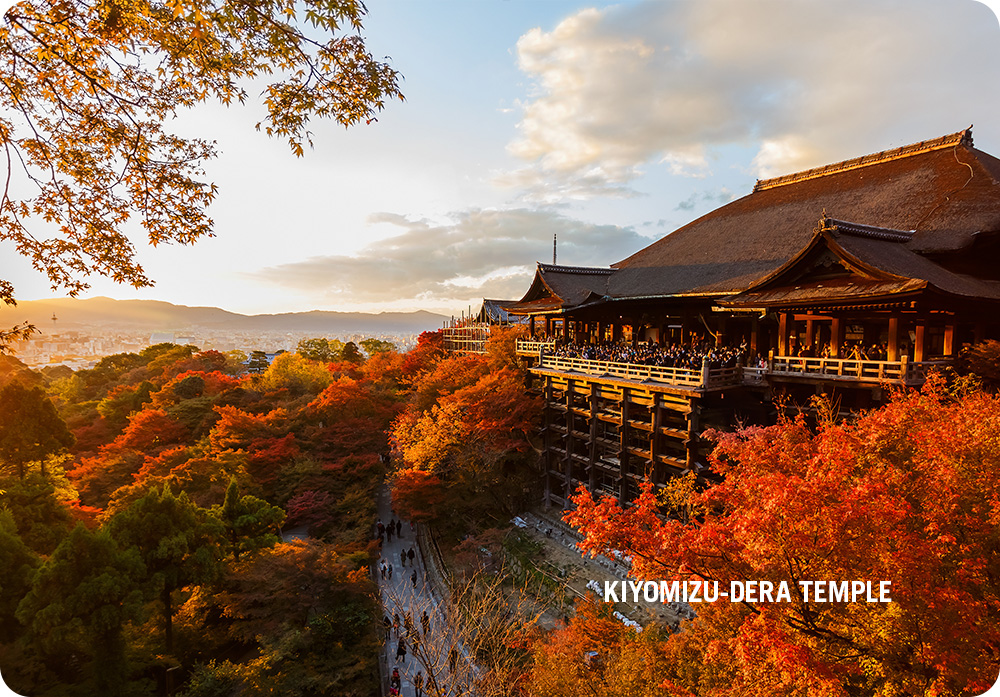
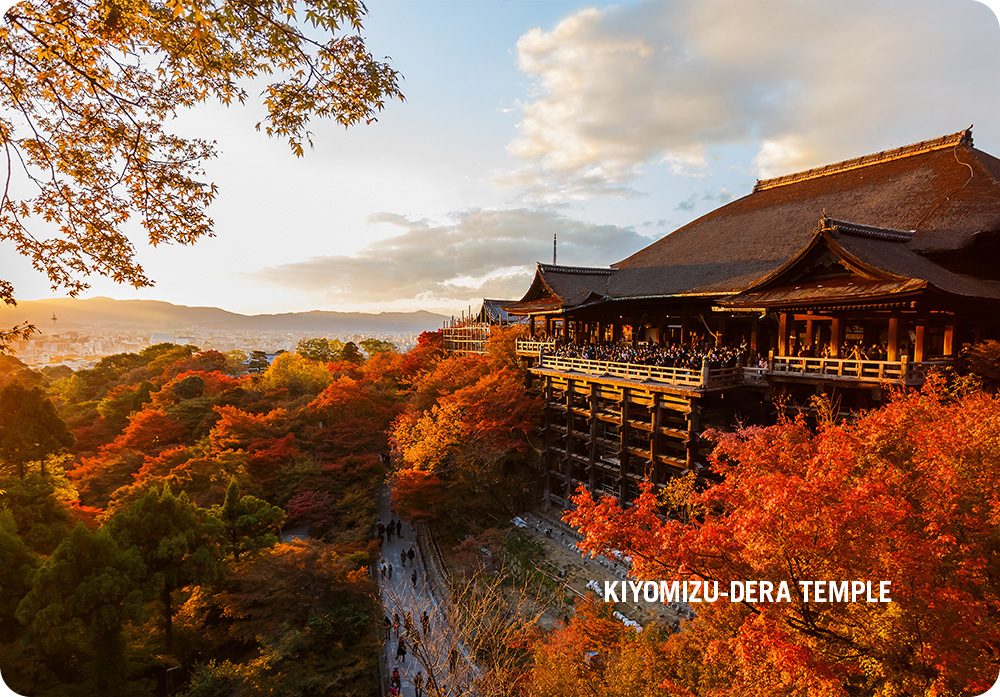
Ninenzaka and Sannenzaka toward Kiyomizudera — the stone-paved pedestrian streets leading up to Kiyomizudera are about 25 to 30 minutes from the shop on foot. The climb is manageable in sandals if you take it slowly. Kiyomizudera itself, with its famous wooden stage extending over the hillside, is one of the most photographed spots in Japan. The approach through Ninenzaka and Sannenzaka is arguably more enjoyable than the temple itself — traditional wooden shops lining stone-paved streets, cherry trees or maple trees overhead depending on season.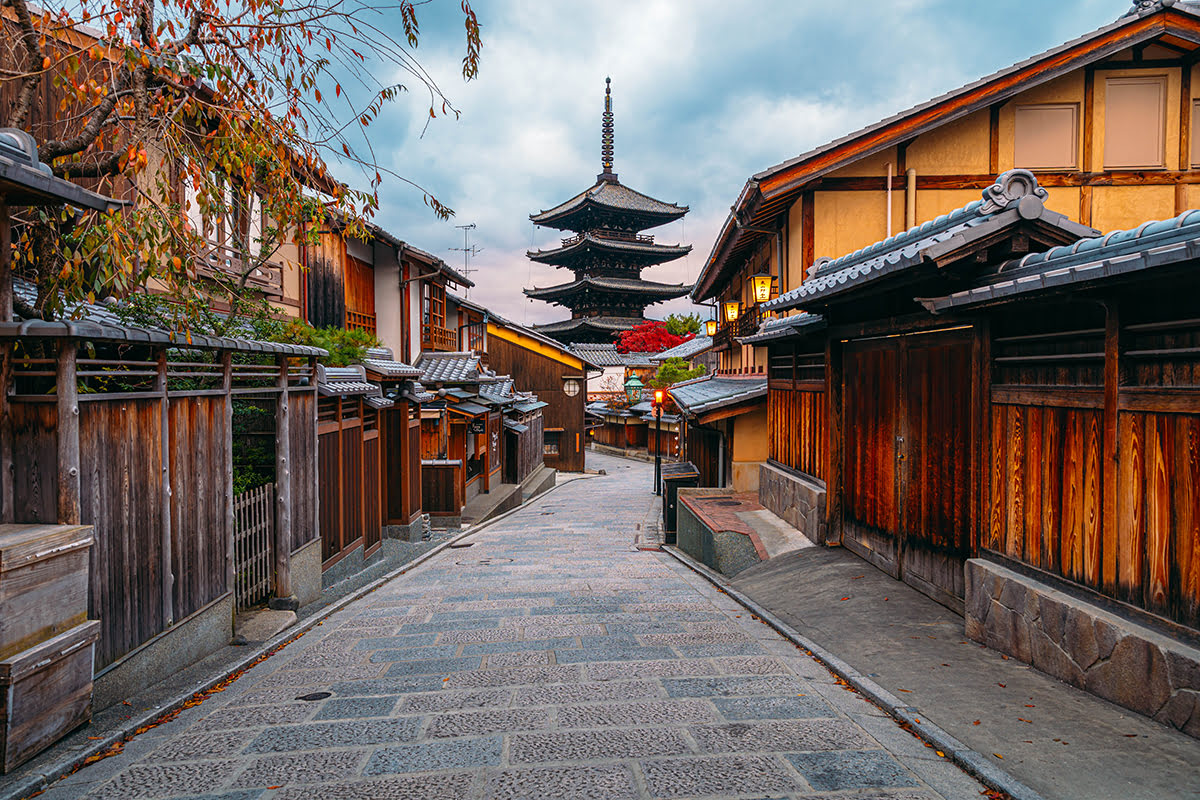
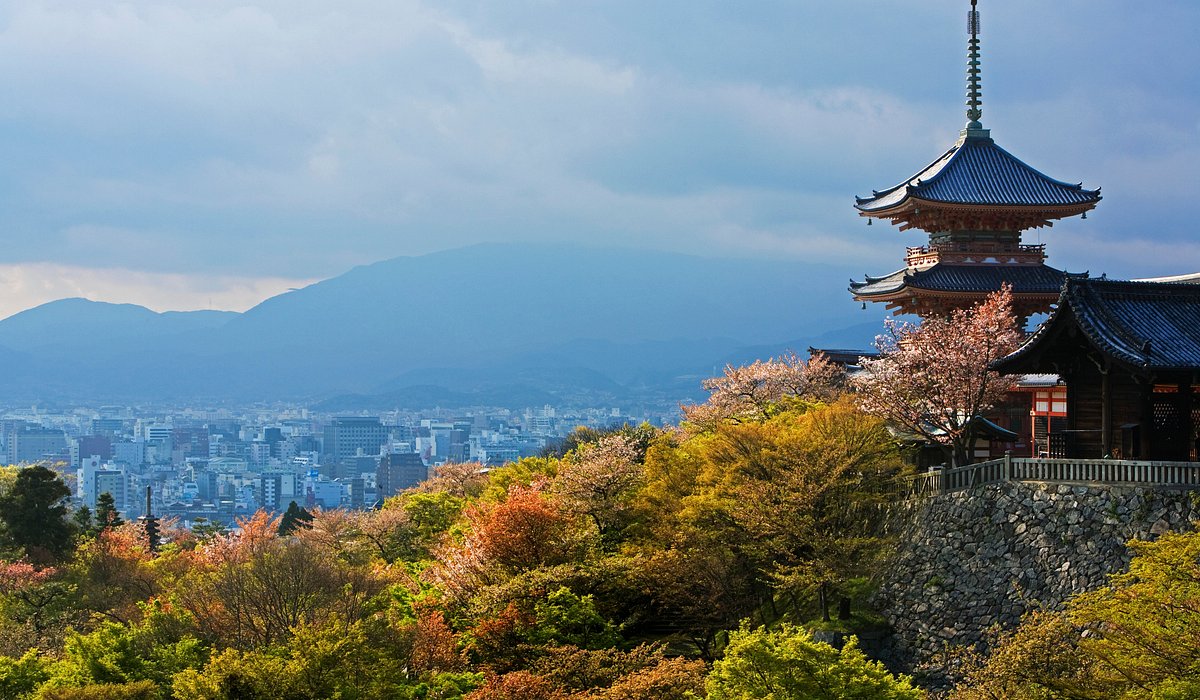
Maruyama Park and Yasaka Pagoda area — connecting several of these sites, the walking route through Maruyama Park east of Yasaka Shrine and along the Higashiyama path connects Gion to the broader temple district of Higashiyama. This route is one of the best kimono walking routes in Kyoto — traditional architecture on both sides, stone paving, mountain backdrop.
What to Think About When Combining Kimono and Temple Visits
A few practical considerations that apply specifically to temple visits in kimono, since the combination has its own logistics.
Footwear matters more than usual. The sandals (zori) provided with your kimono are comfortable for flat walking but less ideal for steep climbs or uneven stone surfaces. Most of the temple approaches in Higashiyama involve stone steps and inclines. Walk slowly and deliberately — the kimono pace is actually the right pace for these environments.
Some areas require removing shoes. A few temple interiors and garden viewing areas ask visitors to remove their footwear. This is straightforward with zori — they slip on and off easily. Your tabi socks remain on your feet and are perfectly appropriate for tatami and polished wooden floors.
Photography inside temple halls. Many temple interiors prohibit photography. Respect this — your kimono will look beautiful in the gardens and on the approaches without needing interior shots. The outdoor spaces are almost always where the best photos happen anyway.
Timing. Early morning is the best time for temple visits in a kimono. The light is better, the crowds are smaller, and the experience of walking through a temple garden or down a stone-paved approach without dozens of other tourists around is significantly different from a midday visit. Getting dressed at 9am and heading to Yasaka Shrine before the tour groups arrive is a decision most people are glad they made.
What the Rental at Kimono no Obebe Includes
At Kimono no Obebe, the rental covers the full outfit — kimono, obi, accessories, tabi socks, and zori sandals — with staff handling the dressing. Hair styling is included, and makeup is available. English-speaking staff can answer questions about the dressing process and, if you want them, provide some context on where to go and what to expect at the temples you are planning to visit.
Plans start from 1,900 yen for a budget option and go up to 15,000 yen for the furisode. Full pricing on the plans page here. No seasonal surcharge in spring or autumn — the price is the same regardless of when you visit.
Photography sessions are available from 10,000 yen. For a temple-focused day specifically, a photographer who knows the approaches to Yasaka Shrine and the quiet sub-temple gardens in Higashiyama can produce images that a solo phone camera cannot. See the guest gallery here for results across seasons and locations.
A Realistic Temple Kimono Day — What It Looks Like
Here is a fictional but realistic picture of how a temple-focused kimono day from Shijo actually unfolds when it is planned properly.
Imagine a couple visiting Kyoto in late November specifically for the autumn foliage. They have been to Tokyo and Osaka already and they want to slow down in Kyoto and do one day properly. They book a 9am slot at Kimono no Obebe. By 9:40am they are dressed — she is in a deep burgundy kimono with a gold obi, he is in a charcoal haori set. They walk east to Yasaka Shrine first while the morning light is still low and warm. The stone torii gate at the entrance, the red maple trees inside the precinct, the incense from the main hall — the combination is extraordinary. They walk south to Kennin-ji, arriving before it gets busy. They sit in the garden for about 20 minutes without rushing. Then north through the Gion backstreets to Hanamikoji. By 1pm they are having lunch in a small restaurant off the main tourist path. In the afternoon they walk the Higashiyama route toward Chion-in, the maple trees at their peak. They return to the shop at 5:30pm. The autumn foliage and the kimono, in the same frame, in good light, photographed by someone who knew the locations — the results look like the trip they had been imagining.
(This is a fictional example — not a real account — but it reflects what a well-planned temple kimono day is designed to produce.)
How Each Season Changes the Temple Experience
Kyoto's temples are worth visiting in every season — but each season produces a completely different atmosphere and a completely different set of photos.
Spring (March-May) is the most famous season for a reason. Cherry trees inside temple precincts — particularly around Maruyama Park, the approach to Chion-in, and the sub-temples of Higashiyama — bloom against stone walls and wooden gates in a way that photographs unlike anything else in the world. The combination of sakura, traditional architecture, and a properly fitted kimono is the quintessential Kyoto image. Book your slot well in advance for April — this is the most in-demand period for kimono rental at any shop near Gion.
Summer (June-August) brings intense green to the temple gardens — deep moss, full-canopy trees, the cool interior of shaded temple corridors. The heat makes lighter yukata the more comfortable choice for a full day of walking, and the Gion Matsuri in July adds a festival context to the whole area. Early morning temple visits in summer, before the heat builds, are particularly good — the light through the trees in a temple garden at 8am in July is remarkable.
Autumn (October-November) is the season most experienced Kyoto visitors point to for temple visits specifically. The maple trees inside Kennin-ji's garden, along the Higashiyama walking path, and in the approaches to Chion-in and Shoren-in turn deep red and gold in November. The combination of traditional temple architecture, autumn foliage, and a well-dressed kimono produces images with a depth and color richness that spring photographs in pale pink tones cannot match. If you have any flexibility on timing, late October to mid-November for a temple-focused kimono day is the strongest choice in the calendar.
Winter (December-February) brings quiet to the temple district. The tourist volumes drop significantly after New Year, and walking the Higashiyama route in January with almost no one else around is an experience that busy season visitors never get. The stone approaches to temples in cold, clear winter light have a stillness and a visual clarity that crowded seasons obscure. Hatsumode — the first shrine visit of the New Year at Yasaka Shrine — draws a local crowd in traditional dress and is one of the most culturally resonant uses of a kimono day in Kyoto.
Getting Here and Booking
Kimono no Obebe is a 2-minute walk from Shijo Station on the Hankyu Kyoto Line or Keihan Main Line. Five minutes from Kyoto Station via the Karasuma subway line to Shijo. For questions about plans, availability, and photography sessions, reach the team through the contact page here.
For recent guest photos from temple visits and the surrounding Higashiyama area, @kyoto_kimonorental_noobebe on Instagram shows the range of locations and seasons. The about page here has more on the shop and what the full experience involves.
Kyoto's temples are extraordinary in any clothes. In a kimono, in the right season, with enough time to walk slowly and actually look — they are something else entirely. That combination is worth planning for deliberately.