Location Is the Decision Most People Get Wrong When Renting a Kimono in Kyoto.
Here's a scenario that plays out constantly in Kyoto — and maybe you've already started planning something similar.
You're visiting for three days. You want to do a kimono rental, walk through Gion, grab matcha somewhere atmospheric, maybe get some photos near a shrine. You find a rental shop online, it looks fine, you book it. Then you arrive in Kyoto and realize the shop is a 25-minute walk from Gion. Or it requires a train connection. You spend 40 minutes of your kimono day just getting to and from the shop — in the outfit, in the sandals, on public transport — before you've even started.
That's a frustrating way to use four hours.
This post is specifically about why location matters so much when you're choosing a kimono rental shop in Kyoto — and what makes the Shijo Station area in particular such a smart base for the experience. By the end, you'll know exactly which landmarks are walkable from here, what each season looks like in this neighborhood, and why Kimono no Obebe — a 2-minute walk from Shijo Station — is set up to give you the most usable kimono day possible.
Why the Shijo Station Area Works So Well
Shijo Station sits at the intersection of two major train lines — the Hankyu Kyoto Line and the Keihan Main Line — which means it's one of the easiest places in Kyoto to get to from almost anywhere. From Kyoto Station, it's five minutes on the Karasuma subway line. From Osaka, the Hankyu limited express brings you directly here in about 45 minutes.
But the real advantage isn't getting here. It's what's already here when you arrive.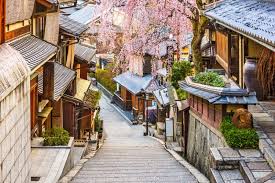
The Shijo-Karasuma area sits right at the western edge of Gion — Kyoto's most famous geisha district and one of the most photographed neighborhoods in Japan. The moment you step outside in a kimono, you're already in it. No transit, no map-checking in sandals. You're just there.
That's the location advantage in one sentence: you get dressed and Kyoto starts immediately.
What's Actually Walkable From Shijo Station in a Kimono
This is the practical part — the stuff that actually shapes how your day goes.
Gion district (Hanamikoji Street) 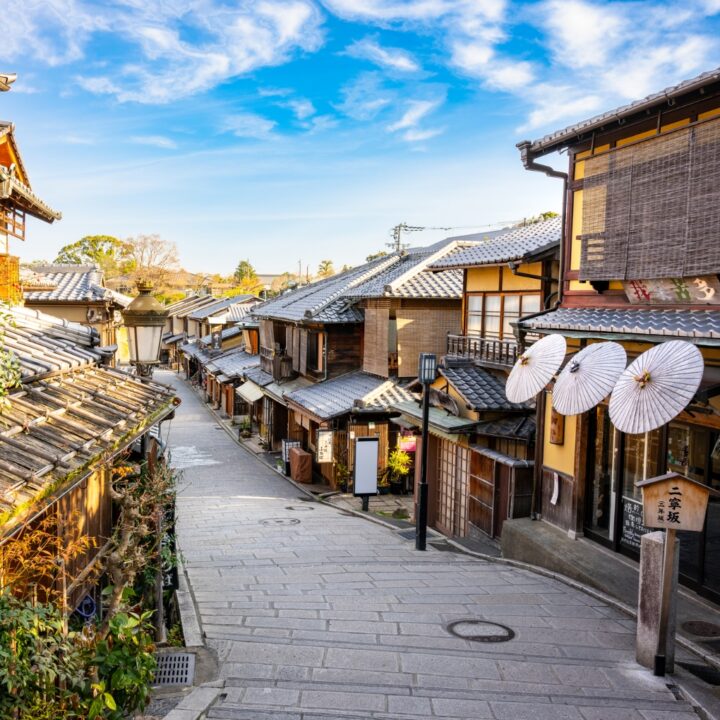
about 10 minutes on foot heading east along Shijo-dori. This is the lane with the traditional machiya townhouses, red paper lanterns, and the atmospheric backstreets that show up in every Kyoto photo guide. It's the most iconic backdrop for kimono photos in the city and it's right here.
Pontocho alley
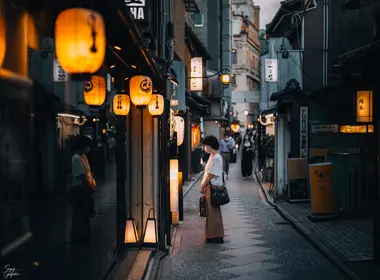
about 5 minutes north, running parallel to the Kamo River. A narrow covered lane lined with restaurants and old Kyoto architecture. Beautiful in the evening, but worth walking through any time of day in a kimono. The contrast of traditional clothing against that old wooden architecture photographs exceptionally well.
Nishiki Market 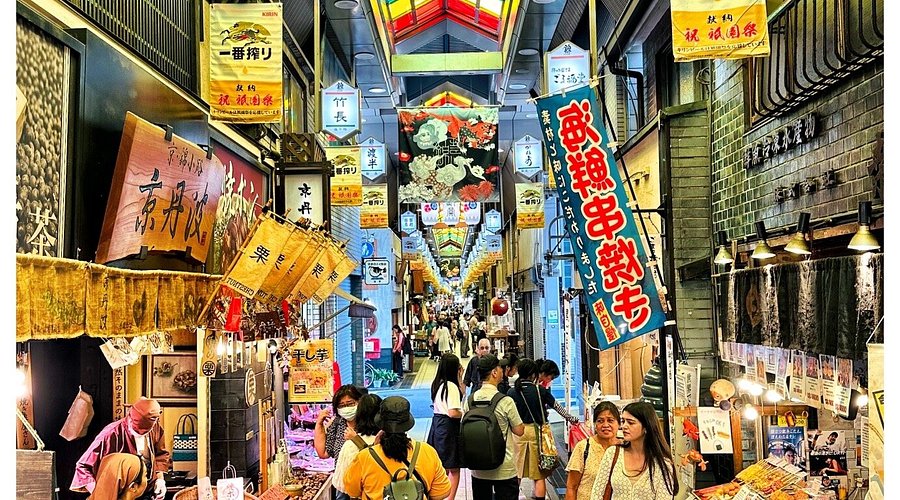
about 5 minutes northwest. Kyoto's covered food market, sometimes called Kyoto's Kitchen. Long, narrow, full of local food stalls, pickles, tofu, fresh mochi, skewers of everything. Walking Nishiki in a kimono is one of those experiences that feels genuinely local rather than touristy.
Yasaka Shrine —
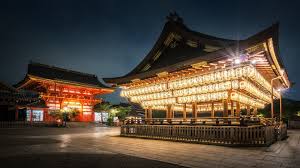
about 15 minutes east at the end of Shijo-dori. One of Kyoto's most important shrines and the center of the Gion Matsuri festival in July. The stone torii gate at the entrance, with the shrine complex behind it, is a classic kimono photo location that never gets old.
Shirakawa Canal 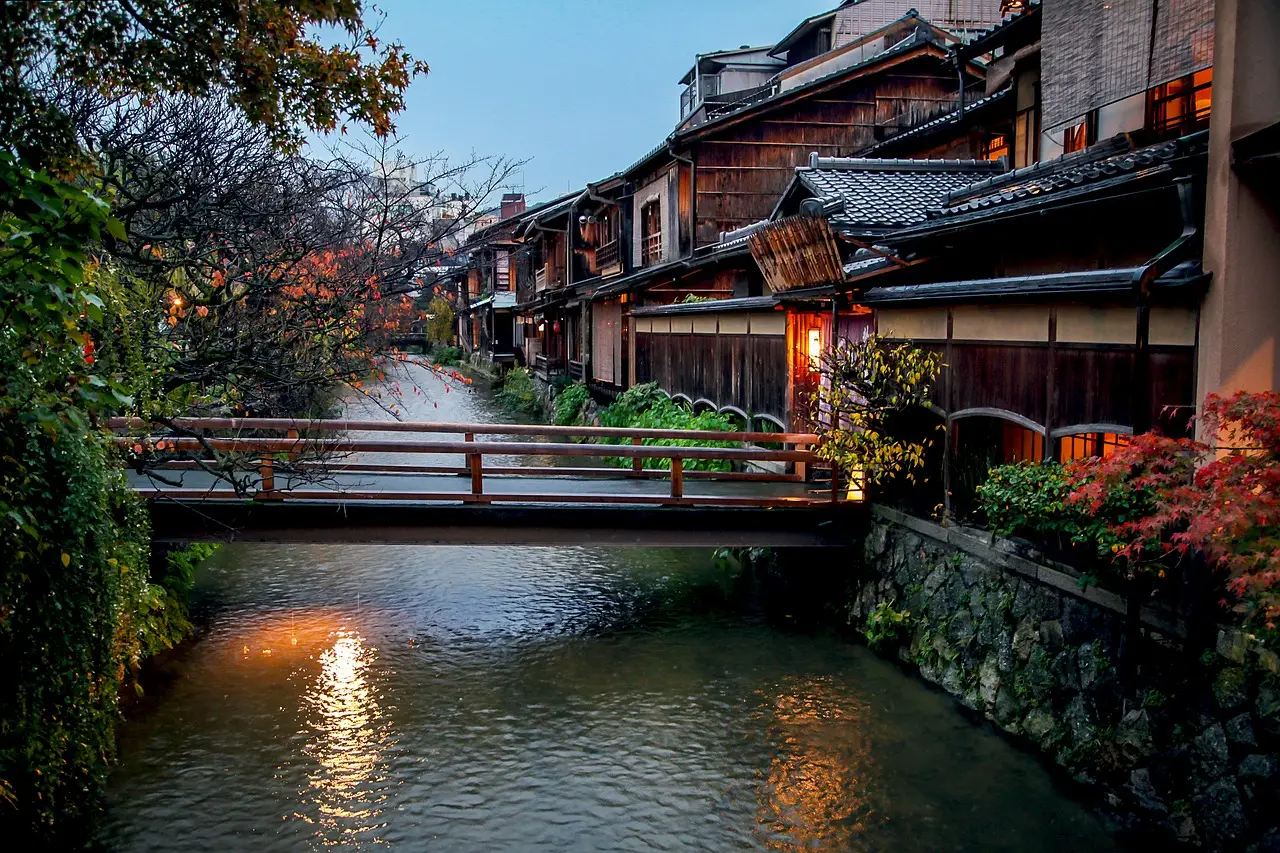
about 12 minutes east, just north of Gion. A small canal lined with weeping cherry trees in spring and lantern-lit in the evenings. One of the quieter, more beautiful spots in the neighborhood — less crowded than Hanamikoji, more intimate for photos.
Kamo River 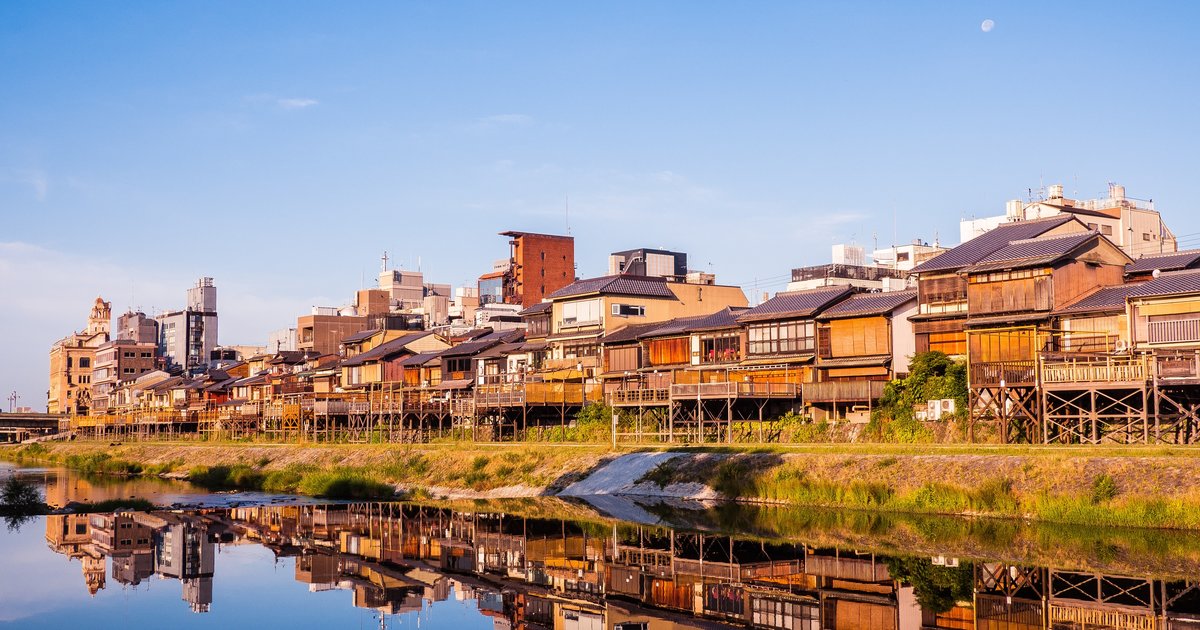
about 5 minutes west. The wide river that runs through central Kyoto, with long flat banks perfect for walking. In cherry blossom season, the banks are lined with people under blooming trees. In summer, the riverside restaurant platforms (yuka dining) extend out over the water. Any time of year, it's a good walk.
A Day Mapped Out — What It Actually Looks Like
Here's a fictional but realistic picture of how a kimono day in this neighborhood can go.
Imagine two friends visiting Kyoto in late November. They've booked a 10am slot at Kimono no Obebe. By 10:30 they're dressed — one in a deep burgundy furisode, one in dark teal with a cream obi — and they walk directly into Gion. They spend an hour in the backstreets of Hanamikoji, stop for warabi mochi at a small sweet shop, wander through the Shirakawa area where the maple trees are still holding their red leaves. They loop back through Pontocho before the lunch crowds fill it up. By 2pm they're at Nishiki Market trying yuba (tofu skin) on a skewer. They're back at the shop by 5:30, changed, and heading to a nearby restaurant for dinner.
(This is a fictional example — not a real account — but it's the kind of day the location makes genuinely possible.)
The point is: none of that required a taxi or a train. They just walked. That's the location advantage made concrete.
How Each Season Changes the Neighborhood
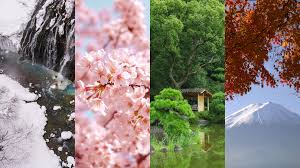
The Shijo-Gion area is one of those places where the season completely changes what you're experiencing — not just the weather, but the atmosphere, the crowds, and what makes a good photo.
Spring (March–May) turns the Shirakawa Canal and Maruyama Park into something almost unreal. The weeping cherry trees reflect in the canal water. The whole neighborhood smells different. This is peak season for a reason — and it's peak season for kimono rental too. If you're coming in late March or April, book your slot at Kimono no Obebe before you book your flights. It fills up.
Summer (June–August) brings heat and the Gion Matsuri — one of Japan's largest and oldest festivals, running through the entire month of July. The neighborhood transforms completely. Decorated floats called yamaboko fill the streets, the area around Yasaka Shrine becomes electric, and everyone — locals included — wears yukata. Lighter kimono options in summer make the heat manageable, and the festival context makes the whole experience feel genuinely participatory rather than touristy.
Autumn (October–November) is arguably the best season for photography. The maple trees in the Gion backstreets and along the Shirakawa Canal go red and gold in November. The light in autumn has a warmth that spring doesn't. The crowds are present but slightly smaller than spring. A lot of photographers who shoot Kyoto regularly consider November their favorite month — and wearing a deep-colored kimono in that light, against that backdrop, is genuinely hard to beat.
Winter (December–February) is quiet in a way the other seasons aren't. The crowds thin out significantly after the New Year period. The streets near Gion in January have a calm that's hard to find in busier months. If you're visiting during the new year period itself, the shrine visit tradition (Hatsumode) at Yasaka Shrine draws people in kimono and traditional dress naturally — you're participating in something rather than performing for photos.
The Pricing Reality: No Surcharges for Peak Season
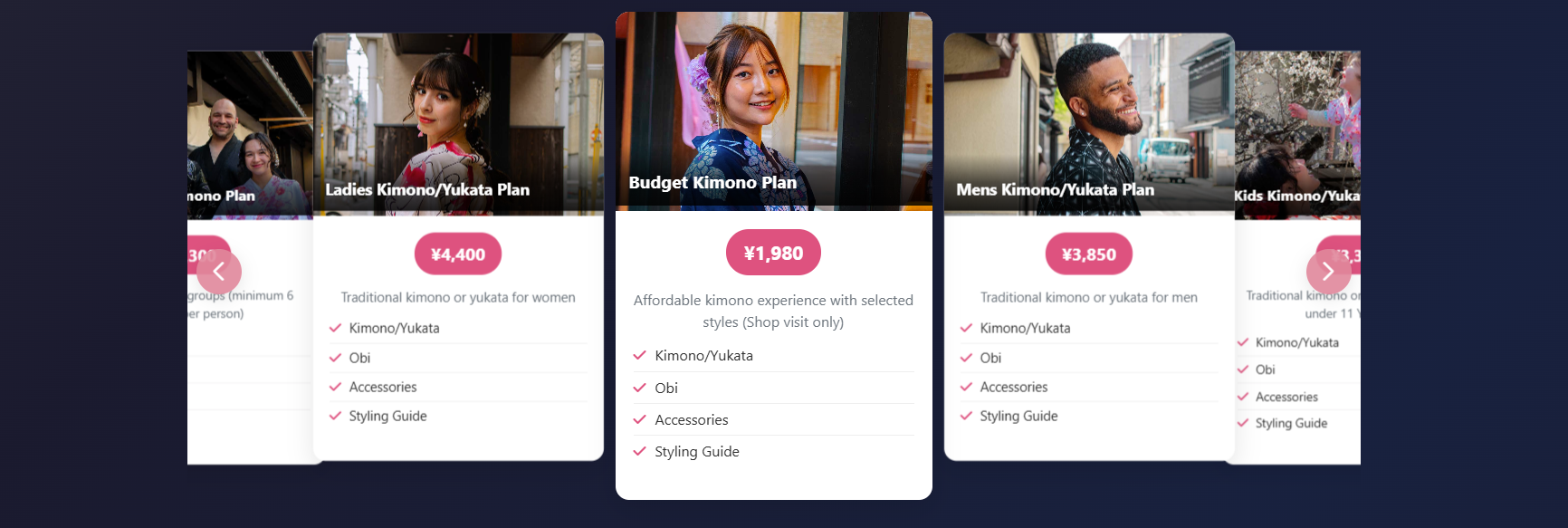
One practical note worth making: a lot of kimono rental shops in popular Kyoto areas charge more during spring cherry blossom season and autumn foliage. Seasonal demand, higher prices — it's understandable, but it adds up when you're already budgeting accommodation and transport for a Kyoto trip.
Kimono no Obebe keeps pricing flat year-round. Plans start from ¥1,900 and go up to ¥15,000 for the furisode option. No seasonal markup regardless of when you visit. The full breakdown is on the plans and pricing page here.
Hair styling and makeup are available as part of the experience, and professional photography sessions — the kind where an actual photographer takes you through the best spots in Gion — start from ¥10,000. See what past guests have looked like in the guest gallery here.
Getting Here Is the Easy Part
From Kyoto Station: Karasuma subway line to Shijo, five minutes. From Osaka (Umeda): Hankyu Kyoto Line limited express to Kyoto-Kawaramachi, then one stop west to Shijo-Karasuma, or walk. From anywhere in central Kyoto: Shijo is on two major lines, so you're almost certainly connecting through here anyway.
Once you're at the station, the shop is two minutes on foot. You arrive, you get dressed, you walk out into Gion. That's really how simple the logistics are.
Questions about availability or what plan makes sense for your trip? Reach the team through the contact page here. And for a real sense of the neighborhood and recent guest experiences, @kyoto_kimonorental_noobebe on Instagram is worth a look before you book.
In Kyoto, the right location doesn't just save you time. It changes what the day feels like. Pick a shop where you can step outside dressed and already be somewhere worth being.