You've Got One Day in Kyoto. Don't Waste It.
 You planned this trip for months. Flights, hotels, bullet trains — the whole thing. And now you're finally here, standing somewhere near Shijo Station, looking at your itinerary and thinking: Can I actually fit kimono rental into today?
Yes. You can. And it won't take as long as you think.
This post is for the traveler who wants the full Kyoto kimono experience — the photos, the streets, the whole thing — but doesn't want to spend three hours navigating a rental process in a city where they don't speak the language. By the end of this, you'll know exactly what to do, where to go, and what to expect when you walk into Kimono no Obebe, which is literally a 2-minute walk from Shijo Station.
Let's get into it.
Why Shijo Karasuma Is the Best Spot for Kimono Rental
Location in Kyoto matters more than people realize. The city isn't huge, but if your kimono shop is tucked 20 minutes away from the sightseeing areas, you're burning daylight — and a kimono — just getting there.
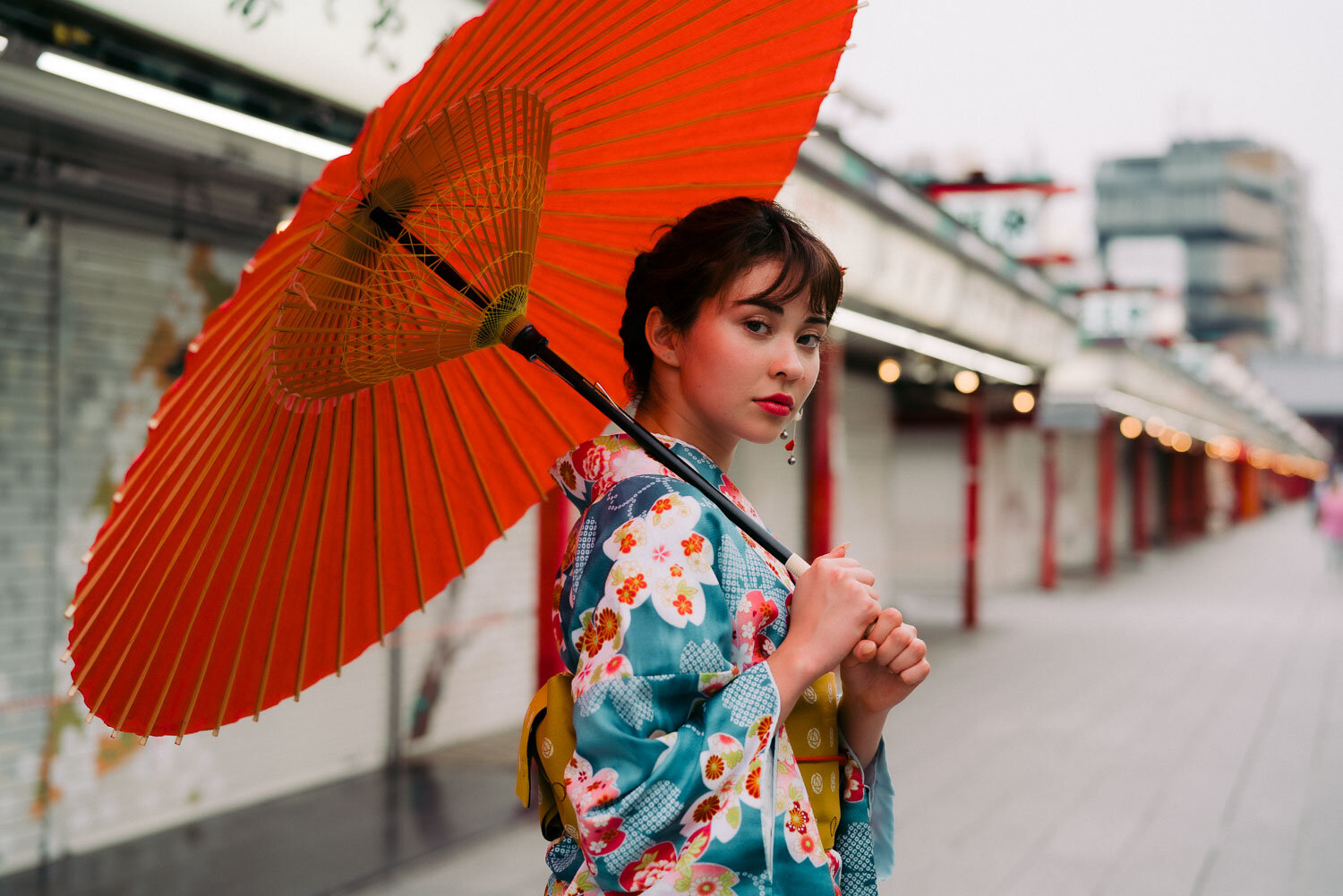
Shijo Karasuma puts you right at the center of everything. Step outside in your kimono and you've got Gion's lantern-lit alleys to the east, Pontocho's narrow food street to the north, and Nishiki Market — Kyoto's famous covered food market — just a short walk away. The backdrop basically sets itself up.
That's not an accident. That's just a really good location.
What Happens When You Walk Into Kimono no Obebe
Here's what the actual process looks like — no surprises.
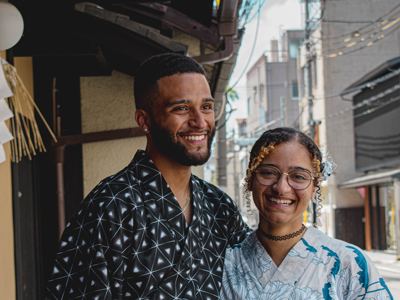
You walk in. There's English-speaking staff. (Yes, actual humans who speak English, not just a laminated translation card.) You look through the kimono options, pick your style and color, and the staff helps you get dressed — properly dressed, with the obi tied correctly and everything aligned the way it should be.
If you want hair styling, they do that too. Makeup? Also available. This isn't a bare-bones rental where you're handed a bag and pointed to a changing room. It's a full getting-ready experience that takes maybe 20–30 minutes, which is honestly faster than most people expect.
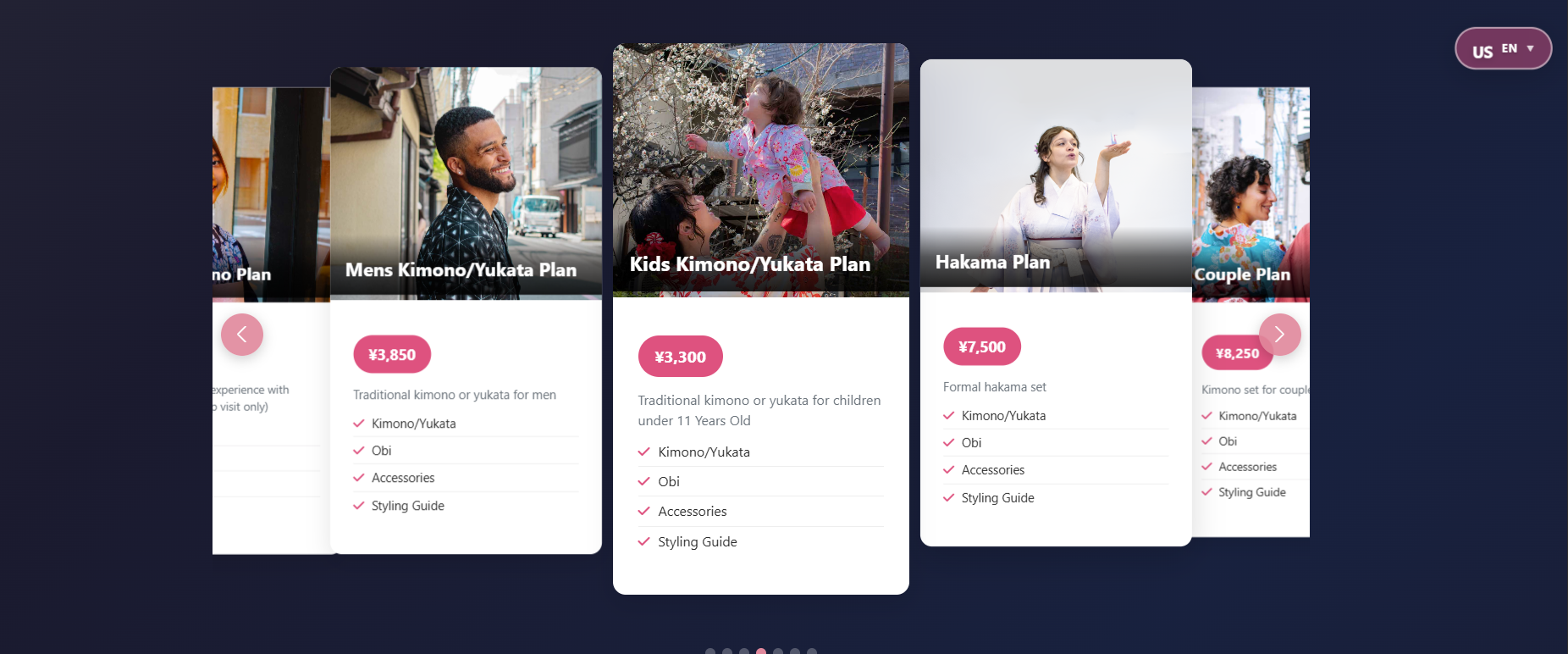
Pricing starts from ¥1,900 for a budget plan and goes up to ¥15,000 for a furisode — the long-sleeved formal style that photographs incredibly well. Check the full plans and pricing page before you go so you know what you're working with.
The Part Nobody Talks About: Seasonal Pricing
Kyoto in cherry blossom season (late March to early April) is one of the most beautiful places on earth. It's also when a lot of kimono shops quietly add a "peak season" surcharge to their prices.
At Kimono no Obebe, the pricing stays the same year-round. Spring, summer, autumn, winter — what's on the price list is what you pay. No seasonal markup, no fine print.
That matters whether you're visiting during sakura season or planning a quieter winter trip. You're not being charged more just because the timing is popular.
Each Season, a Completely Different Experience

One thing worth knowing: Kyoto in a kimono hits differently depending on when you visit. Here's a quick honest breakdown.
Spring (March–May) is peak season for good reason. Cherry blossoms lining the canal, soft pink light, the works. It's crowded — genuinely crowded — but the photos you'll get are hard to replicate anywhere else on earth. Book your rental in advance if you're coming during this window.
Summer (June–August) is hot, so lighter yukata options make more sense. July brings the Gion Matsuri festival, which is one of Japan's biggest and oldest festivals. Wearing a yukata or kimono during Gion Matsuri isn't just a tourist thing — it's what locals do. You'll blend right in.
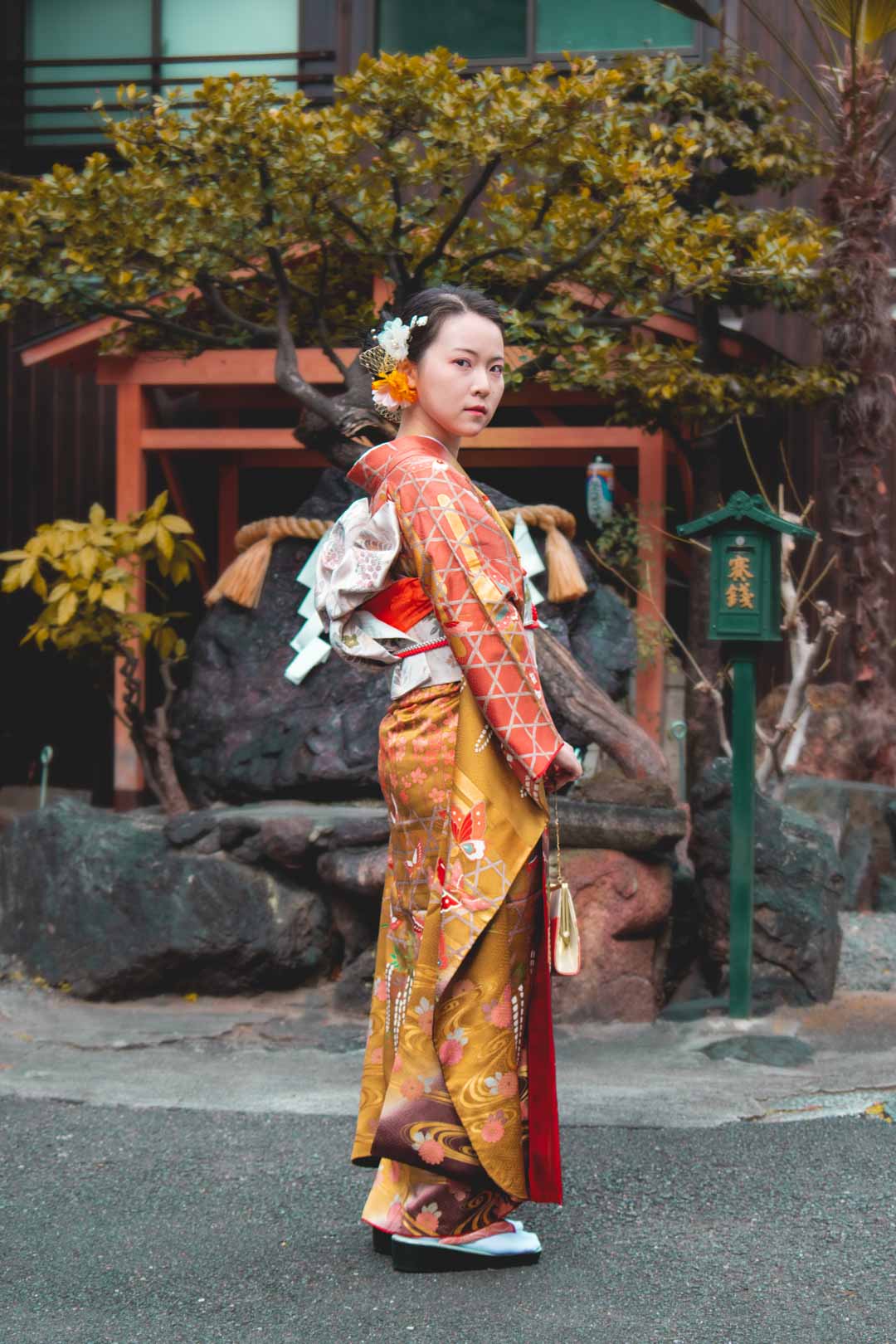
Autumn (September–November) is arguably the most photogenic season. Red and gold maple leaves against traditional wooden architecture — it looks like a painting. Fewer tourists than spring, slightly cooler weather, stunning light. A lot of photographers consider autumn their favorite season in Kyoto.
Winter (December–February) gets overlooked and that's a mistake. The streets are quieter, the atmosphere is calm, and winter kimono layering has an elegance to it that lighter seasonal styles don't. If you want Gion mostly to yourself, come in January.
Photography Sessions: When It's Actually Worth It
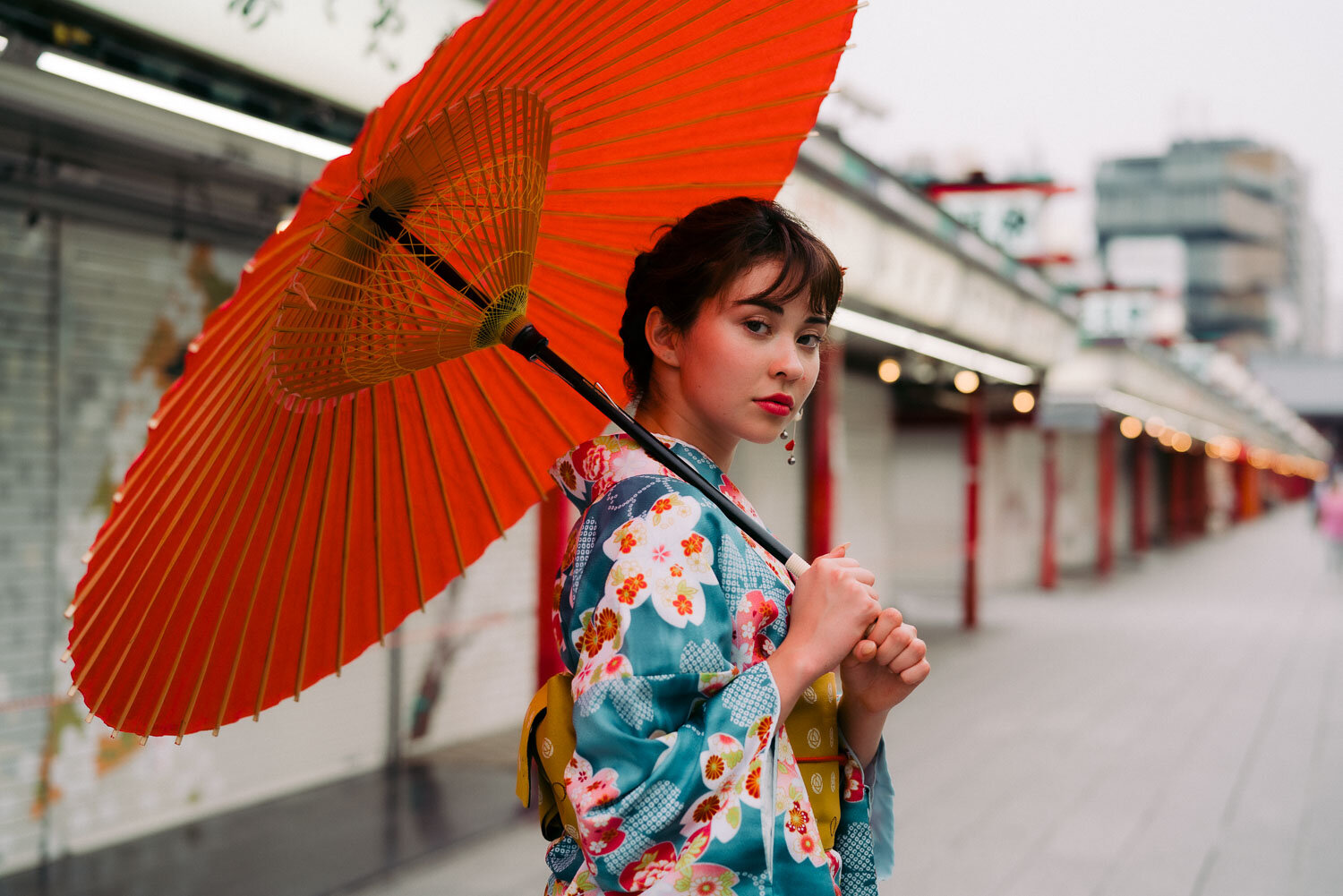
Here's a scenario that plays out all the time — and maybe you've already imagined something like it.
Picture two friends visiting Kyoto for the first time. They rent kimonos, look great, and then spend the next hour handing their phone to strangers and asking them to take photos. Some turn out fine. Most are awkward. The lighting's off. The angle's wrong. They get back home and realize they don't have a single photo that actually captures what that day felt like.
(This is a fictional example, obviously — but it's painfully relatable for a lot of travelers.)
Kimono no Obebe offers professional photography sessions starting from ¥10,000. A photographer joins you after you're dressed, takes you to the right spots in Gion, and shoots while you walk and actually experience the place — not while you're stiff and self-conscious in front of a camera. The difference in the final photos is significant.
If photography matters to you — and for most people visiting Kyoto, it does — this is worth considering. It's not a mandatory add-on. Just an option that a lot of guests are glad they took.
Already Own a Kimono? Bring It In.
This one surprises people: Kimono no Obebe also offers bring-your-own-kimono packages. If you own a kimono, picked one up at a second-hand market, or inherited one and have no idea how to put it on — they'll dress you properly, sort your hair, and make sure everything looks right.
Getting a kimono on solo, especially tying the obi, is genuinely difficult even for people who've done it before. Having someone who does this every day makes the difference between looking polished and looking like you gave it your best shot.
How to Get Here
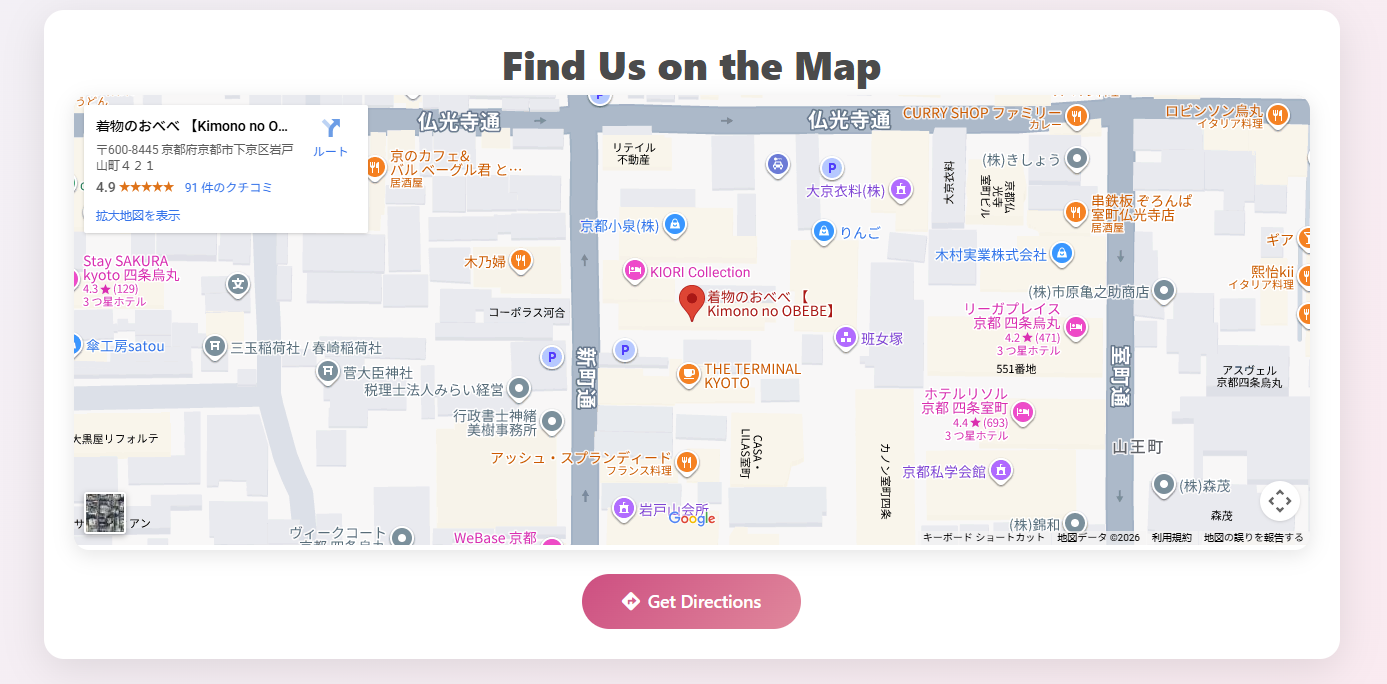
From Shijo Station (Hankyu Kyoto Line or Keihan Main Line), it's a 2-minute walk. From Kyoto Station, take the Karasuma subway line to Shijo — about 5 minutes on the train. Once you're out of the station, you're already in the right neighborhood.
Want to see what the finished look actually looks like on real guests? The guest gallery on the website shows exactly that — real people, different styles, different seasons. Good way to get a feel for what you're choosing.
Questions about availability or plans? Reach the team through the contact page here. And if you want to see day-to-day content and recent guest photos, the Instagram account @kyoto_kimonorental_noobebe is genuinely worth a look before you book.
Kyoto's one of those cities that rewards slowing down and doing things properly. Renting a kimono near Shijo Karasuma — getting dressed well, wandering Gion at your own pace — is one of the better ways to spend a few hours here. Go do it.