Winter Kimono Rental Near Shijo Station: Seasonal Collection 2025
Winter transforms Kyoto into a serene wonderland of snow-dusted temples, tranquil gardens, and peaceful streets. Experiencing this magical season in traditional winter kimono rental near Shijo Station creates unforgettable memories captured in stunning photographs. Kimono no Obebe, perfectly positioned near Kyoto's Shijo Station, leads the city's winter kimono rental scene with authentic seasonal collections, professional photography packages starting at ¥10,000, expert layering techniques for warmth, and the multilingual support that makes winter kimono accessible to international travelers.
Why Winter is Kyoto's Hidden Gem Season for Kimono
While spring's cherry blossoms and autumn's fiery foliage attract massive crowds, winter offers a dramatically different Kyoto experience. The season from December through February provides unique advantages for kimono enthusiasts seeking authentic cultural immersion without the tourist rush.
The Magic of Winter Kimono Photography
Winter kimono photography creates striking visual contrasts impossible in other seasons:
- Dramatic color contrast: Deep-colored kimono stand out brilliantly against white snow and gray skies
- Peaceful, crowd-free temples: Capture serene photos without tourists photobombing your shots
- Unique seasonal atmosphere: Misty mornings, snow-laden branches, and quiet contemplation
- Authentic winter traditions: Experience seasonal patterns and layering techniques passed through generations
- Extended indoor opportunities: Traditional architecture, tea houses, and covered corridors provide shelter while maintaining aesthetic beauty
Winter Weather in Kyoto: What to Expect
Understanding Kyoto's winter climate helps you prepare for comfortable kimono wearing:
- Temperature range: Daytime 5-10°C (41-50°F), nighttime often below freezing
- Snow frequency: Light snow several times per month, rarely heavy accumulation
- Dry, crisp air: Low humidity makes cold feel more manageable than humid climates
- Sunny intervals: Clear, bright days between snow systems create perfect photography conditions
- Morning frost: Gardens glisten with ice crystals creating ethereal early morning scenes
Kimono no Obebe: Best Winter Kimono Rental Near Shijo Station
When searching for winter kimono rental near Shijo Station, Kimono no Obebe distinguishes itself through specialized winter services that combine traditional authenticity with modern comfort and convenience.
Prime Winter Location Advantages
Kimono no Obebe's position near Shijo Station provides exceptional benefits during winter months:
- Minimal outdoor walking: Steps from the subway station means less time in cold weather before dressing
- Quick access to heated transportation: Easy connections to all major winter photography locations
- Nearby indoor facilities: Cafes, restaurants, and shopping for warming breaks
- Central return convenience: Return kimono without long cold walks at day's end
Specialized Winter Kimono Collection
Kimono no Obebe curates a dedicated winter seasonal collection featuring:
Winter-Appropriate Fabrics
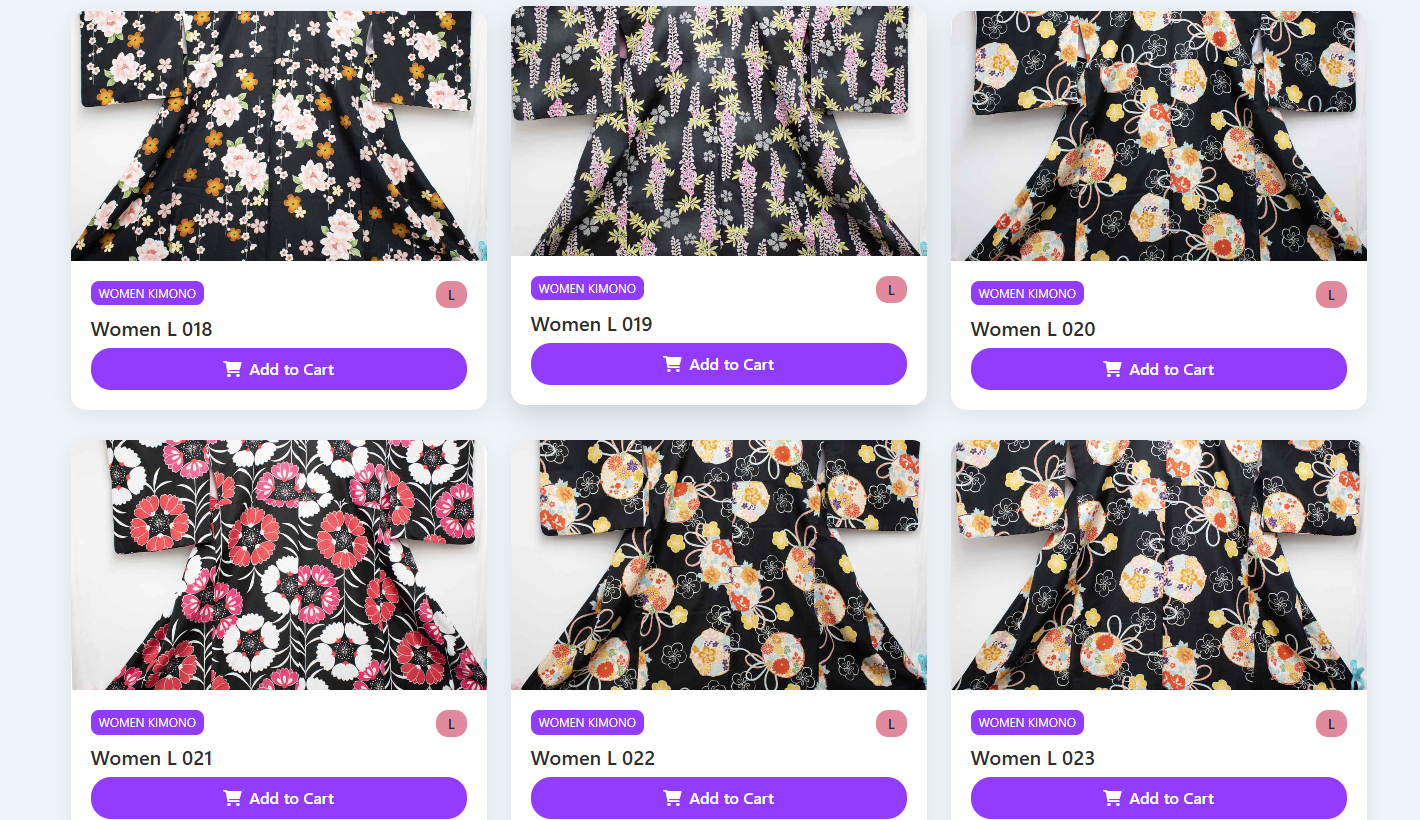
- Lined kimono (awase): Fully lined silk kimono providing warmth without bulk
- Heavier weaves: Thicker silk and textured fabrics appropriate for cold weather
- Quality materials: Authentic silk that insulates naturally while remaining breathable
- Well-maintained garments: Clean, properly stored seasonal kimono rotated specifically for winter
Seasonal Winter Patterns
Traditional Japanese aesthetics celebrate seasonal appropriateness. Winter kimono feature:
- Plum blossoms (ume): Early spring flowers that bloom in late winter, symbolizing perseverance
- Bamboo motifs: Representing resilience and strength through winter
- Pine patterns: Evergreen trees symbolizing longevity and endurance
- Snow scenes (yukiwa): Delicate snow crystal patterns and winter landscapes
- Crane designs: Winter birds representing good fortune and fidelity
- Geometric patterns: Classic designs appropriate year-round, perfect against snow
Winter Color Palettes

Strategic color selection creates stunning winter photography:
- Deep jewel tones: Burgundy, emerald, sapphire, amethyst pop against white snow
- Rich earth colors: Deep brown, forest green, burnt sienna provide warm contrast
- Classic black: Sophisticated and dramatic against winter landscapes
- Ivory and cream: Subtle elegance that harmonizes with snowy scenes
- Deep navy: Traditional formality perfect for temple visits
Essential Winter Layering Services
Staying warm in winter kimono requires proper layering technique. Kimono no Obebe provides:
Haori Jackets
Traditional haori jackets are essential winter accessories:
- Hip-length jackets worn over kimono
- Add warmth without disrupting kimono lines
- Available in coordinating or contrasting colors
- Can be removed for photos, worn for warmth between shots
- Creates sophisticated layered look in photographs
Warm Accessories
- Fur collars (erishin): Traditional detachable collars adding warmth and luxury
- Warm obi: Thicker obi appropriate for winter seasons
- Lined tabi: Warmer sock options for cold feet
- Hand warmers: Discrete modern additions for comfort
- Shawls and wraps: Additional layers for extremely cold days
Underlayer Guidance
Kimono no Obebe's staff provides expert advice on:
- Appropriate thermal underlayers that don't create bulk
- Proper heat-retaining techniques under kimono
- Layering strategies for different temperature ranges
- Balancing warmth with maintaining kimono's elegant silhouette
Winter Photography Packages
Kimono no Obebe's integrated photography services adapt perfectly to winter conditions:
30-Minute Winter Session (¥10,000)
Perfect for cold weather when extended outdoor time is challenging:
- Quick professional photography around shop area
- Nearby covered locations and traditional streets
- 20-30 beautifully edited high-resolution photos
- Minimal cold exposure while capturing winter beauty
- Indoor-outdoor combination options
4-Hour Winter Experience (¥25,000)
Comprehensive winter photography with strategic planning:
- 2-3 carefully selected winter locations
- Mix of outdoor snow scenes and sheltered architectural shots
- 60-100 professional photographs
- Complete kimono rental with winter layering
- Hair styling and makeup included
- Photographer knows best winter timing and locations
- Warming breaks at traditional tea houses (can be included)
Full-Day Winter Premium (¥50,000)
Ultimate winter kimono experience for special occasions:
- 8+ hours of professional coverage
- Multiple winter locations across Kyoto
- 150+ edited images capturing winter's diversity
- Sunrise or sunset snow photography
- Kimono changes for varied looks
- Complete styling services throughout the day
- Strategic timing around weather and light conditions
Multilingual Winter Support
Winter kimono requires additional explanation about layering, movement in bulkier clothing, and weather considerations. Kimono no Obebe's English-speaking staff ensure you understand:
- How to stay warm while maintaining elegant appearance
- Winter-specific movement and posing techniques
- Weather monitoring and location flexibility
- Cultural significance of winter patterns and colors
- Safety considerations for snowy or icy conditions
Best Winter Prices Year-Round
While winter is technically "off-season," Kimono no Obebe maintains their commitment to best prices throughout all seasons. No surprise winter surcharges for warm layers or seasonal patterns—just transparent, fair pricing.
View complete winter package details at their plans list page.
Contact and Booking for Winter
Book your winter kimono experience through their contact page. View winter guest photos at their gallery, learn more on their about page, and follow @kyoto_kimonorental_noobebe for real-time snow updates and winter inspiration.
Website: kimononoobebe.love
Location: Near Shijo Station, Kyoto
Best Winter Photography Locations from Shijo Station
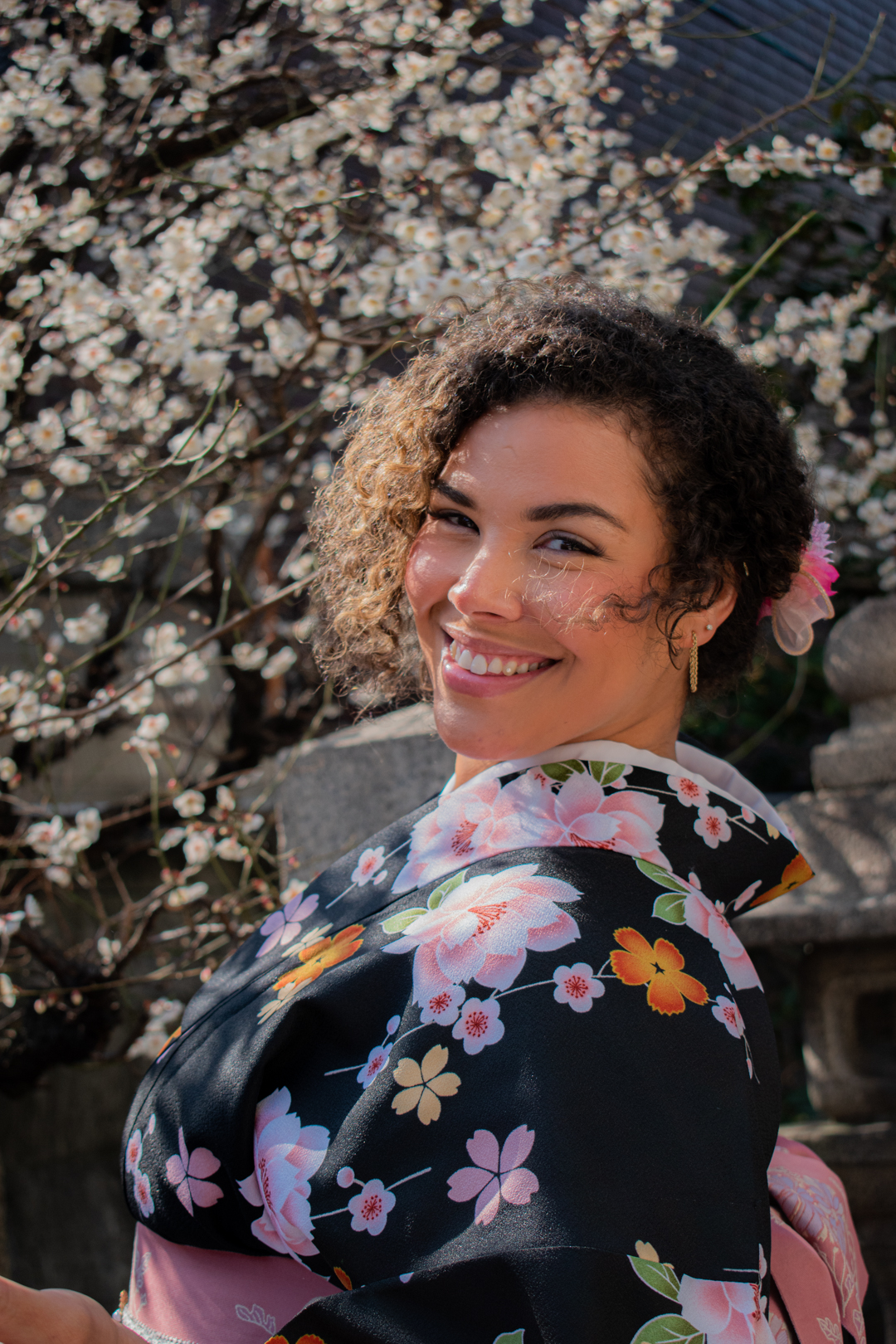
Kimono no Obebe's Shijo Station location provides excellent access to Kyoto's most photogenic winter destinations.
Kinkaku-ji (Golden Pavilion) in Snow
Perhaps Kyoto's most iconic winter scene, the Golden Pavilion against fresh snow creates breathtaking photographs.
Winter Photography Details
- Access from Shijo: 30-minute bus ride
- Best timing: Early morning after fresh snowfall (arrive before 9 AM)
- Photography spots: Reflection pond view, garden pathways, covered viewing areas
- Crowd level: Moderate even in winter; early arrival essential
- Kimono considerations: Pathways can be icy; wear appropriate footwear
Winter Photography Tips
- Golden pavilion reflects beautifully in partially frozen pond
- Snow on pine trees frames the golden structure perfectly
- Deep-colored kimono creates stunning contrast
- Covered areas allow photos without snow accumulation on kimono
Fushimi Inari Shrine Winter Trails
The famous torii gates take on magical quality dusted with snow.
Winter Photography Details
- Access from Shijo: 20-minute train ride
- Best timing: Early morning (7-8 AM) or late afternoon for soft light
- Photography spots: Lower torii tunnels, bamboo groves, mountain viewpoints
- Crowd level: Minimal in winter, especially on trails
- Kimono considerations: Lower shrine area easily accessible; mountain trails require more physical effort in kimono
Winter Photography Tips
- Orange torii gates against white snow and dark kimono create triadic color harmony
- Misty mountain views add atmospheric depth
- Snow accumulation on torii crossbeams provides texture
- Fewer tourists allow leisurely photography without time pressure
Kiyomizu-dera Temple Winter Views
The wooden stage and surrounding hillside transform into winter wonderland.
Winter Photography Details
- Access from Shijo: 15-minute bus ride or 25-minute walk
- Best timing: Mid-morning (9-11 AM) after crowds thin from opening rush
- Photography spots: Main stage, Otowa waterfall, approach streets
- Crowd level: Light to moderate in winter
- Kimono considerations: Uphill approach; pace yourself in layered kimono
Winter Photography Tips
- Snow-covered city views from wooden stage
- Traditional approach streets (Ninenzaka, Sannenzaka) quiet and photogenic
- Pagoda views through snow-laden trees
- Multiple elevation levels provide varied perspectives
Gion District Winter Streets
Traditional geisha quarter gains serene beauty under winter's touch.
Winter Photography Details
- Access from Shijo: 5-minute walk
- Best timing: Early morning (7-9 AM) or evening (4-6 PM)
- Photography spots: Hanamikoji Street, Shirakawa Canal, traditional machiya townhouses
- Crowd level: Very light in winter mornings
- Kimono considerations: Flat, easy walking; perfect for extended kimono wear
Winter Photography Tips
- Snow on traditional wooden architecture
- Lanterns create warm glow against cold blue snow light
- Empty streets allow creative posing without tourist interference
- Close to Kimono no Obebe for easy start and return
Arashiyama Bamboo Grove in Winter
Bamboo stays green year-round, creating striking contrast with snow.
Winter Photography Details
- Access from Shijo: 30-minute train
- Best timing: Very early morning (before 8 AM) for empty groves
- Photography spots: Main bamboo path, Okochi Sanso Garden, Togetsukyo Bridge
- Crowd level: Light in winter, minimal if early
- Kimono considerations: Some walking required; paths can be slippery when snowy
Winter Photography Tips
- Green bamboo against white snow creates natural color contrast
- Snow on bamboo leaves adds delicate detail
- Misty conditions common, adding ethereal atmosphere
- Nearby temples provide indoor warming breaks
Philosopher's Path Winter Walk
The famous canal-side path becomes a peaceful winter meditation.
Winter Photography Details
- Access from Shijo: 25-minute bus
- Best timing: Mid-morning to early afternoon (10 AM-2 PM)
- Photography spots: Canal bridges, stone path, connecting temples
- Crowd level: Nearly empty in winter
- Kimono considerations: Long, flat walk; excellent for kimono strolling
Winter Photography Tips
- Bare trees create stark, beautiful lines
- Canal reflections double winter scenery
- Stone path provides textured foreground
- Multiple small temples along route offer variety
Winter Kimono Styling Guide
Selecting the perfect winter kimono involves balancing aesthetic beauty with practical warmth.
Choosing Winter Kimono Colors
Dramatic Contrast Colors
These colors create maximum visual impact against snow:
- Deep burgundy or wine red: Rich, warm tones that photograph brilliantly
- Royal blue or navy: Traditional formality with modern appeal
- Emerald or forest green: Natural elegance standing out dramatically
- Black with colored patterns: Sophisticated and striking
- Deep purple (murasaki): Regal color historically associated with nobility
Harmonious Neutral Colors
These colors blend beautifully with winter landscapes:
- Ivory or cream: Soft elegance that harmonizes with snow
- Pale gray: Subtle sophistication in monochromatic winter scenes
- Dusty rose: Gentle warmth against cold backgrounds
- Taupe or beige: Earthy tones providing grounded contrast
Essential Winter Accessories
Haori Selection
The traditional jacket is winter kimono's most important accessory:
- Matching haori: Same color as kimono for cohesive elegance
- Contrasting haori: Different color creating layered visual interest
- Patterned vs. solid: Consider whether kimono or haori should feature prominent patterns
- Length options: Hip-length standard; longer versions provide more warmth
- Photography versatility: Choose haori that looks good both on and off in photos
Winter Obi Choices
- Thicker, warmer obi appropriate for season
- Rich colors complementing kimono
- Seasonal patterns (plum blossoms, snow scenes)
- Traditional tie styles providing secure, warm waist layer
Hair Accessories for Winter
- Seasonal kanzashi: Winter flower motifs (plum, camellia)
- Subdued colors: Deep reds, greens, or metallics
- Minimalist options: Simple pins allowing kimono to be the star
- Weather-resistant materials: Accessories that withstand light snow
Footwear Considerations
- Lined tabi: Warmer sock options for cold feet
- Appropriate zori or geta: Traditional footwear with better grip for snow
- Foot warmers: Discrete heat packs for extended outdoor photography
- Weather boots option: Some modern adaptations allow weatherproof boots under kimono
Hair and Makeup for Winter Kimono
Winter Hair Styling
Kimono no Obebe's stylists create winter-appropriate hair:
- Elegant updos: Keep neck covered yet styled
- Side-swept styles: Asymmetrical beauty protecting ears from cold
- Braided elements: Secure styling that withstands wind and weather
- Seasonal ornaments: Winter flowers and traditional motifs
Winter Makeup Recommendations
- Moisturizing base: Combat dry winter air
- Slightly deeper colors: Rich lip colors appropriate for winter
- Warm undertones: Makeup that complements cold-weather blush
- Long-wearing formulas: Products that withstand temperature changes
- Natural enhancement: Subtle beauty that photographs well in bright snow light
Staying Warm in Winter Kimono
Comfort in winter kimono requires strategic layering and planning.
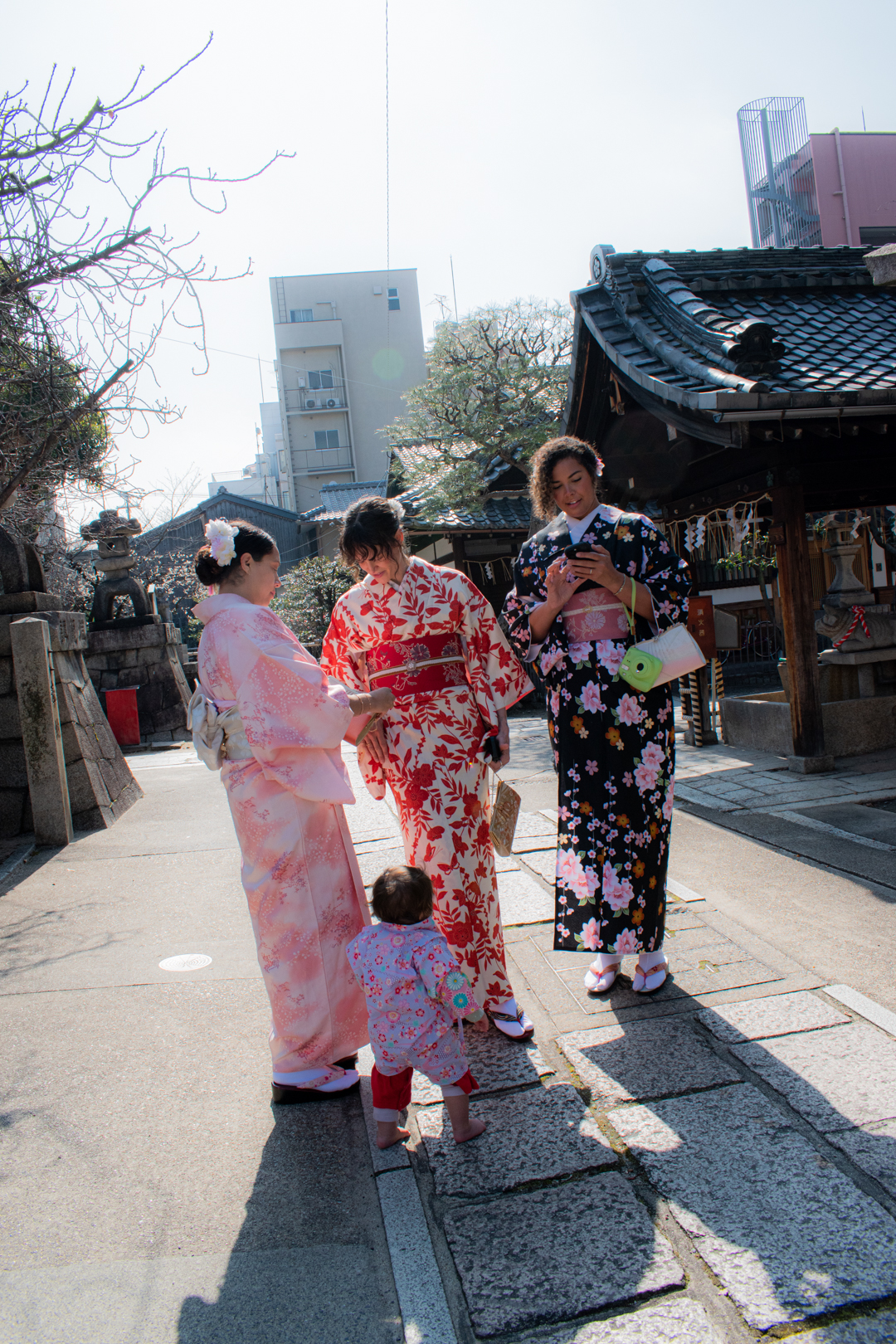
Underlayer Strategy
What to Wear Underneath
- Thermal underlayers: Thin, heat-retaining fabrics (Heattech, merino wool)
- Form-fitting base: Avoid bulk that disrupts kimono lines
- Long-sleeved options: Keep arms warm without visible layers
- Leggings or tights: Thin layers under kimono for leg warmth
- Multiple thin layers: Better than single thick layer
Heat Retention Tips
- Hand warmers: Small disposable heat packs in sleeves or pockets
- Foot warmers: Toe warmers in tabi socks
- Body warmers: Adhesive heat packs on lower back or stomach
- Warm drinks: Carry insulated bottle (small, discreet)
Movement and Comfort
Winter Walking Techniques
- Smaller steps than usual: Kimono restricts movement; snow/ice requires caution
- Slower pace: Don't rush in traditional footwear on slippery surfaces
- Use handrails: Temple stairs can be icy; prioritize safety
- Avoid puddles and slush: Protect kimono hem from wet conditions
- Strategic rest breaks: Plan warming stops at cafes or covered areas
Managing Layers During Photography
- Remove haori for photos showing kimono fully
- Wear haori between locations for warmth
- Have assistant or photographer hold layers during shots
- Quick costume changes maximize shooting time in cold
Weather Contingency Planning
Snow Day Strategies
- Traditional umbrella (wagasa): Beautiful prop that protects from falling snow
- Clear umbrella option: Modern alternative keeping you visible in photos
- Covered locations: Have backup indoor-outdoor combination spots
- Timing flexibility: Monitor weather and adjust schedule for best snow conditions
Extreme Cold Adaptations
- Reduce outdoor photography time
- Focus on covered corridors and indoor-outdoor transitions
- Plan more frequent warming breaks
- Consider shorter rental duration if extremely cold
- Utilize heated taxis between distant locations
Winter Kimono Photography Tips
Capturing beautiful winter kimono photos requires understanding seasonal light and composition.
Working with Winter Light
Bright Snow Days
- Soft, diffused light: Overcast snow days provide even, flattering illumination
- Avoid harsh shadows: Midday sun reflecting off snow can be too bright
- Blue hour magic: Winter's early sunset creates beautiful blue-toned twilight
- Golden hour intensity: Low winter sun creates warm, dramatic light
Snowy Conditions
- Active snowfall: Creates dynamic, romantic atmosphere in photos
- Fresh snow backdrop: Clean white canvas highlighting kimono colors
- Snow on branches: Natural framing elements
- Footprints in snow: Can add to or detract from composition; plan accordingly
Composition Techniques for Winter
Using Winter Elements
- Bare tree branches: Create interesting lines and patterns
- Snow-covered architecture: Traditional buildings gain ethereal quality
- Ice formations: Frozen waterfalls, icicles add winter specificity
- Mist and fog: Common in winter, creates atmospheric depth
- Winter gardens: Dormant plants have structural beauty
Color Contrast Maximization
- Position dark kimono against white snow for maximum pop
- Use colorful obi as accent point in snowy scenes
- Include traditional red elements (torii gates, bridges) for color harmony
- Leverage gray stone and brown wood textures for depth
Posing for Winter Photography
Layered Kimono Poses
- Haori gracefully draped: Show elegant lines of jacket over kimono
- Hands in sleeves: Traditional cold-weather gesture looks authentic
- Holding umbrella: Creates beautiful silhouette and provides prop interaction
- Walking through snow: Capture movement and floating kimono edges
- Contemplative stillness: Winter's quiet atmosphere suits thoughtful poses
Working with Cold
- Genuine smiles may be harder in cold; try thoughtful, serene expressions
- Keep hands visible occasionally (not always tucked away)
- Use warming breaks to relax and return to camera refreshed
- Shorter individual sessions with breaks maintain better expressions
Winter Kimono Rental Logistics
Planning logistics ensures smooth winter kimono experience.
Booking Your Winter Kimono
Advance Reservation Timeline
- 1-2 weeks ahead: Generally sufficient for winter (off-peak season)
- Holiday periods: New Year's week, Valentine's Day require earlier booking
- Snow forecast days: Popular for photography; book when forecast looks promising
- Last-minute flexibility: Winter often allows same-week bookings
What to Communicate When Booking
- Preferred date and arrival time
- Interest in winter layering options (haori, warm accessories)
- Photography package selection
- Color preferences for winter kimono
- Any concerns about cold sensitivity
- Desired photography locations (for timing planning)
Day-of Timeline
Standard 4-Hour Winter Rental
- 9:00 AM: Arrive at Kimono no Obebe near Shijo Station (arrive 10 min early)
- 9:00-9:20 AM: Check-in, kimono selection with winter styling consultation
- 9:20-10:00 AM: Dressing in kimono with winter layering
- 10:00-10:30 AM: Hair styling and makeup
- 10:30 AM: Depart for photography locations (meet photographer if booked)
- 10:45 AM-12:30 PM: Photography at 1-2 winter locations with warming break
- 12:45 PM: Return to Shijo Station area
- 1:00 PM: Return kimono to Kimono no Obebe
Essential Items for Winter Kimono Day
- Warm arrival clothing: Coat, hat, gloves (store at shop during rental)
- Thermal underlayers: Wear or bring to put on under kimono
- Comfortable shoes: For travel to shop; change into traditional footwear
- Compact bag: Small enough to hide in photos
- Hand/foot warmers: Disposable heat packs (available in Japan)
- Lip balm and moisturizer: Combat dry winter air
- Charged phone: For photos, maps, and coordination
- Portable charger: Cold drains batteries faster
- Tissues and hand sanitizer: Personal comfort items
- Umbrella: If snow forecast (or rent traditional wagasa)
Cultural Significance of Winter Kimono
Understanding winter kimono tradition enriches your experience.
Seasonal Patterns and Their Meanings
Plum Blossoms (Ume)
The most important winter-to-spring motif:
- Bloom in late winter before cherry blossoms
- Symbolize perseverance and hope
- Represent the first signs of spring's approach
- Often paired with nightingale (uguisu) birds
- Appropriate from January through March
Pine, Bamboo, and Plum (Sho-Chiku-Bai)
This auspicious trio appears frequently in winter kimono:
- Pine: Evergreen representing longevity and steadfastness
- Bamboo: Resilience and flexibility through adversity
- Plum: Hope and renewal
- Together symbolize fortune, especially for New Year
Snow Crystals (Yuki)
- Delicate geometric patterns representing winter's beauty
- Can be subtle or prominent design elements
- Often combined with other winter motifs
- Appropriate throughout winter season
Cranes (Tsuru)
- Winter birds symbolizing longevity and fidelity
- Auspicious pattern for celebrations
- Often depicted in pairs representing marital harmony
- Appropriate year-round but especially popular in winter
Winter Kimono Etiquette
Seasonal Appropriateness
- Wearing seasonal patterns shows cultural awareness and respect
- Avoid spring patterns (cherry blossoms) in deep winter
- Subtle geometric or year-round patterns always acceptable
- Lined kimono (awase) appropriate from October through May
Formal vs. Casual Winter Kimono
- Formal occasions: Solid colors or subtle patterns, traditional accessories
- Casual sightseeing: Bolder patterns and colors acceptable
- Photography focus: Choose styles that photograph well over strict formality rules
Winter Events and Festivals in Kimono
Kyoto's winter calendar offers special kimono-wearing opportunities.
New Year (Oshogatsu)
January 1-3 is Japan's most important holiday period:
- First shrine visit (hatsumode): Traditional to wear kimono
- Fushimi Inari: Extremely crowded but festive atmosphere
- Yasaka Shrine: Close to Gion, beautiful traditional setting
- Special kimono: More formal styles appropriate for New Year
- Booking note: Must reserve well in advance; some shops closed Jan 1
Setsubun (February 2-3)
Bean-throwing festival marking winter's end:
- Temples hold special ceremonies
- Traditional to wear kimono for participation
- Yasaka Shrine hosts major celebration
- Photography opportunities with festival atmosphere
Plum Blossom Viewing (Late February-March)
Early spring flowers begin blooming:
- Kitano Tenmangu Shrine: Famous plum garden
- Jonangu Shrine: Weeping plum specialty
- Wear plum blossom patterned kimono for seasonal harmony
- Less crowded than cherry blossom season
Why Choose Kimono no Obebe for Winter
Kimono no Obebe's winter-specific advantages make it the clear choice for winter kimono rental near Shijo Station:
- Specialized winter collection: Curated seasonal patterns, colors, and warm fabrics
- Expert layering services: Professional styling for both beauty and warmth
- Prime heated location: Minimal cold exposure before dressing near Shijo Station
- Integrated photography: Packages from ¥10,000 with photographers who know best winter locations and timing
- Multilingual winter guidance: English-speaking staff explain layering, safety, and seasonal traditions
- Best year-round pricing: No winter surcharges or hidden fees
- Flexible weather adaptation: Understanding staff help adjust plans for conditions
- Complete accessories: Haori, warm tabi, and winter-appropriate items included
Conclusion: Your Winter Kimono Adventure
Winter kimono rental near Shijo Station offers a uniquely peaceful and beautiful way to experience Kyoto. While crowds flock to spring's cherry blossoms and autumn's maple leaves, winter reveals a quieter, more contemplative side of Japanese culture. Snow-dusted temples, frost-touched gardens, and tranquil streets create the perfect backdrop for kimono photography that stands apart from the typical tourist experience.
Kimono no Obebe makes winter kimono accessible and comfortable through their specialized seasonal collection, expert layering techniques, integrated photography services, and genuine cultural education. From the moment you step into their warm shop near Shijo Station to the moment you return your kimono, every detail is designed to maximize both your comfort and the beauty of your winter experience.
The photographers understand winter's unique lighting challenges and opportunities. The staff's multilingual support ensures you understand not just how to stay warm, but why certain patterns and colors carry seasonal significance. The location provides instant access to Kyoto's most photogenic winter destinations without lengthy cold walks in traditional footwear.
As you walk through Gion's quiet streets with fresh snow underfoot, photograph Kinkaku-ji's golden brilliance against white drifts, or capture the serene beauty of bamboo groves in winter dress, you'll understand why those who discover winter kimono often consider it their most meaningful Kyoto experience. The season's tranquility allows deeper cultural immersion, more personal photography, and authentic moments of connection with Japanese aesthetic tradition.
Visit kimononoobebe.love to begin planning your winter kimono experience. Review their complete winter packages and pricing, browse guest photos from past winter seasons, and contact them to discuss your winter photography dreams. Follow @kyoto_kimonorental_noobebe on Instagram for real-time snow updates and winter styling inspiration.
Winter in Kyoto awaits, wrapped in silk and tradition, ready to transform your Japan adventure into something truly extraordinary.