You've Got a Full Day in Kyoto. Don't Spend Two Hours of It Getting to and From a Kimono Shop.
Here's the thing about Kyoto that nobody warns you about before you arrive: the city is beautiful, but it's also spread out. And when you're navigating it for the first time — with jet lag, a paper map, and a phone that keeps switching to Japanese GPS — the gap between "walking distance" and "technically reachable" feels enormous.
Most travelers doing kimono rental in Kyoto have one window to make it work. Maybe it's a full day, maybe it's an afternoon. Either way, every hour matters. And if your rental shop is a 20-minute bus ride from the sightseeing areas — or worse, requires you to change trains in a kimono and sandals — you've already lost something before the day even starts.
This post is for the traveler who's thought about the logistics. Who's looked at a Kyoto map, seen how spread out the city is, and thought: I want to do kimono rental, but I want it to actually work with my itinerary.
By the end, you'll know exactly why walking distance matters for a kimono day, what being two minutes from Shijo Station actually unlocks in terms of places to go, how the experience at Kimono no Obebe is set up to make the whole thing efficient, and how the neighborhood shifts by season. Practical stuff. Let's get into it.
Why "Walking Distance" Actually Changes the Day
 It sounds like a small thing. Two minutes versus twenty minutes — what's the difference?
More than you'd think.
When your kimono rental shop is walking distance from both the train station and Kyoto's main sightseeing areas, a few things happen that don't happen otherwise. You arrive by train, walk two minutes, get dressed, and walk directly into the neighborhood you came to see. No bus connection. No taxi in a kimono. No standing at a platform in sandals hoping the next train isn't delayed.
And when the day ends, the return is just as simple. You walk back, change, and you're already at the station for wherever you're heading next. No stress, no scramble.
That's the difference. Convenience isn't a luxury in Kyoto — it's time. And time in a city this good is the one thing you can't buy more of.
Two Minutes From Shijo Station — What That Means in Practice
Kimono no Obebe is a 2-minute walk from Shijo Station on the Hankyu Kyoto Line and Keihan Main Line. From Kyoto Station, you're looking at a 5-minute subway ride on the Karasuma line, then a 2-minute walk. From Osaka, the Hankyu limited express drops you almost at the door.
What does that proximity actually unlock? Let's be specific.
You get off the train. You walk to the shop. You spend 20–30 minutes getting dressed — kimono fitted properly, obi tied, hair styled, the full look put together. You step outside. And you're already standing at the western edge of Gion.
That's not a metaphor. The shop's location puts you right where you want to be. From there, everything spreads out on foot.
What's Within Easy Walking Distance Once You're Dressed
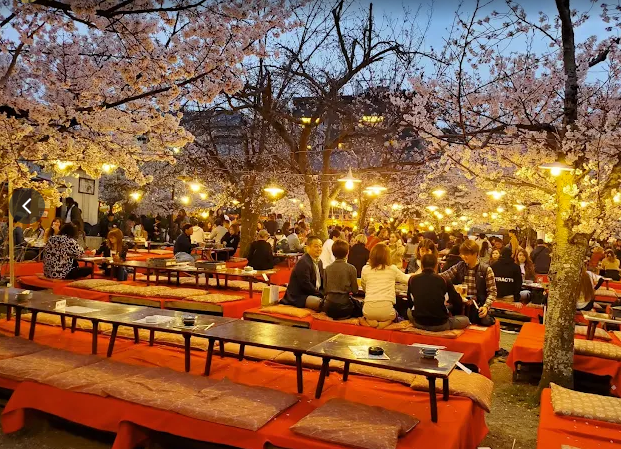
This is the practical core of why location matters so much for a kimono day. Here's what's actually accessible on foot from Shijo Karasuma once you step outside in your kimono.
Gion (Hanamikoji Street) — 10 minutes east. The most photographed street in Kyoto. Stone pavement, red lanterns, traditional machiya townhouses. This is the backdrop most people are picturing when they imagine a kimono day in Kyoto, and it's a pleasant walk from the shop.
Pontocho Alley — 5 minutes north. A narrow, atmospheric lane that runs parallel to the Kamo River. Old wooden buildings, small restaurants, quiet during the day and lantern-lit in the evening. Walking Pontocho in a kimono feels like stepping sideways into a different century.
Nishiki Market — 5 minutes northwest. Kyoto's famous covered food market — long, narrow, packed with local vendors selling pickled vegetables, fresh tofu, matcha sweets, grilled skewers. Walking Nishiki in a kimono is one of those experiences that blends into the fabric of the place rather than sitting on top of it like a tourist activity.
Kamo River — 5 minutes west. The wide river that cuts through central Kyoto. Long, flat banks that are perfect for walking, sitting, and watching the city move around you. In cherry blossom season, the banks are lined with trees. In summer, riverside restaurant platforms extend over the water.
Yasaka Shrine — 15 minutes east at the end of Shijo Street. One of Kyoto's most important shrines, with a stone torii gate at the entrance and an expansive inner courtyard. The approach along Shijo-dori is a walk worth taking slowly. The shrine itself is free to enter and looks extraordinary in every season.
Ninenzaka and Sannenzaka — about 20–25 minutes on foot. Stone-paved pedestrian streets climbing toward Kiyomizudera, lined with traditional wooden shops. A longer walk, but very much worth it if you've got time and comfortable sandals.
What the Rental Experience at Kimono no Obebe Actually Looks Like
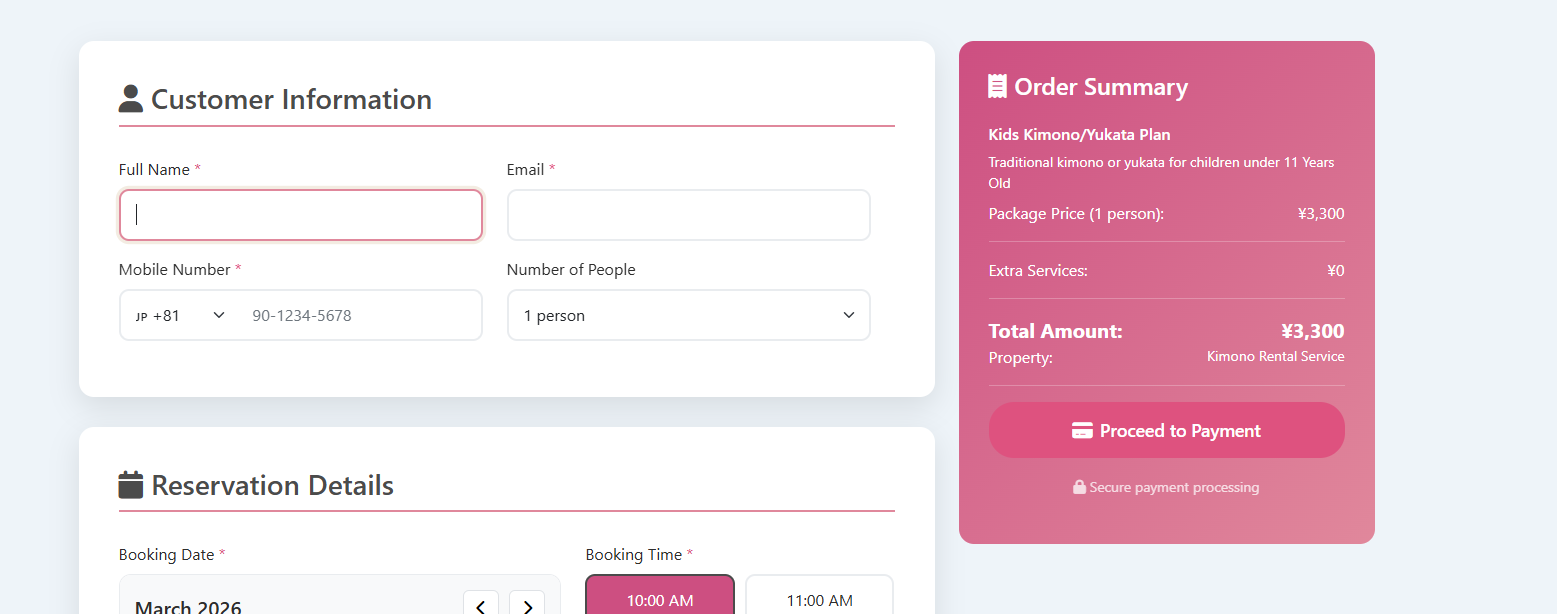
Here's a fictional but realistic picture of how a convenient kimono day actually unfolds from this location.
Imagine someone visiting Kyoto for two days on a tight schedule — they're traveling between Tokyo and Osaka and have a packed itinerary. They've allocated one morning for kimono rental. They arrive at Shijo Station at 9:30am, walk two minutes to Kimono no Obebe, spend about 25 minutes getting dressed — kimono selected, obi tied, hair styled up with hairpins. By 10am they're outside. They walk east to Hanamikoji, spend an hour in Gion, stop at a small tea house on a quiet backstreet, walk north through Pontocho, loop back through Nishiki for a late snack, and are back at the shop by 1pm. They change, walk two minutes to the station, and they're on a train south by 1:30.
(This is a fictional example — not a real account — but it's a realistic picture of what a well-located rental shop makes possible for a time-pressed traveler.)
That's four hours, well used, with zero wasted time on logistics.
The Full Service Picture: What's Included
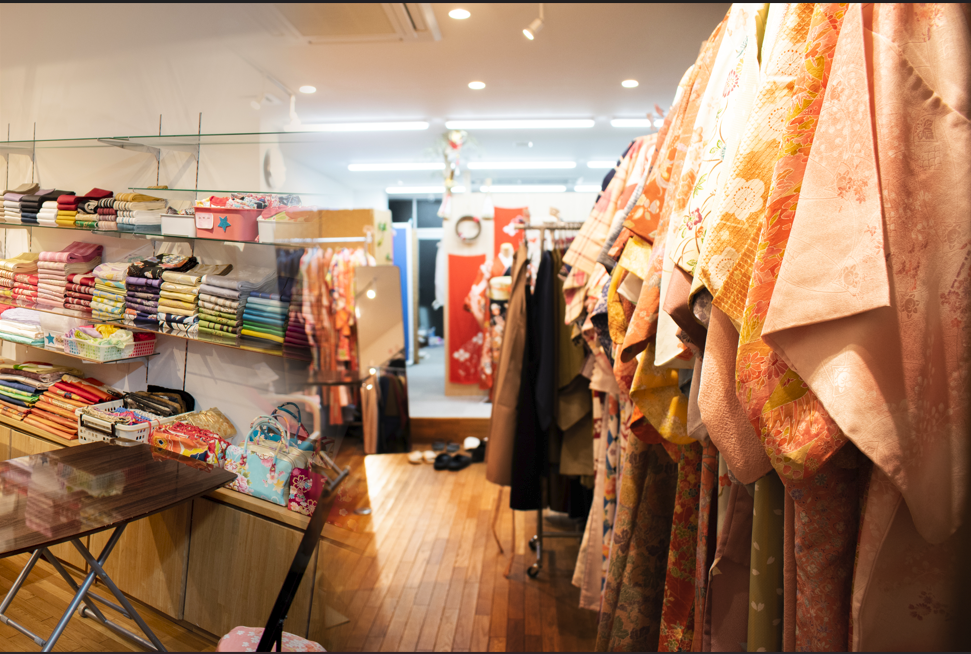
On the service side, Kimono no Obebe covers everything you need for the experience to actually work — not just the kimono itself.
Hair styling is included and makes a significant difference to how the final look comes together. Makeup is available too. The staff speaks English, which matters more than it sounds — a lot of the small questions and decisions that come up during dressing (which obi pattern works with this kimono, how tight is too tight, what accessories make sense) are much easier to navigate when you can just ask and actually get an answer.
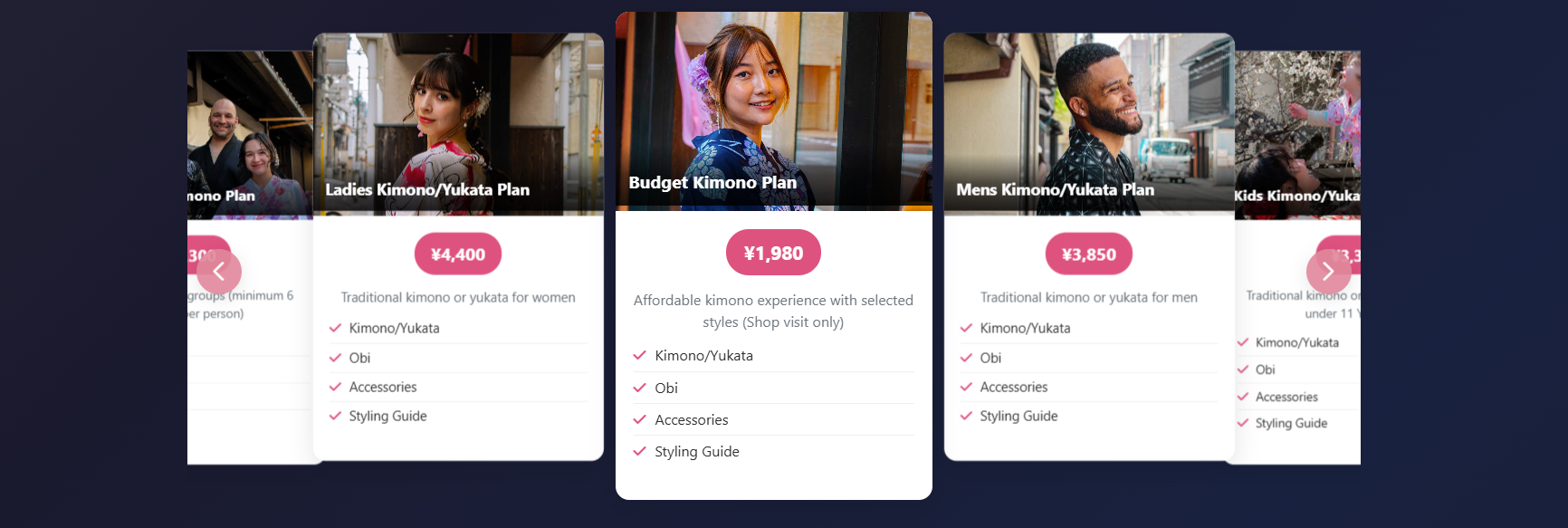
Plans start from ¥1,900 for a budget option and go up to ¥15,000 for the furisode — the long-sleeved formal kimono that photographs extraordinarily well. Full pricing is on the plans page here. And it's the same pricing year-round — no seasonal surcharge during cherry blossom season or autumn foliage. What you see is what you pay.
If photographs are a priority, professional photography sessions are available starting from ¥10,000. A photographer joins you after you're dressed and takes you through the best spots nearby — the lanes with good light, the angles that actually work. It's worth it if photos are the point of the day. See what that looks like in the guest gallery here.
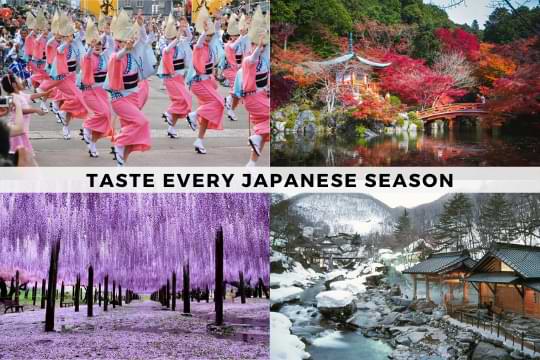
How the Neighborhood Changes by Season
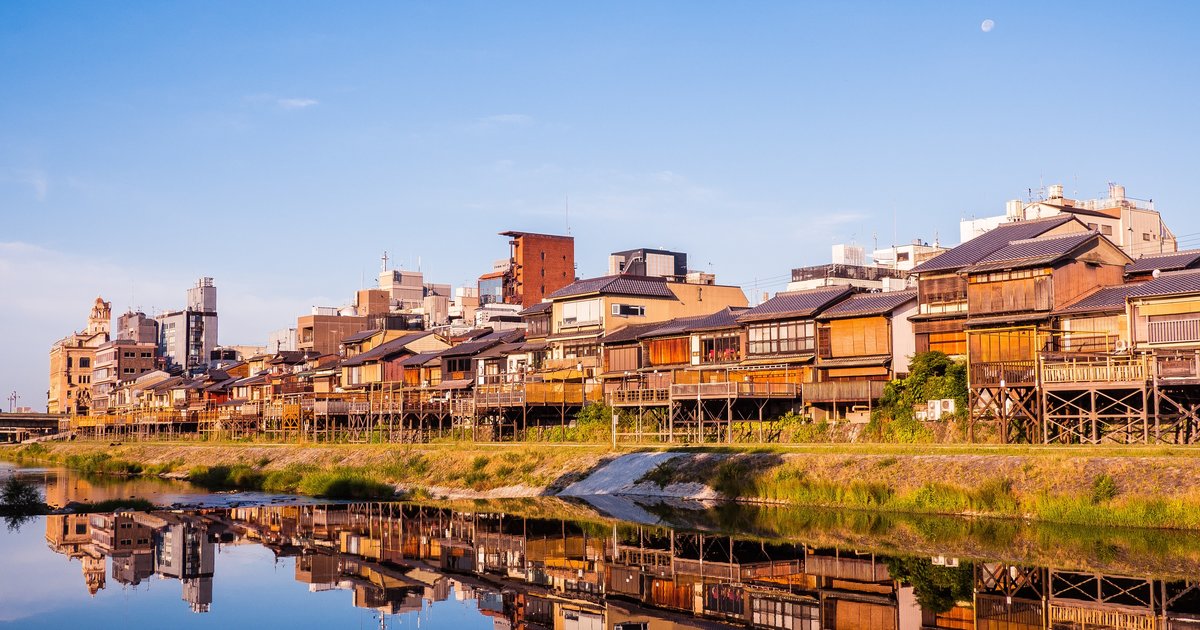
The Shijo-Gion area is one of those places where the season doesn't just change the weather — it changes the whole character of the neighborhood. Here's what you're walking into, depending on when you visit.
Spring (late March–April) is cherry blossom season. The Shirakawa Canal — a small waterway lined with weeping cherry trees about 12 minutes east of the shop — becomes one of the most beautiful spots in Japan during peak bloom. The petals fall onto the canal water. The light is soft. The whole neighborhood smells like spring. It's crowded, genuinely crowded, but the photos justify it. Book your rental slot in advance if you're visiting in April.
Summer (June–August) brings heat and the Gion Matsuri — a month-long festival centered around Yasaka Shrine, with the main procession of decorated yamaboko floats in mid-July. The neighborhood transforms for the festival season. Wearing yukata (the lighter summer kimono) during Gion Matsuri isn't a tourist activity — it's what people do. You'll see locals in yukata heading to the festival alongside you.
Autumn (October–November) is when the neighborhood shows its best colors. Maple trees along the backstreets of Gion and the Shirakawa Canal area go deep red and gold in November. The afternoons are cool, the light is warm, and the colors complement dark kimono fabrics in a way that spring's pale palette doesn't. If you have flexibility on timing, late November is one of the strongest cases for a kimono day in this area.
Winter (December–February) is the season for people who want Kyoto without the queues. The streets near Gion are calm and navigable in a way they simply aren't during peak seasons. The atmosphere during New Year is unique — Hatsumode (first shrine visit of the year) at Yasaka Shrine draws people in traditional dress, and being in a kimono during that period feels less like tourism and more like participation.
Booking and Getting Here
Shijo Station is on two major lines — Hankyu Kyoto and Keihan — which means it's easy to reach from almost anywhere in the Kyoto-Osaka corridor. From Kyoto Station, it's 5 minutes on the Karasuma subway line. From Osaka (Umeda), the Hankyu limited express takes about 45 minutes directly to Kyoto-Kawaramachi, one stop from Shijo-Karasuma.
For questions about availability, plan options, or to arrange a photography session, contact the team through the contact page here. For a real look at the experience across different seasons and styles, @kyoto_kimonorental_noobebe on Instagram gives you the most honest preview. And if you want to learn more about how Kimono no Obebe is set up, the about page here has the full picture.
Kyoto rewards good planning. Picking a kimono rental shop that's genuinely convenient — not just close on a map but actually walkable from the station and from everywhere you want to go — is one of the better decisions you can make for a day here. Two minutes from Shijo Station. Right where you need to be.