So You Want to Try Kimono Rental — But You Have No Idea Where to Start.
You're visiting Kyoto. You've seen the photos — people walking through Gion in beautiful kimonos, cobblestone streets, paper lanterns in the background. And you've thought: I want to do that.
Then you open a browser and suddenly there are twenty kimono rental shops, different prices, different plans, words like furisode and obi you don't fully understand, and absolutely no clear answer to the most basic question: how does this actually work?
That's exactly what this guide is for.
By the end of this post, you'll understand what the rental process looks like step by step, what to wear and bring, how long the whole thing takes, what you'll spend, and why renting near Shijo Station — specifically at Kimono no Obebe — makes the whole first-time experience a lot smoother. No confusion, no surprises. Just a clear picture of what you're getting into.
First Things First: What Actually Is a Kimono Rental?
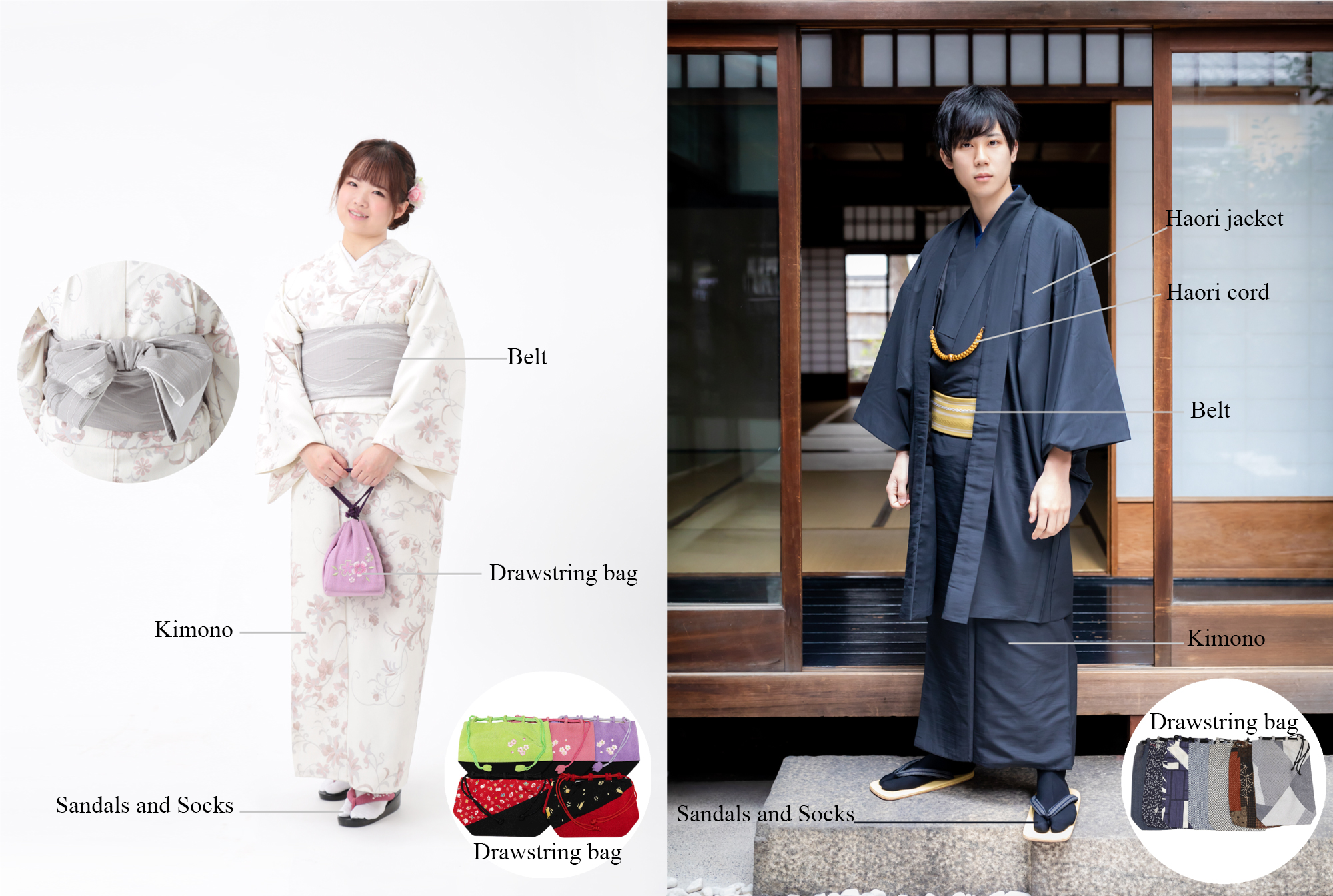
A kimono rental is exactly what it sounds like — you borrow a full traditional Japanese outfit for the day, get properly dressed with staff assistance, explore Kyoto looking the part, and return everything before closing time.
You don't just grab a robe off a rack. The kimono comes with an obi (the wide sash tied around the waist), tabi socks, sandals called zori, and all the small accessories needed to complete the look. Getting dressed properly takes around 20–30 minutes and involves actual skill — the layering, the folding, the obi tying. That's why you don't do it yourself. The shop staff handles it.
When it's done right, you step outside looking like you belong in Kyoto. That's the point.
Step-by-Step: What Happens at the Shop
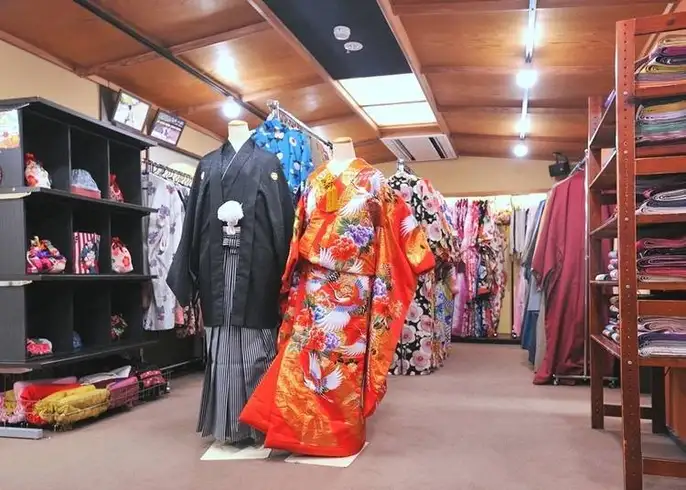
Here's the process in plain terms, so nothing catches you off guard.
Step 1 — You arrive and pick your kimono. The shop will show you the available options in your size. Colors, patterns, fabrics. Take your time — this is the fun part. Most first-timers gravitate toward floral patterns or classic deep colors like navy, green, or burgundy.
Step 2 — You get dressed. Staff does the dressing for you. You stand, they layer and tie. It feels a bit like being fitted for something — a little hands-on, but completely normal and expected. No prior knowledge needed on your end.
Step 3 — Hair and makeup (if you want it). Kimono no Obebe offers hair styling and makeup as part of the experience. Not mandatory, but most first-timers are glad they went for it. The hair especially makes a significant difference in how the whole look comes together.
Step 4 — You head out. The shop sits a 2-minute walk from Shijo Station, right on the edge of Gion. You walk out the door already in the right neighborhood — no taxi or train ride in a kimono required.
Step 5 — Return before closing. Check the return time when you book. Most full-day rentals run until around 6pm. You come back, change, and you're done.
That's it. It's genuinely straightforward once you know what to expect.
What to Wear Underneath — The Question Everyone Forgets to Ask
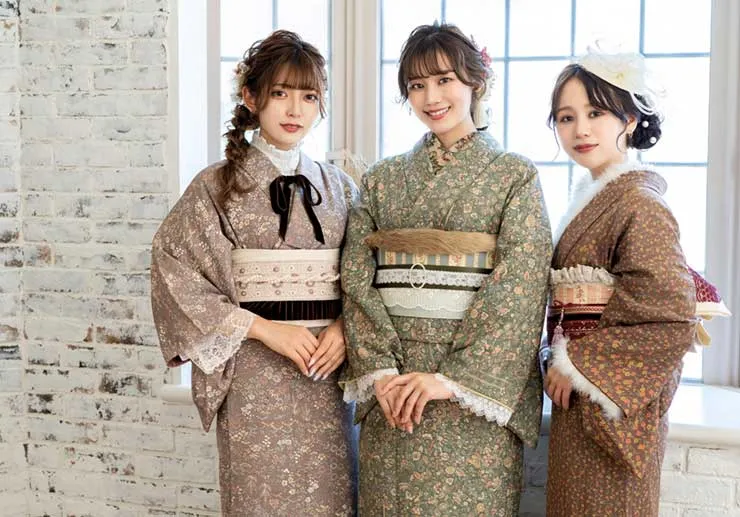
This one trips up a lot of first-timers. Here's the honest answer.
Wear a V-neck top or a thin camisole. Something that won't show at the neckline, because the kimono collar sits low and open at the front. Avoid bulky clothes, thick turtlenecks, or anything with a wide collar — it'll either bunch under the kimono or show in a way that looks off.
For bottoms, it doesn't really matter — you'll be fully covered. Leggings or thin trousers work fine.
In colder months, a thin thermal undershirt is completely fine and the staff will work around it. Kyoto in January is cold, and nobody expects you to freeze for the aesthetic.
How Much Does It Cost? An Honest Breakdown.
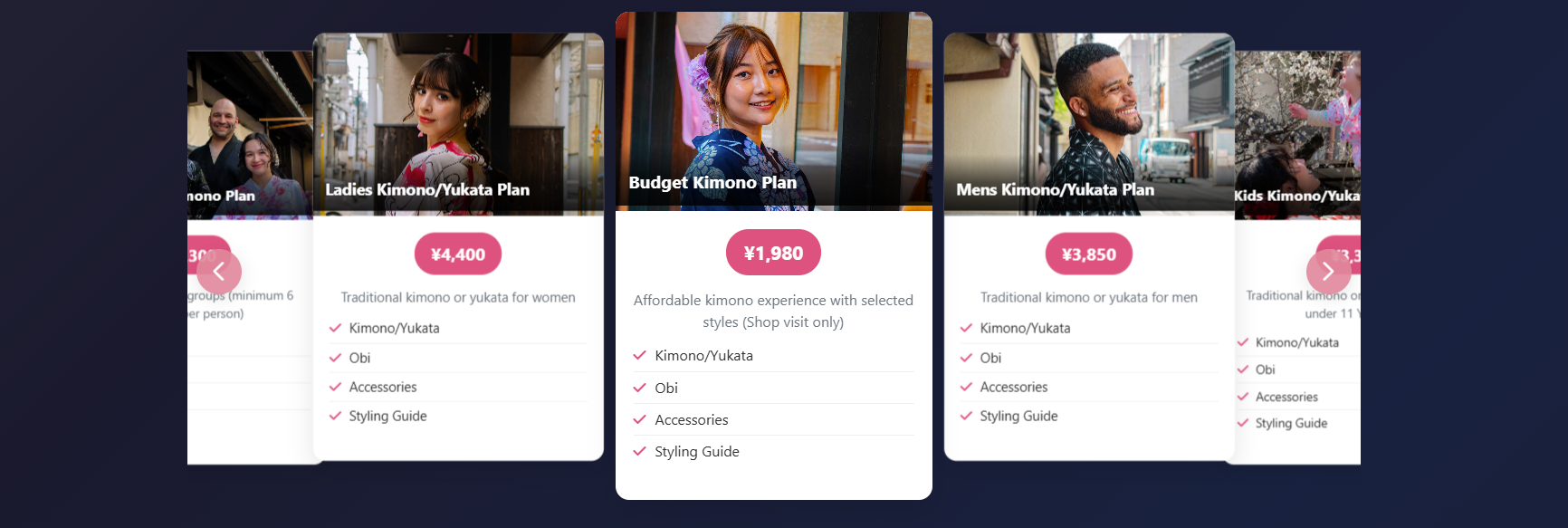
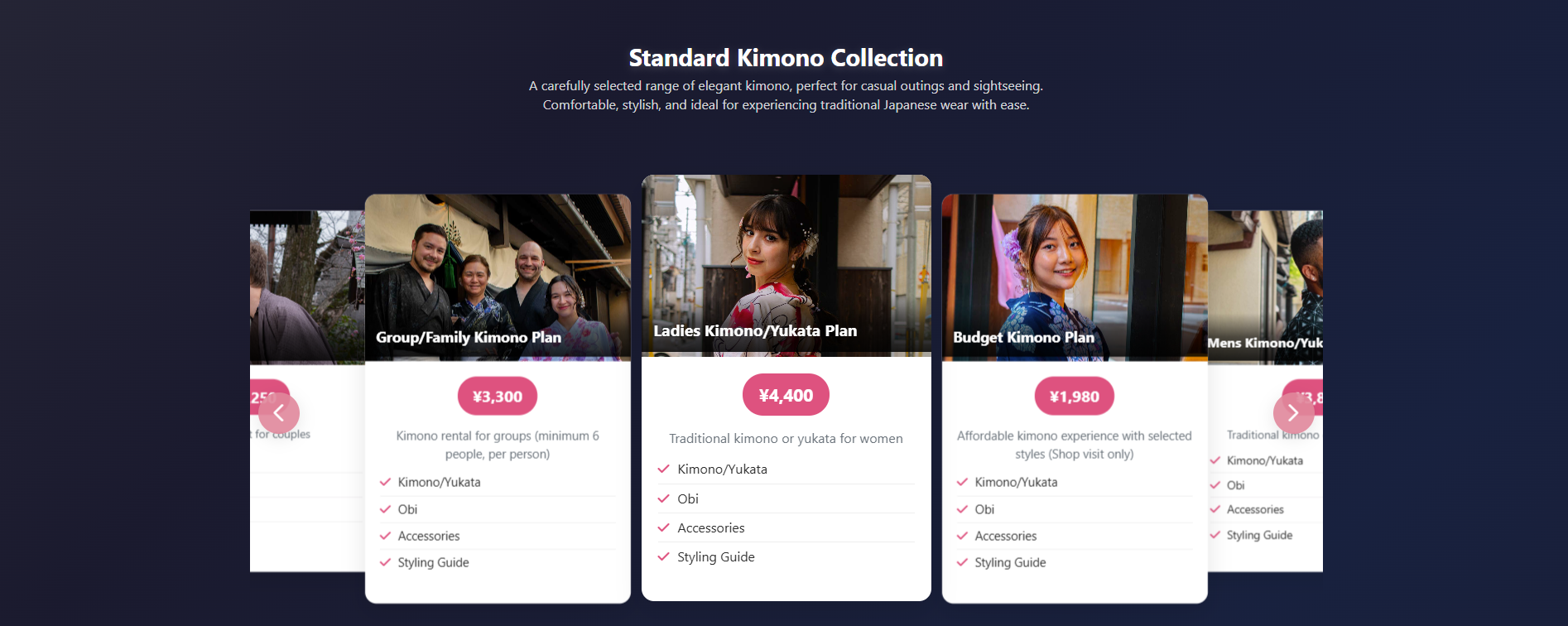
Pricing at Kimono no Obebe starts from ¥1,900 for a budget plan and goes up to ¥15,000 for the furisode — the long-sleeved formal kimono that photographs dramatically well. As a first-timer, most people land somewhere in the ¥3,000–¥8,000 range depending on the style they choose.
Hair styling and makeup add to that, and if you want a photography session, those start from ¥10,000. See the full breakdown on the plans and pricing page here.
One thing worth knowing: pricing stays the same all year. Spring cherry blossom season, autumn foliage, summer, winter — no seasonal surcharges. What you see on the plans page is what you pay. That's not how every shop in Kyoto works, so it's worth knowing before you compare options.
A First-Timer's Morning — What It Might Look Like
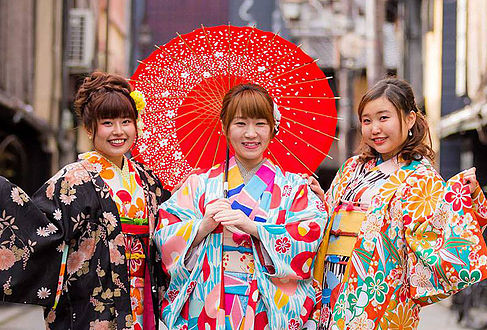
Here's a fictional but realistic scenario that captures what a first-time kimono rental day can actually feel like.
Imagine someone visiting Kyoto for the first time, solo, mid-October. They've booked a 10am slot at Kimono no Obebe. They arrive slightly nervous — they've never done anything like this and they don't speak Japanese. The staff greets them in English. Within a few minutes they're looking through kimono options, and they settle on a deep green with a gold obi. The dressing takes about 25 minutes. Their hair is styled up. They step outside into Gion at 10:30am, and for the next three hours they wander the backstreets, stop at a small matcha shop, and take photos near the stone lanterns of Yasaka Shrine. By noon, they've already decided it was the best morning of the trip.
(This is a fictional example — but it's the kind of morning the experience is designed to create.)
Which Season Should You Do It?
Every season in Kyoto has something going for it — and as a first-timer, the season you're visiting in is almost always the right season. Here's a quick honest read on each.
Spring (March–May) is the most iconic. Cherry blossoms line the Shirakawa Canal and the paths near Maruyama Park. A kimono against sakura trees is the image most people picture when they think of Kyoto. It's also the busiest — book your rental slot in advance, especially for April.
Summer (June–August) means lighter yukata options, which are cooler and a great entry point for first-timers who aren't sure about committing to a full kimono. July's Gion Matsuri is one of Japan's most famous festivals, and wearing yukata during the festival feels completely natural — everyone does it.
Autumn (September–November) is genuinely spectacular. Red and gold maple leaves, cooler temperatures, fewer crowds than spring. The colors of the season complement deep kimono fabrics beautifully. A lot of repeat visitors say autumn is their favorite Kyoto season for this exact reason.
Winter (December–February) is quieter and surprisingly beautiful. The streets near Gion are calm, the atmosphere is serene, and winter kimono layering has a depth that lighter seasonal styles don't match. New Year's in Kyoto — with people heading to Yasaka Shrine for the first shrine visit of the year — is an extraordinary time to be dressed in a kimono.
Do I Need to Speak Japanese?
No. Full stop.
Kimono no Obebe has English-speaking staff. You can ask questions, understand what's happening during the dressing process, and communicate any preferences or concerns without a language barrier making the experience awkward. For first-timers especially, this matters. A lot of the nervousness around kimono rental is really nervousness about not being able to communicate. That's not an issue here.
Multi-language support is available too — so if English isn't your first language, there's a reasonable chance the team can work with you.
How to Get There and What to Do After
From Shijo Station (Hankyu Kyoto Line or Keihan Main Line), the shop is literally a 2-minute walk. From Kyoto Station, take the Karasuma subway line to Shijo — five minutes.
Once you're dressed and outside, you're already in the right place. Gion's stone-paved Hanamikoji Street is close. Nishiki Market — Kyoto's covered food market — is walkable. Yasaka Shrine is at the end of Shijo Street. Pontocho alley is nearby. You won't run out of places to walk.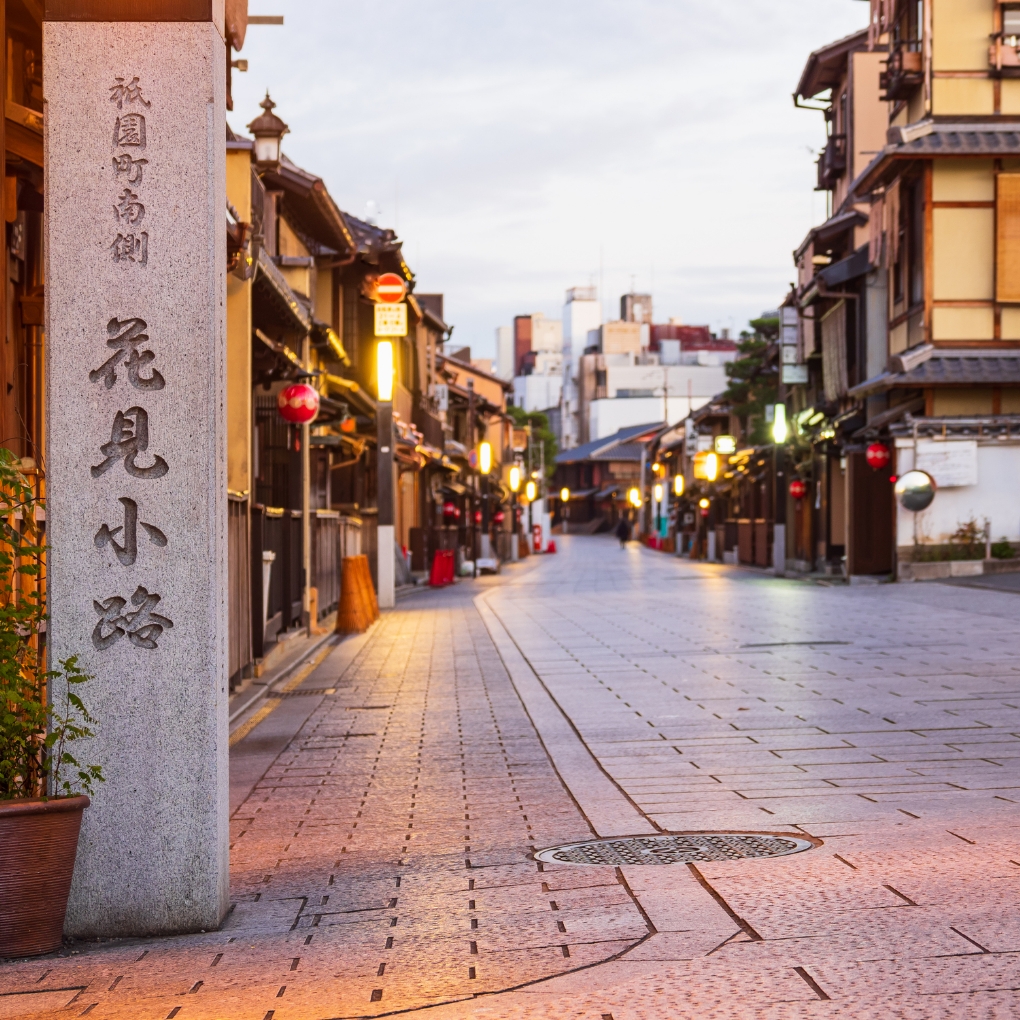
For a look at what the finished experience produces, the guest gallery is the most useful preview. Real people, different plans, different seasons. And for day-to-day content and recent shots, @kyoto_kimonorental_noobebe on Instagram gives you a genuine sense of the experience.
Ready to book or have questions? The team is reachable through the contact page here.
First times are rarely as complicated as they feel before you start. Kimono rental in Kyoto is one of those experiences where the anxiety going in is completely out of proportion to how easy and enjoyable it actually turns out to be. Go find out for yourself.