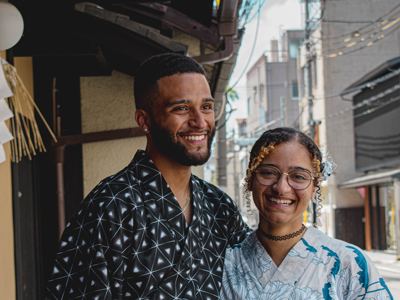
Kyoto at Night in a Kimono Is a Different Experience Entirely. Here Is How to Do It.
Most kimono rental days follow the same arc. You get dressed in the morning. You walk Gion and Pontocho through the middle of the day. You return the kimono by late afternoon and head back to your hotel before dinner.
That is fine. But it misses something.
Kyoto at dusk — when the red lanterns in Gion and Pontocho start to glow, when the stone-paved lanes empty out from the tourist peak, when the wooden facades of Hanamikoji reflect warm light against the darkening sky — is one of the most atmospheric versions of the neighborhood you can experience. And experiencing it in a kimono, dressed properly and already in the neighborhood, is the kind of thing that gets remembered long after a standard daytime stroll fades.
This post is for the traveler who wants the full range of what a kimono day in Kyoto can be — not just the morning version. By the end you will know what evening return kimono rental actually means at Kimono no Obebe near Shijo Station, what the evening neighborhood looks like by season, the best places to be once the light changes, and how to structure a day that runs morning through evening without rushing any of it.
What Evening Return Kimono Rental Actually Means
The phrase can mean different things at different shops, so let's be clear about what it means in practice.
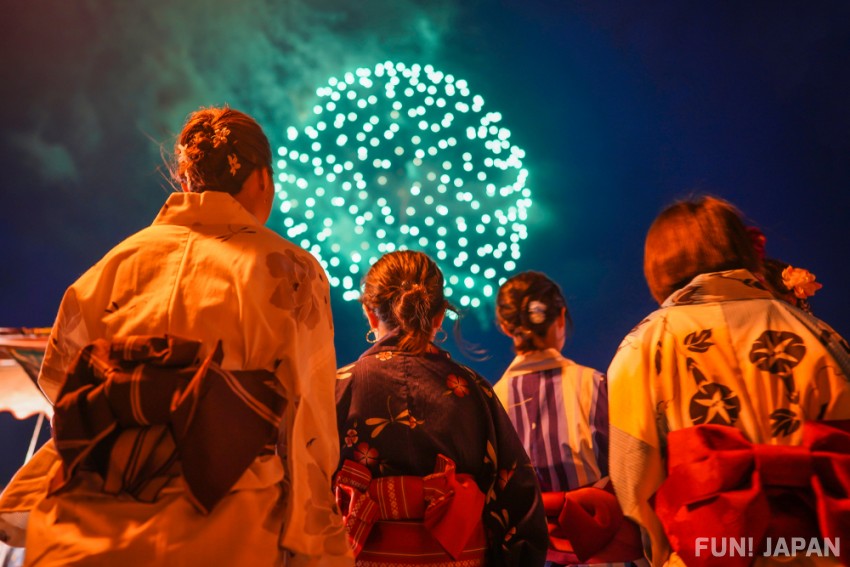
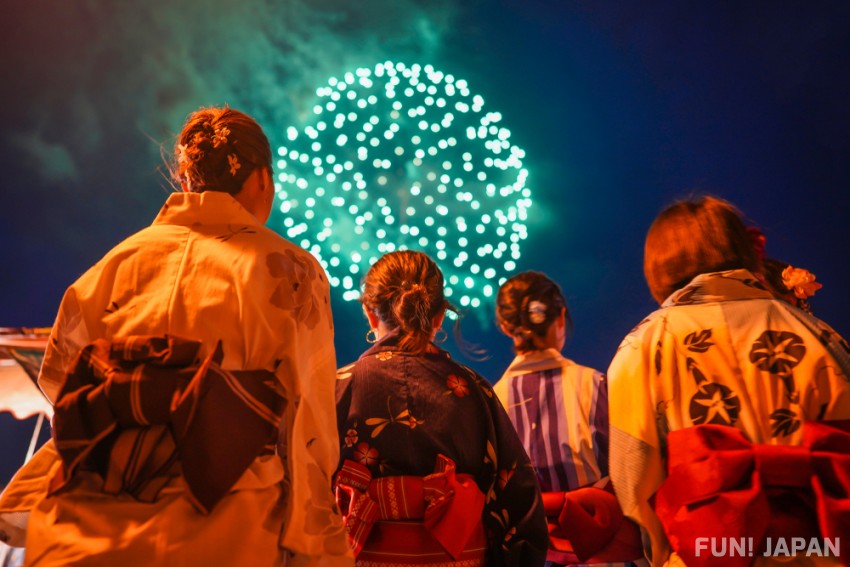
A standard full-day kimono rental typically runs until closing time — usually around 6pm at most Kyoto shops. An evening return option extends that window, allowing you to be out in the neighborhood as the evening light comes in and the atmosphere shifts, before returning the kimono later in the evening.
The value of this is specific to Kyoto's geography. Gion and Pontocho in the evening are genuinely different from the same streets at noon. The tourist density drops after 5pm as day-trippers head for their trains. The paper lanterns are lit. The restaurants open their evening service. The energy of the neighborhood becomes quieter and more local. Being dressed in a kimono in that environment — rather than having already changed back into regular clothes — is a meaningfully different experience.
For details on return times and evening availability, reach out to the team at Kimono no Obebe directly here to confirm what is available for your preferred date. Evening slots and extended returns have different availability depending on the season and the day.
Why the Evening Light Changes Everything for Photos
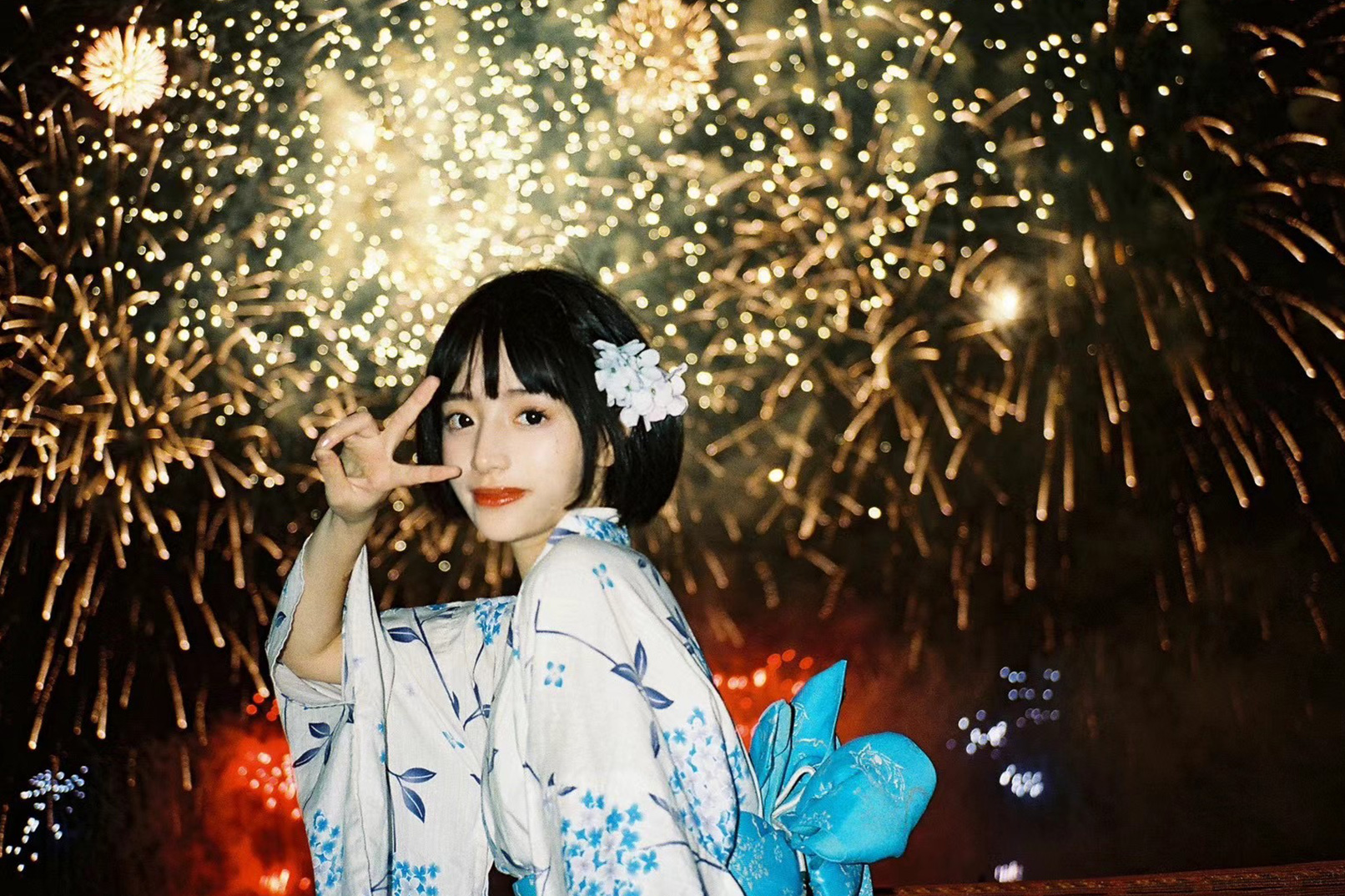
Photographers know this but most tourists do not: the best light of the day is not at noon. It is the hour before and after sunset — what photographers call golden hour — when the light is warm, directional, and creates depth in a way that flat midday sun cannot.
In Kyoto's Gion district, golden hour light hits the wooden facades of Hanamikoji and the stone-paved side streets in a way that midday shots simply do not produce. The red lanterns overhead become visible against a darkening sky rather than washing out against bright daylight. The shadows lengthen. The whole neighborhood looks like a photograph from a different era.
A kimono photographed in evening light in Gion looks better than the same kimono photographed at 11am on a bright spring day. The light does the work.
Kimono no Obebe offers professional photography sessions starting from 10,000 yen. If you are planning an evening extension, a photographer who knows the best spots at dusk — which corner of Hanamikoji catches the last light, which section of Pontocho is quietest in the early evening — produces images that are qualitatively different from midday tourist photography. Browse the guest gallery here to see the range of lighting conditions represented across different times of day and seasons.
A Realistic Evening Kimono Day — What It Actually Looks Like
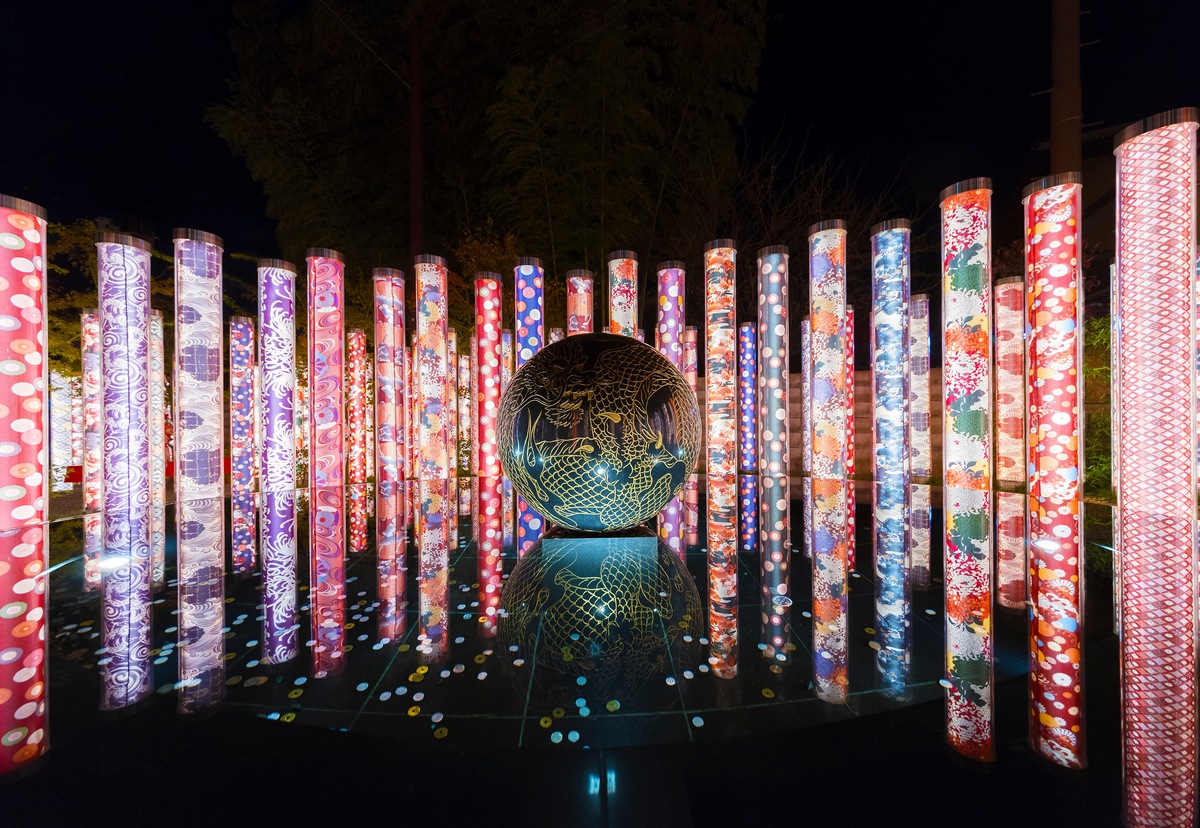
Here is a fictional but realistic picture of how a full day-into-evening kimono experience in Kyoto can unfold.
Imagine a couple visiting Kyoto for four days in late October. They book a morning slot at Kimono no Obebe and arrange an extended return window for the evening. They are dressed by 10am — she is in a deep burgundy furisode with a gold obi, he is in a slate blue haori set. They spend the morning in the quieter parts of Gion and along the Shirakawa Canal where the maple trees are starting to turn. Lunch in a small restaurant off Hanamikoji. The afternoon in Nishiki Market and around Yasaka Shrine. By 4:30pm the tourist crowds have started to thin. They walk back through Pontocho as the restaurant lanterns begin to glow. The evening light on the stone walls is completely different from the morning. They take photos they could not have taken at noon. They return the kimonos at closing time and walk two minutes back to Shijo Station for dinner.
(This is a fictional example — not a real account — but it captures what an extended kimono day is designed to make possible.)
The Best Evening Spots in Kyoto in a Kimono
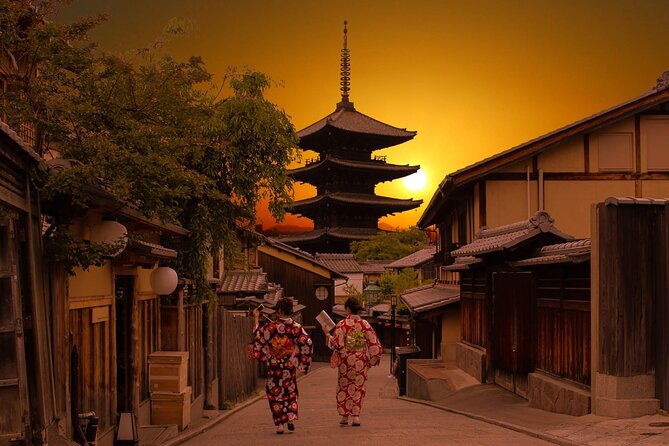
Not every Kyoto landmark is equally good in the evening. Here are the specific spots that improve significantly once the light changes — all walkable from Kimono no Obebe near Shijo Karasuma.
Pontocho Alley — 5 minutes from the shop. This is arguably the best evening destination in the neighborhood. The alley is narrow enough that the lanterns on both sides create a canopy of warm light. In summer, the yuka dining platforms extend over the Kamo River and the whole alley is busy with people eating, drinking, and enjoying the evening. In cooler months, the enclosed warmth of the alley feels even more intimate. Any time of year, Pontocho after 5pm is a different place from Pontocho at noon.
Hanamikoji Street, Gion — 10 minutes from the shop. The most iconic lane in Kyoto becomes a different place in the evening. The red paper lanterns glow against the darkening sky. The wooden machiya facades catch the last directional light of the day. The geiko and maiko who work in Gion are more active in the evenings — sightings are more likely after 5:30pm than at any point during the day. A kimono on Hanamikoji as the evening settles in is one of those Kyoto experiences that is hard to fully describe.
Yasaka Shrine — 15 minutes east along Shijo-dori. The shrine is lit at night and the stone lanterns along the approach create a particularly atmospheric walk in the dark. Entering the shrine precinct at night in a kimono — when the tourist day has ended and the space feels quieter and more ceremonially charged — is a noticeably different experience from visiting at midday.
Shirakawa Canal area — 12 minutes east. The small bridges over the canal and the lantern-lit walkway along the bank are designed for evening as much as daytime. In spring, the canal is lit up during cherry blossom season specifically for evening viewing — hanami illuminations that turn the reflected blossoms golden after dark.
How Each Season Changes the Evening Experience
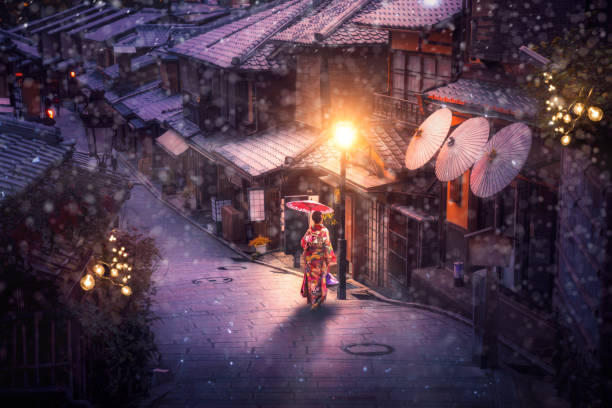
The evening atmosphere in Kyoto shifts significantly by season, and the evening kimono experience changes with it.
Spring (March-May) evenings during cherry blossom season are extraordinary. Maruyama Park illuminates the famous weeping cherry tree at night — one of the most photographed nighttime scenes in Japan. The Shirakawa Canal cherry blossoms are lit up after dark during peak bloom. The evening crowds during sakura season are significant, but the atmosphere is festive rather than exhausting. Being in a kimono during Maruyama Park hanami at night is one of those specific Kyoto experiences that does not have an equivalent anywhere else.
Summer (June-August) is the season for Pontocho evenings specifically. The yuka platforms are out from May through September — riverside dining over the Kamo River in the warm evening air. The Gion Matsuri in July runs evening events, processions, and lantern displays that are best experienced on foot in the neighborhood after dark. A yukata in summer Pontocho during the festival is about as immersive a Kyoto experience as you can find.
Autumn (October-November) brings the best evening light of any season. The low amber quality of early November sunsets, hitting the maple leaves and wooden architecture of Gion in the last hour before dark, is the kind of light that makes photographers stay out late. Deep-colored kimono fabrics catch that golden hour quality in a way that pale spring palettes do not. If photos are the priority, autumn evening is the strongest combination of season and light in Kyoto.
Winter (December-February) evenings are quiet and intimate in a way no other season matches. The tourist volumes are lower, the streets near Gion are easy to navigate, and the cold air makes the lantern light feel warmer by contrast. New Year illuminations around Yasaka Shrine on January 1st draw a local crowd in traditional dress — being in a kimono in that context is participatory rather than performative. A winter evening in Gion, well-dressed and in no particular hurry, is a genuinely beautiful way to spend a few hours in Kyoto.
Kimono no Obebe keeps pricing flat year-round with no seasonal surcharge. The plans page here shows consistent pricing from 1,900 yen to 15,000 yen for the furisode, applicable in spring, summer, autumn, and winter alike.
Practical Things to Know Before You Plan an Evening Return
A few specifics that matter more for evening rental than for a standard morning slot.
Book the time window in advance. Evening returns require confirming the return window when you book, not on the day. Contact the team through the contact page here to arrange this before your visit.
Plan for dinner in the kimono. Pontocho and the surrounding Gion area have some of Kyoto's best restaurants. Eating in a kimono is completely normal — but avoid anything messy that might risk the fabric. Kaiseki, small Japanese plates, soba, and tofu-based cuisine are all good choices. Sitting at a counter restaurant solo in a kimono in Pontocho is one of those experiences that is worth planning for deliberately.
Wear the right shoes out. You will be in zori sandals for the evening walk. They are comfortable for a few hours, but if the evening extends significantly, your feet will let you know. Bring shoes in a bag for the return journey if you are planning a late evening out.
The area is safe and well-lit. Gion and Pontocho in the evening are popular, well-maintained, and safe for solo travelers and groups alike. The lantern-lit atmosphere that makes them atmospheric also makes navigation easy.
Getting Here and What to Do Next
Kimono no Obebe is a 2-minute walk from Shijo Station on the Hankyu Kyoto Line or Keihan Main Line. Five minutes from Kyoto Station via the Karasuma subway line. The neighborhood is right outside the door once you are dressed.
For evening return availability, photography session bookings, and plan details, contact the team at the contact page here. For a real look at evening and late afternoon guest photography, @kyoto_kimonorental_noobebe on Instagram shows the range of lighting conditions and seasons. The about page here has more on the shop and the full experience.
A morning kimono rental in Kyoto is good. An evening one — lanterns lit, crowds thinning, that last hour of amber light on Hanamikoji — is the version you will still be thinking about when you get home.