Planning Your Autumn Photo Shoot in Traditional Kimono
A successful autumn kimono photo shoot in Japan requires thoughtful planning that balances timing, location, and logistics. Understanding these elements ensures you capture the beauty of both the season and traditional Japanese culture while making the most of your experience.
Best Times for Autumn Photo Shoots
Timing is everything when it comes to autumn photography in Japan. Beyond catching the seasonal peak of foliage, several factors influence when you should schedule your kimono photo shoot.
Optimal Time of Day
Early Morning (6:00-8:00 AM)
The early morning hours offer some of the most magical photography conditions:
- Soft, diffused golden light that enhances both kimono colors and foliage
- Significantly fewer tourists at popular locations
- Peaceful, serene atmosphere perfect for contemplative shots
- Cooler temperatures (10-15°C) that are comfortable while wearing kimono
- Fresh energy and crisp autumn air
Late Afternoon (3:30-5:00 PM)
The golden hour creates stunning photographic opportunities:
- Warm, amber tones that complement autumn colors
- Dramatic backlighting possibilities
- Long, artistic shadows that add depth
- Magical ambiance as the day transitions to evening
Midday Considerations (11:00 AM-2:00 PM)
While midday light can be harsh, this time slot has advantages:
- Warmest temperatures of the day
- Convenient for those who prefer not to wake early
- Works well in shaded temple gardens or covered locations
- More time to prepare and get dressed in kimono
Day of the Week Strategy
Weekday Advantages
Choosing a weekday for your photo shoot dramatically improves your experience:
- Popular autumn foliage sites see 50-70% fewer visitors
- More freedom to position yourself for ideal shots
- Less waiting for backgrounds to clear
- More relaxed, unhurried atmosphere
- Better parking and transportation availability
Weekend and Holiday Awareness
Be cautious about these dates:
- Japanese national holidays (Sports Day, Culture Day) bring massive crowds
- Weekends at peak foliage time can feel overwhelmingly busy
- Some locations implement crowd control measures
- Transportation may be more crowded and expensive
Seasonal Timing Across Japan
Understanding the progression of autumn colors helps you plan:
Early October
- Northern regions like Hokkaido begin their transformation
- Mountain areas at higher elevations show early color
- Less crowded as many wait for timing
- Cooler temperatures ideal for comfortable kimono wear
Mid-November
- Kyoto and Tokyo reach spectacular peak color
- Most popular time with highest visitor numbers
- Widest variety of locations at peak simultaneously
- Book accommodations and services well in advance
Late November to Early December
- Southern areas and lower elevations display autumn palette
- Urban parks and gardens shine
- Extended season allows makeup opportunities if you miss peak
- Increasingly cool weather requires layering options
Weather Considerations for Kimono Photography
Autumn weather in Japan can be wonderfully pleasant but also unpredictable. Being prepared for various conditions ensures your photo shoot succeeds regardless of what nature brings.
Temperature Management
Layering for Comfort
Autumn temperatures typically range from 10-15°C in the morning to 18-22°C in the afternoon:
- Kimono no Obebe offers haori (traditional jackets) that add warmth without hiding your kimono's beauty
- Under-layers are possible—rental shops can advise on appropriate undergarments
- Hand warmers can be discreetly carried for breaks between shots
- Plan for temperature drops if shooting into evening hours
Dressing Room Convenience
At Kimono no Obebe, located just steps from Shijo Station:
- Climate-controlled dressing rooms keep you comfortable during preparation
- Easy to return and change if weather becomes uncomfortable
- Central location means minimal time traveling in uncomfortable conditions
- Can store regular clothing while you're out shooting
Rain Contingency Planning
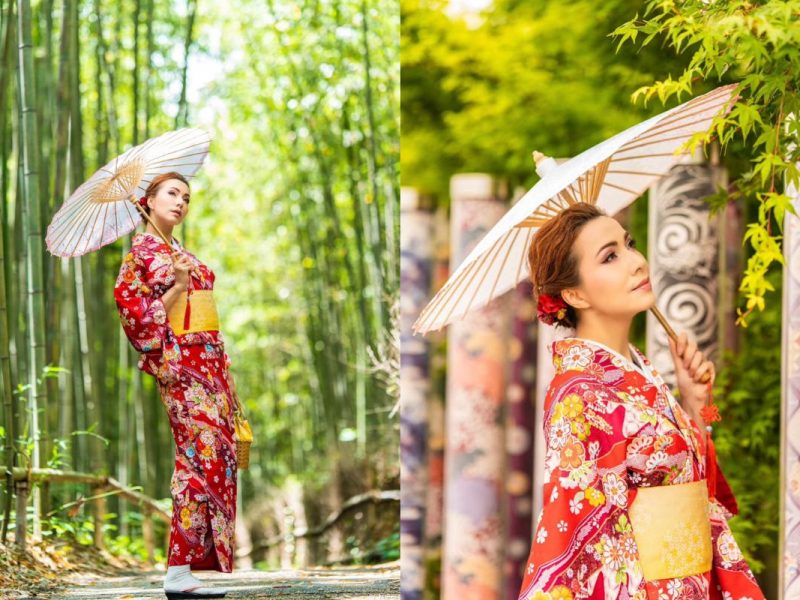
Light rain doesn't have to ruin your photo shoot—it can create atmospheric, unique images:
Rain Photography Opportunities
- Traditional Japanese umbrellas (wagasa) create stunning props and protection
- Rain-slicked streets reflect autumn colors beautifully
- Misty conditions add ethereal quality to temple gardens
- Fewer crowds brave the weather, giving you better access
Practical Rain Solutions
- Kimono no Obebe can help arrange clear modern umbrellas that protect while staying invisible
- Identify covered temple corridors and shrine areas in advance
- Many Kyoto temples have roofed walkways perfect for rainy-day photos
- Consider indoor-outdoor combination locations
Backup Location Ideas
- Covered shopping arcades in traditional districts
- Temple interiors (where photography is permitted)
- Traditional machiya townhouses
- Museum gardens with covered viewing areas
Wind Management
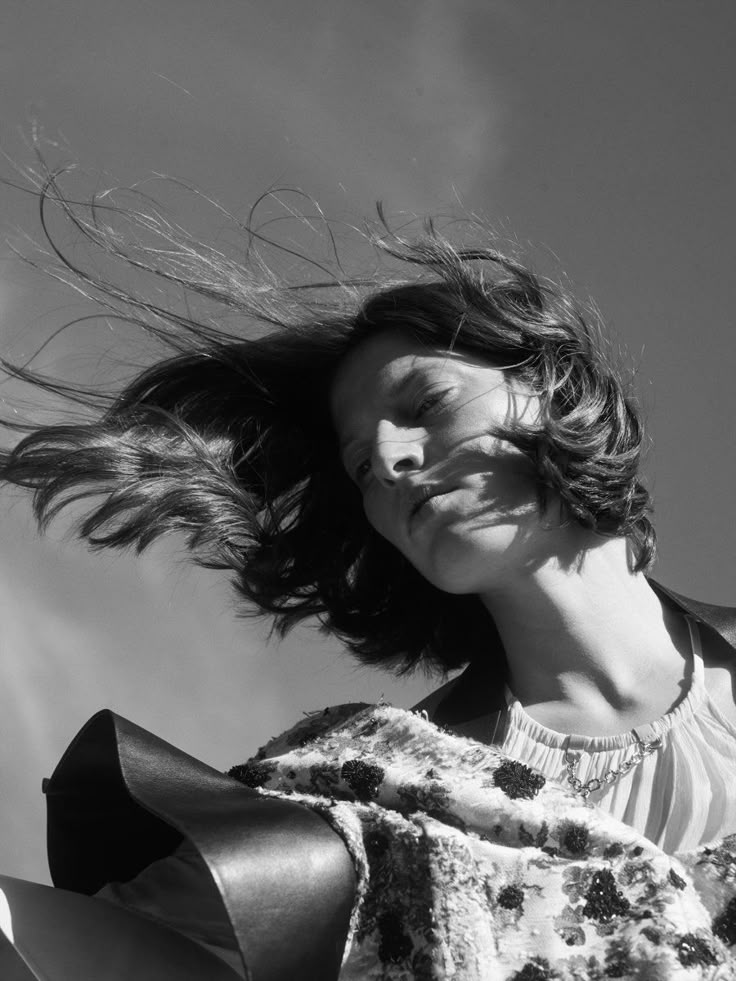
Strong winds pose unique challenges for kimono photography:
Wind Challenges
- Kimono styling can become disheveled quickly
- Traditional hairstyles may come loose
- Holding poses becomes difficult
- Some accessories may blow away
Wind Solutions
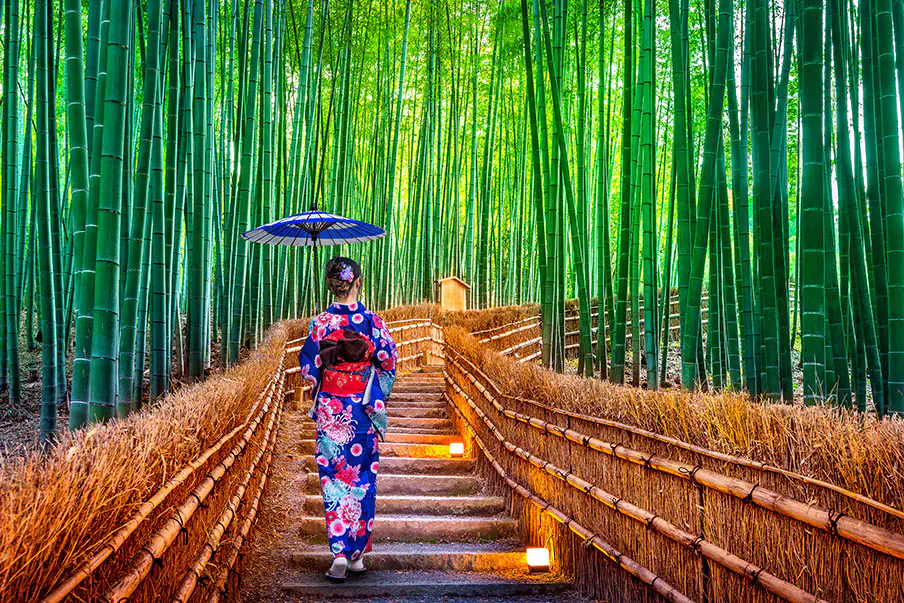
- Choose naturally sheltered locations (temple courtyards, bamboo groves, urban gardens)
- Schedule photographer to help with quick readjustments between shots
- Embrace controlled movement—wind can create beautiful flowing fabric moments
- Have extra hairpins available for quick fixes
Kimono no Obebe Advantage
With photography packages starting at ¥10,000 for 30 minutes, their experienced staff:
- Secure kimono styling to withstand light wind
- Provide quick touch-up services if needed
- Recommend wind-sheltered locations near their shop
- Include accessories that help manage windy conditions
Sunshine and Cloud Cover
Bright, Clear Days
Advantages:
- Vibrant blue skies contrast beautifully with red autumn foliage
- Sharp, colorful images with excellent contrast
- Warm, comfortable temperatures
Challenges:
- Harsh midday shadows can be unflattering
- Squinting in bright light
- High contrast can lose detail in dark kimono fabrics
Solutions:
- Seek dappled shade under trees
- Position yourself with sun behind or to the side
- Use early/late day times when sun is lower
- Photographer can use reflectors to soften shadows
Overcast Days
Advantages:
- Soft, even lighting perfect for portraits
- No harsh shadows to manage
- Colors appear saturated and rich
- Comfortable shooting without squinting
Challenges:
- Less dramatic than blue-sky backgrounds
- Can feel flat if not composed creatively
- Slightly cooler temperatures
Location Scouting Tips
Choosing and preparing your photography locations significantly impacts your final images and overall experience.
Research Before You Go
Online Resources for Foliage Reports
- Japan-guide.com provides weekly autumn color reports
- Local tourism boards update current conditions
- Social media hashtags show real-time visitor photos
- Weather websites predict upcoming conditions
Timing Your Visit to Peak Color
Each location peaks at different times:
- Check historical peak dates for your chosen locations
- Follow current-year reports starting in early October
- Be flexible with your schedule if possible
- Have backup dates within your trip window
Visiting Locations in Advance
If your schedule allows, scout locations before your photo shoot day:
What to Look For
- Actual lighting conditions at your planned shoot time
- Current crowd levels and patterns
- Best angles and compositions
- Background distractions to avoid
- Accessibility and walking distances
Practical Logistics to Note
- Parking availability and cost
- Public transportation options and schedules
- Restroom locations (important when wearing kimono!)
- Food and drink options nearby
- Mobile phone signal strength
- Accessibility for elderly or mobility-limited participants
Location Distance from Kimono Rental
This is a crucial planning factor often overlooked:
Walking in Kimono Considerations
Traditional kimono footwear (zori or geta) limits walking distance:
- 10-15 minute walks are generally comfortable
- Extended walking can cause blisters or discomfort
- Kimono restricts stride length, making distances feel longer
- Uneven terrain is more challenging
Kimono no Obebe Location Advantage
Situated steps from Shijo Station in central Kyoto:
- Walking distance to Gion's traditional streets
- Short taxi rides to major temples (Kiyomizu-dera, Yasaka Shrine)
- Easy access to Kyoto's efficient bus system
- Can return quickly if adjustments needed
Transportation Planning
- Pre-book taxis if traveling to distant locations
- Research bus routes and schedules in advance
- Allow extra time for travel while wearing kimono
- Consider hiring photographer who provides transportation
Photography Restrictions to Verify

Not all beautiful locations permit photography freely:
Common Restrictions
- Some temples prohibit tripods or professional equipment
- Interior photography often forbidden
- Commercial photography may require permits and fees
- Drone photography typically prohibited at cultural sites
How to Check in Advance
- Visit official website of temples/gardens
- Call or email location management
- Ask your kimono rental shop about known restrictions
- Check recent visitor reviews for policy updates
Kimono no Obebe Photography Packages Include
When you book photography services (starting at ¥10,000):
- Photographer familiar with local restrictions
- Pre-planned routes avoiding problematic locations
- Knowledge of permit-free public areas with beautiful backgrounds
- Backup location suggestions if primary choice has issues
Hidden Gems vs. Popular Locations
Balancing Your Location List
Famous Locations
Advantages:
- Guaranteed spectacular scenery
- Well-maintained grounds
- Accessible facilities
- Iconic, recognizable backdrops
Disadvantages:
- Heavy crowds, especially at peak
- Challenging to get shots without other tourists
- May require tickets or advance reservations
- Can feel rushed or stressful
Lesser-Known Spots
Advantages:
- Peaceful, uncrowded atmosphere
- More time and freedom to experiment
- Authentic, undiscovered feeling
- Often free or low-cost entry
Disadvantages:
- May require more research to find
- Foliage quality can be unpredictable
- Less maintained facilities
- Harder to reach by public transportation
Recommended Balance
Plan for 2-3 locations mixing both types:
- One famous location (early morning to avoid crowds)
- One local neighborhood shrine or garden
- One flexible backup option
Working with Kimono no Obebe's Multilingual Support
Planning Advantage: English Speakers Available
One of Kimono no Obebe's standout features is their multilingual support:
Language Support Benefits
- Clear communication about location recommendations
- Understanding of photography goals and vision
- Ability to explain technical kimono details
- Help coordinating with Japanese-speaking vendors
- Assistance with transportation directions
Planning Your Shoot with Their Team
When you book, their English-speaking staff can:
- Recommend locations based on current foliage reports
- Suggest timing to avoid crowds
- Coordinate photographer schedules
- Provide maps and transportation instructions
- Share insider tips about lesser-known spots
Photography Package Convenience
30-Minute Session (¥10,000)
Perfect for:
- First-time visitors wanting professional memories
- Limited time in Kyoto
- Those uncertain about extended shoots
- Budget-conscious travelers
Includes:
- Professional photographer
- Kimono rental and dressing
- Hair styling
- Photos around shop area and nearby locations
- Digital delivery of edited images
4-Hour Package (¥25,000)
Ideal for:
- Visitors wanting variety in backgrounds
- 2-3 different location visits
- More relaxed, unhurried pace
- Higher volume of photos
Includes:
- Extended photographer time
- Full kimono rental and styling
- Travel to multiple nearby locations
- Larger collection of edited images
- Time for outfit adjustments between locations
Full-Day Experience (¥50,000)
Premium option for:
- Special occasions (anniversaries, proposals)
- Comprehensive coverage across Kyoto
- Maximum variety in shots and locations
- Sunrise to sunset photography
Includes:
- All-day photographer accompaniment
- Complete kimono rental and styling
- Multiple location visits of your choice
- Extensive edited photo collection
- Flexibility for spontaneous moments
Creating Your Location Schedule
Sample Half-Day Itinerary (4-Hour Package)
8:00 AM - Arrival at Kimono no Obebe
- Kimono selection and dressing
- Hair styling
- Final preparation
9:30 AM - First Location: Yasaka Shrine
- 10-minute walk from shop
- Peaceful morning atmosphere
- Traditional gate and garden backgrounds
- 45 minutes of photography
10:30 AM - Second Location: Maruyama Park
- Adjacent to Yasaka Shrine
- Autumn foliage and pond scenery
- More relaxed, natural settings
- 45 minutes of photography
11:30 AM - Third Location: Gion District Streets
- Traditional machiya architecture
- Classic Kyoto atmosphere
- Walking shots and candid moments
- 30 minutes of photography
12:30 PM - Return to Shop
- Change back to regular clothes
- Review and select favorite shots
- Completion
Sample Full-Day Itinerary (8-Hour Package)
7:00 AM - Early Start at Kimono no Obebe
- Beat the crowds with sunrise timing
- Full preparation and styling
8:00 AM - Kiyomizu-dera Temple
- Taxi to temple area
- Capture morning light on autumn foliage
- Iconic wooden terrace views
- 90 minutes of photography
10:00 AM - Ninenzaka and Sannenzaka Streets
- Traditional stone pathways
- Historic architecture
- Shopping street atmosphere
- 60 minutes walking and shooting
11:30 AM - Lunch Break
- Rest and refreshment
- Touch-up styling if needed
1:00 PM - Arashiyama Area
- Taxi to western Kyoto
- Bamboo grove photography
- Togetsukyo Bridge and river scenery
- 90 minutes coverage
3:00 PM - Tenryu-ji Temple Garden
- Classic garden composition
- Peak autumn color typically
- 60 minutes of photography
4:30 PM - Return Journey
- Golden hour shots during travel
- Final photos near shop if desired
5:30 PM - Completion
- Change and wrap-up
Essential Planning Checklist
3-4 Weeks Before Your Shoot
- Research autumn foliage peak timing predictions
- Book kimono rental at Kimono no Obebe
- Select photography package (30-min, 4-hour, or full-day)
- Reserve accommodations near Shijo Station if traveling
- Research and shortlist 4-5 potential locations
1-2 Weeks Before
- Check current foliage reports and adjust locations if needed
- Confirm all bookings and appointments
- Share photography inspiration with Kimono no Obebe team
- Plan transportation routes to locations
- Check weather forecasts and prepare backup plans
2-3 Days Before
- Recheck foliage status for final location decisions
- Monitor detailed weather forecasts
- Confirm photographer meeting time and location
- Prepare comfortable shoes for travel
- Charge all devices and prepare power banks
Day Before
- Get good rest (early shoot times!)
- Prepare bag with essentials
- Review location addresses and routes
- Set multiple alarms if early start time
- Finalize color preferences for kimono
Day of Shoot
- Arrive on time at Kimono no Obebe
- Communicate any last-minute preferences
- Enjoy the experience and trust your photographer
- Stay hydrated during the day
- Take mental photos alongside camera shots
Why Choose Kimono no Obebe for Your Autumn Photo Shoot
Comprehensive Advantages
1. Unbeatable Pricing
- Best prices across all seasons in Kyoto
- Photography sessions starting at just ¥10,000
- All-inclusive packages eliminate hidden costs
- Excellent value compared to booking separately
2. Prime Location
- Steps from Shijo Station (main Kyoto transit hub)
- Walking distance to Gion and traditional areas
- Easy access to all major autumn foliage sites
- Convenient for travelers with luggage
3. Professional Services
- Experienced kimono dressing specialists
- Professional hair styling included
- Makeup services available
- Quality garments well-maintained
4. Multilingual Support
- English-speaking staff eliminate communication stress
- Clear explanation of options and processes
- Help with location planning and recommendations
- Assistance coordinating broader Kyoto itinerary
5. Photography Expertise
- Photographers experienced in kimono styling
- Knowledge of best local autumn locations
- Understanding of optimal timing and lighting
- Efficient workflow maximizes shooting time
6. Flexible Options
- Multiple package durations to fit any schedule
- Bring your own kimono packages available
- Can extend rental time if shoot runs long
- Accommodating of special requests
Conclusion
The secret to an unforgettable autumn kimono photo shoot lies not just in the moment itself, but in the thoughtful preparation beforehand. By understanding optimal timing, preparing for various weather scenarios, carefully scouting locations, and choosing a partner like Kimono no Obebe that simplifies logistics while providing exceptional value, you set yourself up for success.
Remember that the best photographs come from moments when you're relaxed, comfortable, and fully present in the experience. Let the planning handle the stress, so when you're dressed in your beautiful kimono surrounded by Kyoto's autumn splendor, you can simply enjoy the magic of the moment.
Ready to plan your autumn kimono photo shoot?
Visit Kimono no Obebe to explore rental options and photography packages, or check their Instagram for inspiration from past guests' autumn photo shoots.
Contact Kimono no Obebe:
- Website: kimononoobebe.love
- Plans & Pricing: View All Plans
- Guest Photos: See Our Guests
- Contact: Contact Us
- About: About Kimono no Obebe
- Instagram: @kyoto_kimonorental_noobebe
Comparison Table: Photography Package Options
| Package Type | Duration | Price | Best For |
|---|---|---|---|
| Quick Session | 30 minutes | ¥10,000 | First-time visitors, limited time, budget-conscious |
| Half-Day Experience | 4 hours | ¥25,000 | Multiple locations, varied shots, relaxed pace |
| Full-Day Premium | 8+ hours | ¥50,000 | Special occasions, comprehensive coverage, maximum variety |
Your autumn kimono photographs will become treasured memories of a season when you walked through Japan's most beautiful landscapes, wrapped in centuries of tradition, creating art with every step.