Men's Kimono Rental in Kyoto — Less Complicated Than You Think
Let's address the thing most men are quietly wondering when they consider kimono rental in Kyoto.
Is this actually for me? Will it look weird? Is it going to be some kind of production that my travel companion wants to do and I'm just along for it?
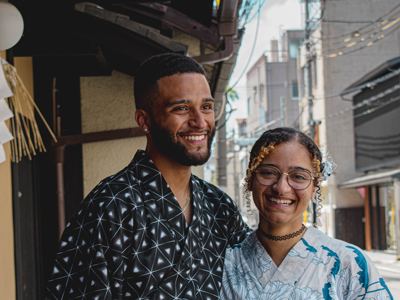
Here's the honest answer: men's kimono rental is genuinely straightforward, looks sharp when done properly, and takes less time than the women's version. The outfit is more structured and less fussy — a kimono, an obi tied simply at the back, a haori jacket over the top, and tabi socks with sandals. The whole look is clean, understated, and photographs well without requiring the same level of accessory coordination that women's kimono does.
If you've been on the fence about this, this post is worth finishing. By the end you'll know exactly what men's kimono rental involves at Kimono no Obebe near Shijo Station, what the different styles look like, what you'll spend, and where to go once you're dressed. No guesswork.
What Men's Kimono Actually Looks Like
Most people's mental image of kimono is the women's version — long sleeves, elaborate obi, bright colors, the works. Men's kimono is a different aesthetic entirely.
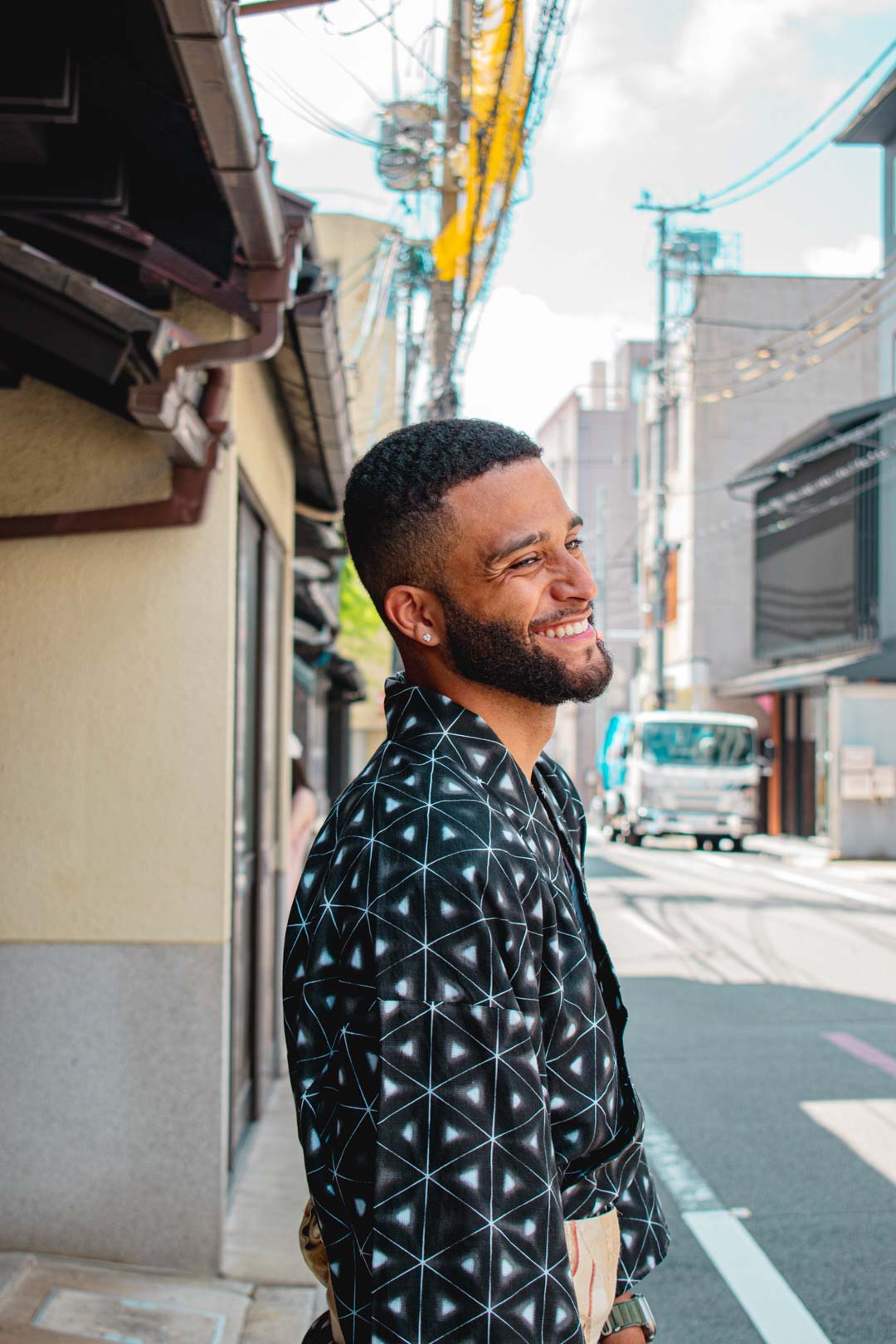
The silhouette is straight and clean. The colors run darker — navy, charcoal, deep green, earthy browns, black. The patterns, when they exist, tend to be subtle: small geometric repeats, fine stripes, understated textures. The obi is tied in a simple knot at the back, not the structured bow you see on women's kimono. And the haori — the shorter jacket worn over the kimono — adds a layer that gives the whole look a bit of weight and intention.
The result is something that reads as both traditional and quietly stylish. It doesn't look costume-y. It looks like you made a deliberate choice. That's the thing men who've done it often say afterward: it looked better than I expected.
Men's Kimono Styles: What You're Choosing Between
At Kimono no Obebe, men's options include a range of styles from casual everyday kimono through to the more formal montsuki — the formal men's kimono traditionally worn for ceremonies and significant occasions, typically featuring a family crest on the back and chest.
For most tourists visiting Kyoto, the standard men's kimono with haori jacket is the right choice. It's relaxed enough to walk around in comfortably all day, looks good in photos without feeling overdressed for a casual stroll through Gion, and is significantly easier to wear than the formal alternatives.
If you're visiting with a partner and she's going for the furisode or a premium women's plan, the men's haori set matches in formality without trying to compete. The two looks photograph well together — the contrast between the detailed women's kimono and the cleaner men's silhouette actually works in your favor.
Full details on men's plans and pricing are on the plans page here. Pricing is consistent year-round — no seasonal surcharges regardless of when you visit.
How Long Does It Take to Get Dressed?

This is the question most men ask first. The answer: faster than the women's version.
A men's kimono dressing typically takes around 15–20 minutes. The layering is simpler, the obi is tied in a basic knot rather than the complex formal styles used for women's kimono, and there's no elaborate hair styling involved unless you want it. You arrive, pick your kimono and haori, get dressed with staff assistance, and you're outside in under half an hour.
The shop is a 2-minute walk from Shijo Station — Hankyu Kyoto Line or Keihan Main Line. From Kyoto Station, it's 5 minutes on the Karasuma subway line. You arrive by train, walk two minutes, get dressed, and walk directly into Gion. No transit needed once you're in the kimono.
A Realistic Men's Kimono Day — What It Actually Looks Like
Here's a fictional but grounded scenario that captures how a men's kimono day tends to go.Imagine two guys visiting Kyoto together — one dragged the other into the kimono rental plan, half-expecting resistance. They arrive at Kimono no Obebe at 10am. The skeptic picks a deep navy kimono with a charcoal haori, mostly because the color looks like something he'd actually wear. Getting dressed takes 18 minutes. He looks in the mirror and says something along the lines of: "okay, this is actually pretty good." They walk east into Gion. The skeptic ends up being the one who wants to stay longer. By noon they've walked through Hanamikoji, stopped for matcha at a small shop off the main path, and wandered along the Shirakawa Canal. The photos are good — properly good, not just polite travel snapshots.
(This is a fictional example — not a real account — but it's a scenario that plays out in various forms more often than you'd think.)
The Photography Option — Worth Considering for Couples and Groups
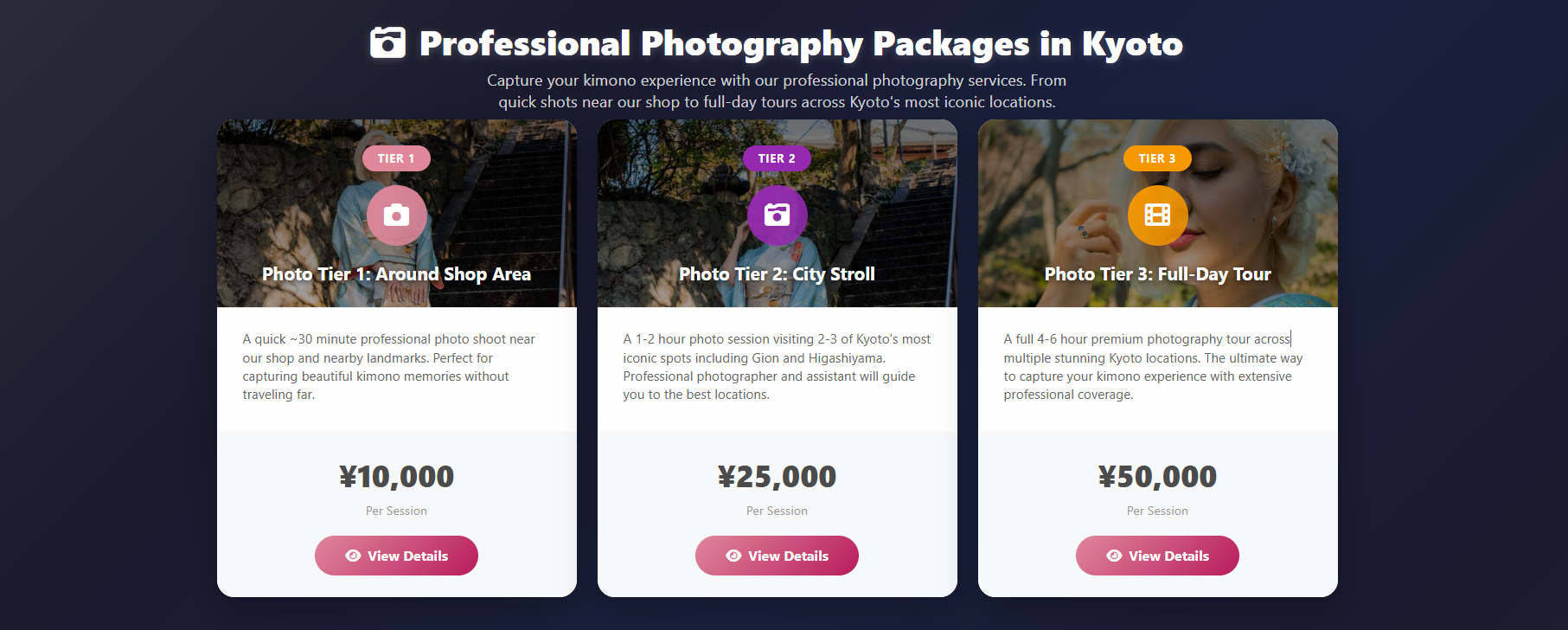
If you're visiting with a partner or a group, the photography session is worth knowing about. Kimono no Obebe offers professional photography starting from ¥10,000 — a photographer joins you after dressing and takes you through the best spots in the Gion area with actual knowledge of where the light and backdrops work.
For men specifically, this tends to produce better results than solo phone photography because the men's kimono look reads better in motion than in stiff posed shots. Walking through an alley, standing at the entrance to a shrine, leaning against a stone wall — those are the shots that look right. A photographer who knows the neighborhood knows exactly where to put you for that.
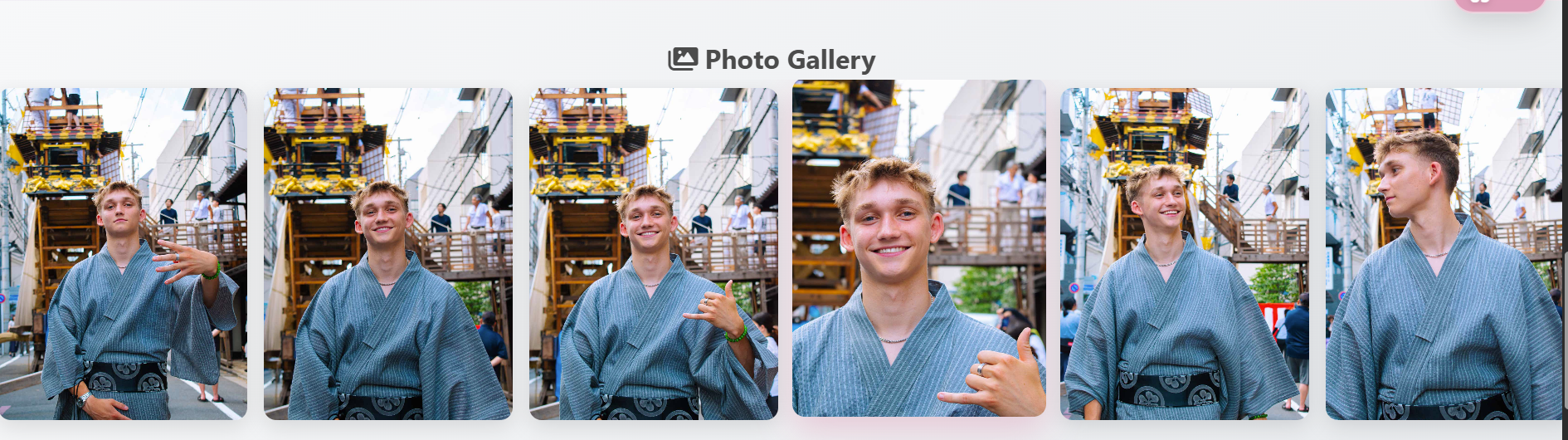
See what past guests have looked like — including couples and groups — in the guest gallery here.
What to Wear Underneath — The Practical Bit
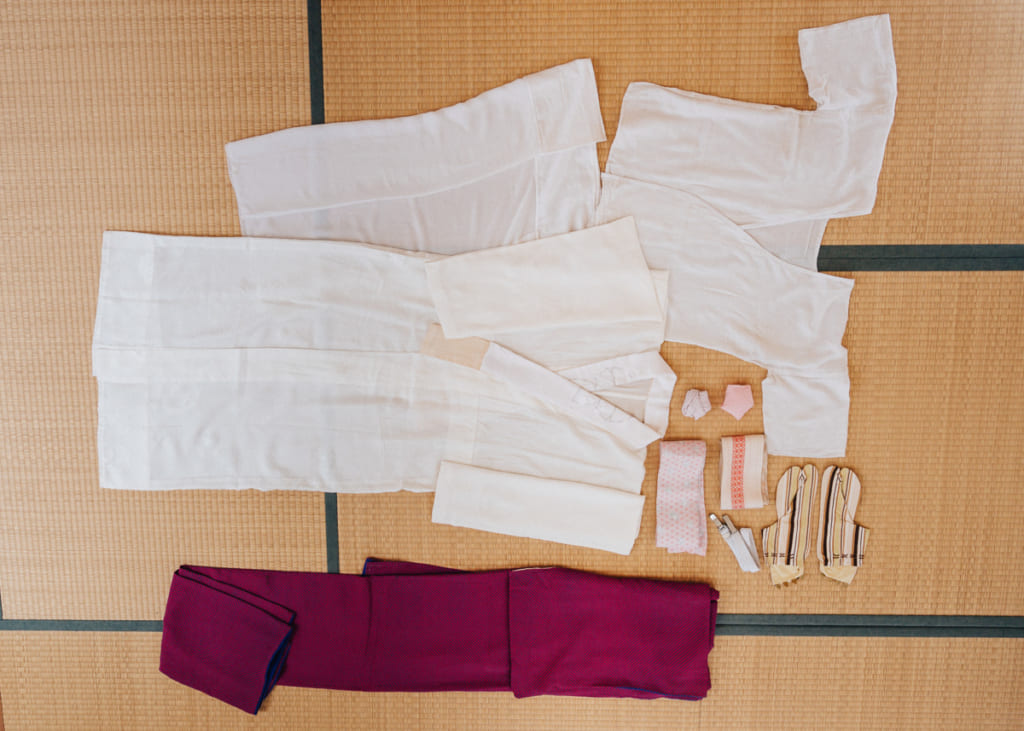
A thin, plain t-shirt or undershirt works fine underneath a men's kimono. The collar sits open at the front and low at the back, so avoid thick crewnecks or anything that'll bunch under the neckline. A plain V-neck or simple crew in a neutral color is ideal — it won't show and won't add bulk.
For cold weather visits, a thin thermal layer underneath is completely fine. The staff will work around it. Kyoto winters are genuinely cold, and nobody expects you to freeze in January for the sake of the look.
Footwear: you'll be wearing zori sandals as part of the rental. Wear socks that are easy to change (tabi socks are provided) and shoes you can slip in and out of quickly.
Where to Go Once You're Dressed — Best Spots for Men's Kimono in Kyoto
The shop's location near Shijo Karasuma means you're already at the right end of the city. Here's where to go.
Gion — Hanamikoji Street is the obvious first stop and it's obvious for good reason. The stone-paved lane with traditional machiya townhouses is the backdrop that makes a men's kimono look intentional rather than dressed-up. Go before 10am if you want it without the tourist crowd. The look works in any season here.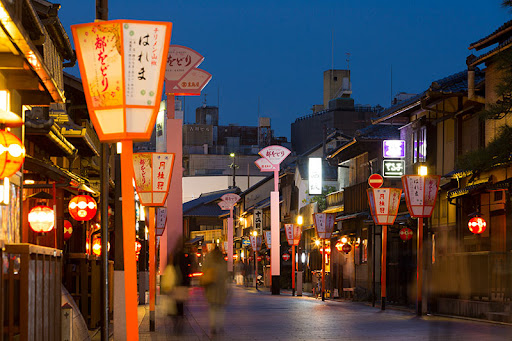
Pontocho Alley is 5 minutes north and feels different from Gion — narrower, darker, more intimate. The compressed architecture and textured walls make for strong photos, especially in the mid-morning before restaurants open and the foot traffic picks up.
Yasaka Shrine is a 15-minute walk east along Shijo-dori. The stone lanterns lining the path to the main hall, the orange torii gate at the entrance, the open courtyard — all of it works as a backdrop for men's kimono in a way that's straightforward without being generic.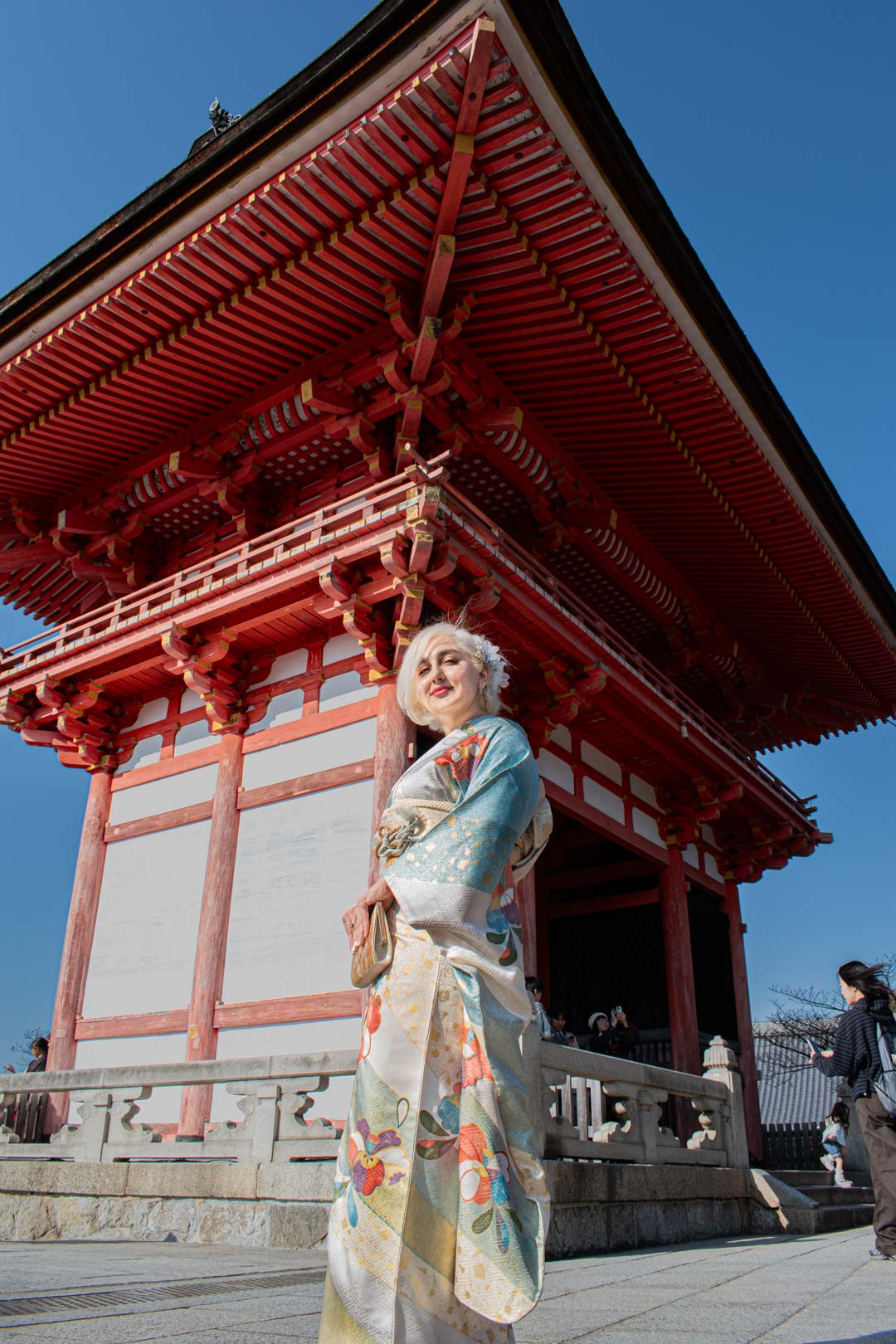
Nishiki Market is 5 minutes northwest. Walking through the covered market in a kimono is a different experience from walking it in regular clothes — vendors notice, people smile, it feels participatory rather than observational. Good for the middle of the day when the light outside is harsh anyway.
How Each Season Affects the Men's Kimono Experience
Spring (March–May) is cherry blossom season and the most popular time for kimono rental across the board. The Shirakawa Canal lined with blooming trees is one of the most photographed spots in Kyoto, and a men's kimono against that backdrop photographs cleanly. Book in advance — April especially fills up fast.
Summer (June–August) is hot. The lighter men's yukata option makes more sense in July and August than a full kimono, and during the Gion Matsuri festival in July, wearing yukata in this neighborhood is completely natural — it's what everyone's doing. The festival atmosphere adds a context that makes the whole experience feel less like tourism.
Autumn (October–November) is strong for men's kimono specifically because the darker color palettes — navy, charcoal, deep green — contrast well against red and gold maple leaves. The neighborhood around Gion and the Shirakawa Canal in late November has a warmth to the light and a depth of color that spring doesn't match. If you're choosing a travel window, autumn is worth serious consideration.
Winter (December–February) offers quiet streets, fewer crowds, and a calm that other seasons don't. The layered men's kimono look — with the haori jacket over the top — handles cooler temperatures reasonably well and photographs with a starkness that suits the season. New Year in Kyoto, with Hatsumode at Yasaka Shrine, is a particularly good time to be in traditional dress.
Booking and Contact
Questions about men's plans, sizing, or availability? Reach the team through the contact page here. English-speaking staff, multi-language support available. For a real look at men's kimono results and the full range of styles, @kyoto_kimonorental_noobebe on Instagram shows recent guest photos across different seasons and plan types. And for background on the shop itself, the about page here gives you the full picture.
Men's kimono rental in Kyoto is one of those things that sounds like more of a commitment than it actually is. Twenty minutes to get dressed, a few hours in one of the most beautiful neighborhoods in Japan, photos that look genuinely good. It's worth doing — and it's a lot less complicated than you were probably assuming.