You've Been Invited to a Japanese Wedding. Now What Do You Wear?

It's a question that catches most international guests off guard. You've received the invitation, you've booked your flights, you've figured out the venue — and then you realize: a Western outfit feels wrong for a Shinto shrine ceremony in Kyoto. But you've never worn a kimono before, you're not sure what's appropriate for a wedding context, and you don't know where to start.
This is exactly the situation a lot of international guests find themselves in when attending Japanese weddings or formal ceremonies near Kyoto's Gion district.
This post is going to walk you through what kimono rental for wedding guests actually looks like — what styles are appropriate, what to avoid, how the process works at Kimono no Obebe near Shijo Station, and how to show up looking genuinely considered rather than like a tourist who made a guess. By the end, you'll have a clear picture of what to do and enough confidence to book.
What Kimono Is Actually Appropriate for a Wedding Guest?
This is the most important question — and it has a clear answer.
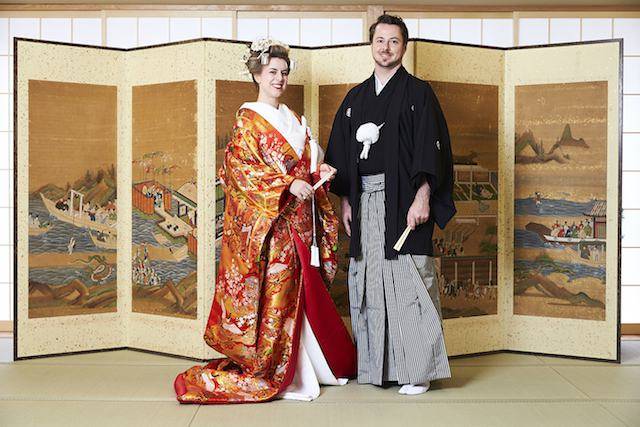
For female wedding guests, the homongi or tsukesage are the appropriate choices. These are semi-formal kimono with flowing patterns that cross the seams — a design feature that signals formality without crossing into the territory reserved for the bride or close family. Colors should lean toward soft and elegant: dusty rose, sage green, pale gold, soft lavender, muted blue. Avoid pure white (reserved for the bride in some contexts) and extremely bright or loud patterns that compete for attention.
The furisode — the long-sleeved formal kimono — is technically appropriate for unmarried women at weddings, but it's worth checking with the couple or the host family first, since it's one of the most formal options available and context matters.
For male guests, the haori hakama set — a kimono paired with wide-legged trousers and a formal jacket — is the appropriate formal choice. It photographs extremely well and reads as appropriately dressed without being overdone.
At Kimono no Obebe, the English-speaking staff can guide you through which options are right for your specific context. That conversation is much easier to have in English at the shop than to navigate on your own with limited Japanese and a Google search at 11pm before the ceremony.
The Dressing Experience for Formal Occasions
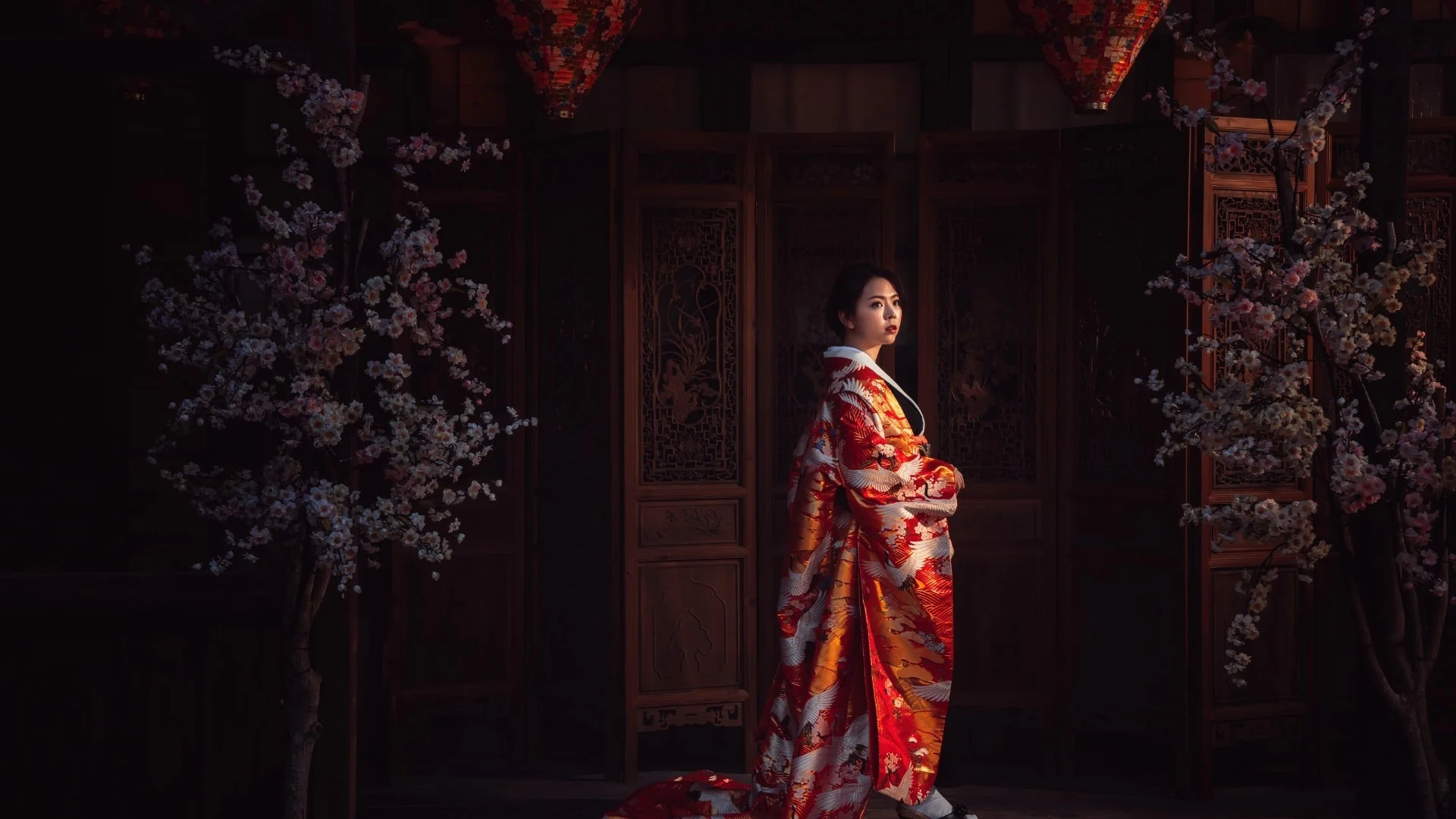
Wearing a kimono to a wedding isn't the same as wearing one for a casual tourist walk through Gion. The formality level is higher, which means the dressing needs to be more precise — the obi tied in the correct formal style, the collar positioned correctly, the accessories appropriate for a ceremonial context.
This is not the time for a rushed 15-minute change. Plan for a proper dressing session — around 30 minutes for women, slightly less for men — where the staff takes the time to get the details right. Hair styling is included at Kimono no Obebe, and for a wedding context this matters significantly. A formal upswept style with kanzashi hairpins is appropriate and completes the look in a way that a casual half-updo doesn't.
Makeup is also available. For guests who want the full formal look, this is worth considering — the finished result should feel ceremonially appropriate, not just pretty.
Full plan details and pricing are on the plans page here. Plans start from 1,900 yen, with premium options up to 15,000 yen for the furisode. For wedding contexts, most guests opt for a mid-to-upper plan to ensure the quality of the fabric and the formality of the accessories match the occasion.
What the Day Actually Looks Like — A Realistic Picture
Here's a fictional but grounded scenario that captures what getting dressed for a wedding ceremony in Kyoto can look like when it's handled well.
Imagine an international guest attending a friend's Shinto wedding ceremony at a Kyoto shrine. She's from Australia, she's never worn a kimono before, and she's slightly nervous about getting it wrong. She reaches out to Kimono no Obebe a week in advance, explains the context, and asks what would be appropriate. The staff recommends a pale gold homongi with a soft ivory obi — elegant without being ostentatious. She arrives at the shop two hours before the ceremony. The dressing takes 30 minutes. Her hair is styled up formally with gold kanzashi pins that match the obi. She arrives at the shrine and — without having planned it this way — her outfit complements the ceremony rather than competing with it. Several other guests ask her where she got dressed. She gives them the shop details.
(This is a fictional example — not a real account — but it captures what a well-prepared wedding kimono rental experience looks like in practice.)
Practical Timing: When to Book and When to Arrive

For a wedding or formal ceremony, timing matters more than it does for a casual kimono day.
Book your slot well in advance — at least a week ahead, more if you're visiting during spring cherry blossom season (late March to early May) or autumn foliage season (October to November), when the shop is busiest. Contact the team through the contact page here to explain your context and confirm which plan and style is right for your occasion.
On the day, allow more time than you think you need. Arrive at the shop at least 90 minutes before you need to be at the venue. This gives you time for dressing, hair, makeup, and any small adjustments without rushing — and it means you arrive at the ceremony composed rather than flustered.
The shop is a 2-minute walk from Shijo Station on the Hankyu Kyoto Line or Keihan Main Line. Five minutes from Kyoto Station via the Karasuma subway line. If your ceremony is at a shrine in the Gion area — Yasaka Shrine is one of the most popular for Shinto weddings — you're already close. Gion is walkable from the shop, and most Higashiyama area venues are accessible in 15-20 minutes on foot.
Photography at a Wedding: What's Worth Considering
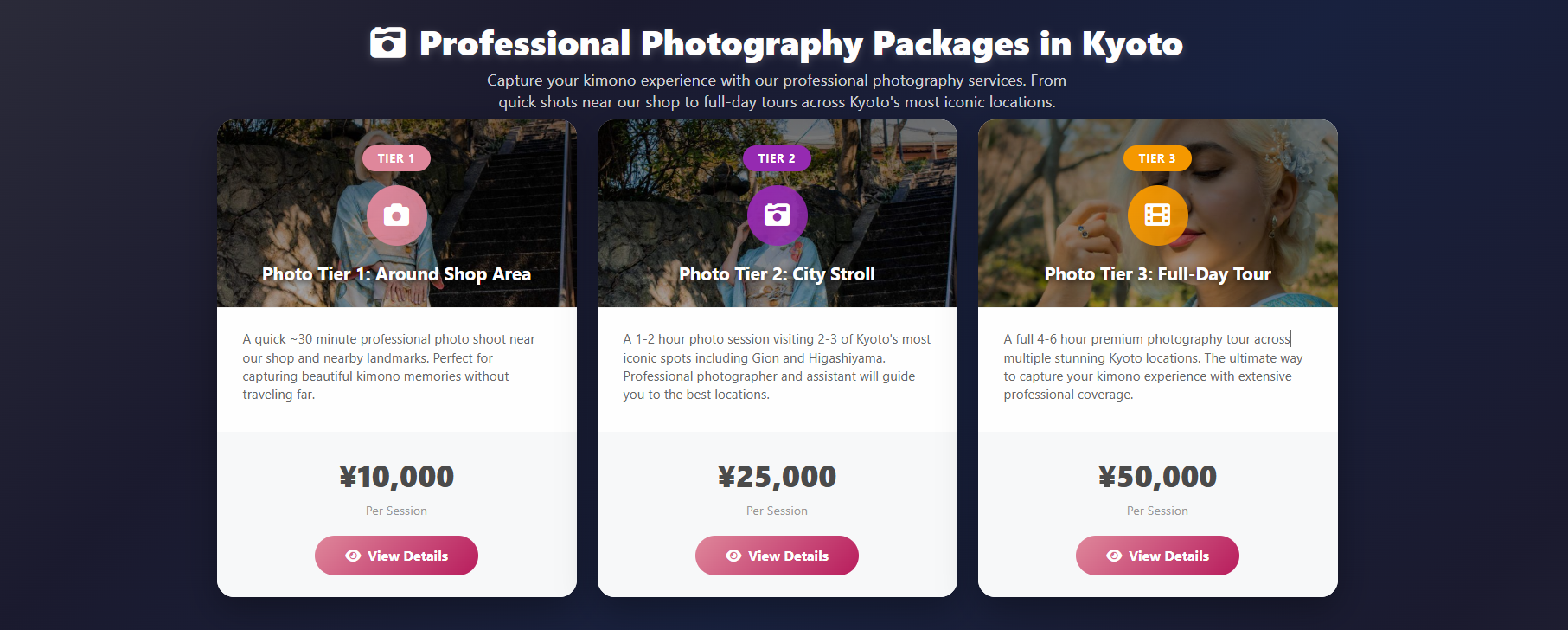
If you want photos of yourself in your wedding guest kimono — before the ceremony, or after — the professional photography sessions at Kimono no Obebe start from 10,000 yen. A photographer takes you through the best spots in Gion, shooting while you walk through the neighborhood in formal dress.
This is particularly worth considering if you're attending a wedding solo or with a small group and don't have someone available to take photos of you. The Gion backstreets and the approach to Yasaka Shrine in formal kimono, professionally photographed, produce images that are completely different from standard tourist shots. See what that looks like in the guest gallery here.
Attending a Ceremony in Each Season
Kyoto weddings happen year-round, and each season brings a different atmosphere to the city and to the experience of wearing formal kimono.
Spring (March-May) is one of the most popular seasons for Japanese weddings — cherry blossom season adds a natural beauty to shrine ceremonies that is hard to match anywhere else in the world. If you're attending a spring wedding in Kyoto, book your kimono rental slot as far in advance as possible. April is the most in-demand period across the city.
Summer (June-August) brings warmth and the Gion Matsuri festival in July. Summer weddings in Kyoto have their own energy, and lighter formal options are available for guests who don't want to be uncomfortable in the heat. The festival season adds a backdrop to any Kyoto visit in July that is genuinely unmatched.
Autumn (October-November) rivals spring as the most beautiful season for Kyoto ceremonies. Deep maple colors against shrine architecture, cool comfortable temperatures, and warm afternoon light that makes formal kimono photography look extraordinary. Late October and November weddings in Kyoto are stunning, and the formal kimono options available at Kimono no Obebe complement the season's color palette particularly well.
Winter (December-February) brings quiet and calm to Kyoto's shrines. A winter wedding ceremony at Yasaka Shrine or in the Higashiyama district has an intimacy and stillness that busier seasons don't offer. Winter kimono layering in formal styles looks genuinely elegant, and the quieter streets make for beautiful photography after the ceremony.
Pricing at Kimono no Obebe stays flat year-round — no seasonal premium regardless of when the wedding falls. The plans page here shows consistent pricing across all seasons.
A Few Things to Confirm Before You Arrive
Before you book for a wedding context specifically, a few things are worth clarifying — either with the couple or with the shop.
Check with the couple or host family whether there are any color restrictions for guests. Some families have preferences around guest kimono colors, particularly regarding white or patterns that might be considered too similar to the bridal outfit. It's a simple question to ask and avoids any awkwardness.
Let the shop know the occasion when you contact them. The team at Kimono no Obebe can make specific recommendations based on the formality level of the event — a casual outdoor blessing ceremony requires different choices than a formal Shinto wedding at a major shrine. Giving them context produces a better recommendation.
And finally: arrive early, stay comfortable, and enjoy it. Wearing a well-fitted formal kimono to a Japanese wedding ceremony is one of those experiences that earns its place in the memory of a trip. It's worth doing properly. Follow @kyoto_kimonorental_noobebe on Instagram for examples of formal styling across different occasions and seasons, and reach the team at the contact page when you're ready to book.