You're Not Just Renting a Kimono. You're Trying to Get Specific Photos.
Let's be honest about what's actually happening here.
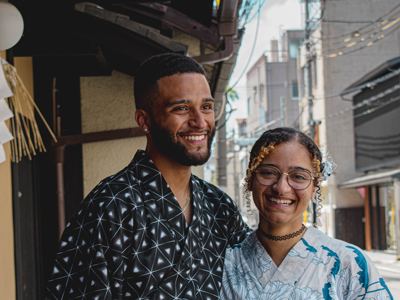
You've seen the images — a couple in kimono on a stone-paved Gion alley, late afternoon light, red lanterns in the background. Or a solo shot against the Shirakawa Canal in autumn, maple leaves overhead, everything in perfect color. You're not visiting Kyoto to tick a box. You want those photos. The ones that actually look like Kyoto.
The problem is that a basic kimono rental doesn't automatically get you there. The outfit is one piece. The hair and makeup is another. The location matters enormously. And if you're relying on a travel companion with a phone camera and no idea where the good light is — the results are often disappointing in a way you don't realize until you're home reviewing the files.
This post is for the traveler who's thought about this more than average. By the end, you'll know what a kimono rental set up for photoshoots actually looks like, which specific spots near Shijo Karasuma produce the best results in each season, what Kimono no Obebe offers on the photography side, and how to put together a kimono photo day that delivers what you're actually picturing.
What Makes a Kimono Rental Good for Photos — Specifically
Four things. Get all four right and the photos follow.
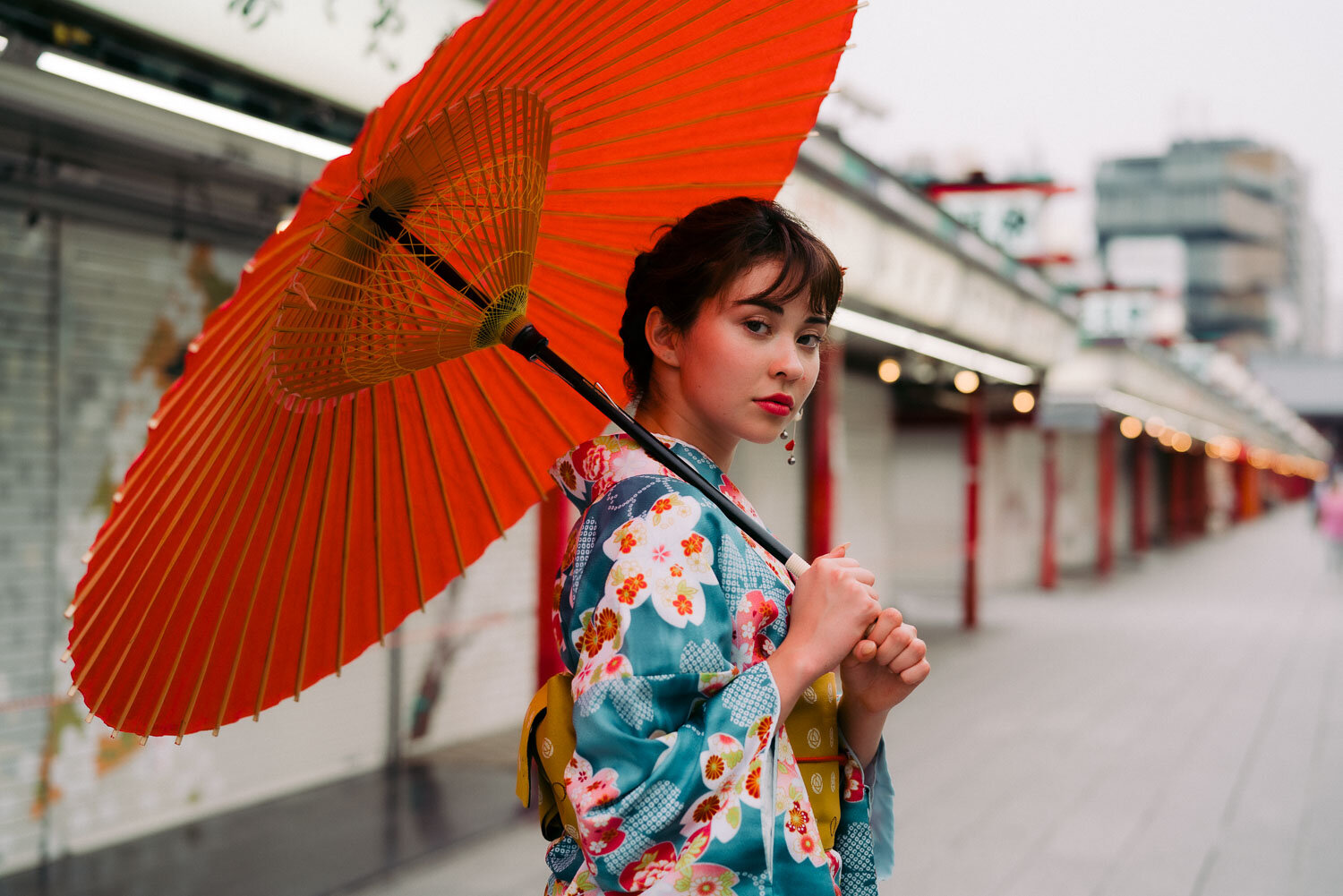
The kimono quality and fit. A poorly fitted kimono with a loosely tied obi reads immediately in photos — the whole silhouette goes soft. A well-tied kimono with the right obi shape, properly fitted to your body, creates clean lines that photograph well from any angle. This is why the dressing process matters and why it takes 20–30 minutes when done properly.
The hair and makeup.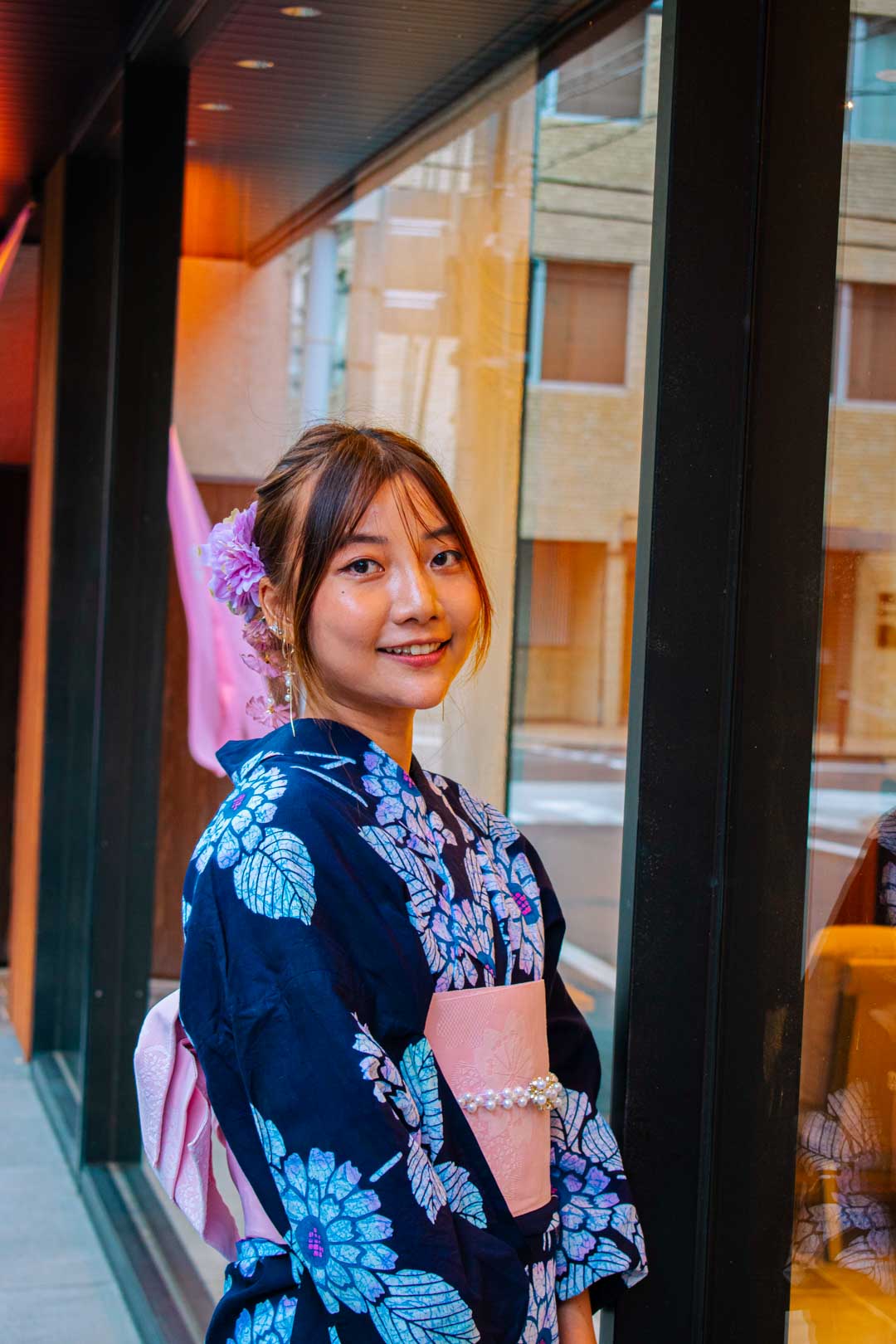
This is the element most people underestimate. A kimono with a casual bun or loose hair looks like a rental. The same kimono with a proper upswept style and traditional kanzashi hairpins looks like it belongs. Makeup matters too — not heavy, but intentional. The face and the outfit need to read as a coherent look, not two separate things happening at once.
The location. Renting near Shijo Karasuma means you're already inside the most photogenic neighborhood in Kyoto. Gion's Hanamikoji Street, the Shirakawa Canal, Pontocho at the quiet end, the approach to Yasaka Shrine — all walkable from the shop. You're not commuting to your backdrop. You step outside and it's already there.
The photographer. This is the one that separates good photos from great ones. Knowing where to stand, which alley has the right light at 11am versus 3pm, how to shoot candid movement rather than stiff posed shots — that's not something you can guide from behind your own phone.
What Kimono no Obebe Offers for Photography
At Kimono no Obebe, photography sessions are available starting from ¥10,000. A professional photographer joins you after you're d
ressed and takes you through Gion and the surrounding area — the spots that actually photograph well, not just the obvious tourist locations everyone crowds around.
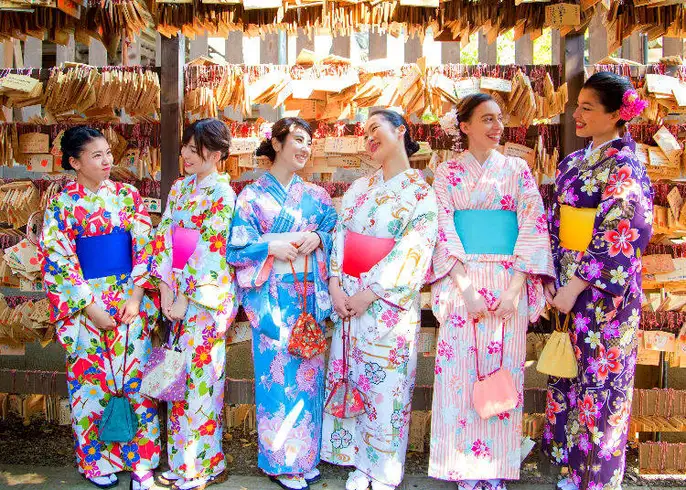
The dressing experience already includes hair styling and makeup, so by the time you step outside, the full look is in place. You're not trying to coordinate a photo session while also fixing a hairpin or adjusting an obi. Everything's sorted before the photography starts.
Browse the guest gallery here to see what the finished results look like across different seasons and kimono styles. It gives you a realistic sense of what's possible — which is more useful than any written description.
The Best Photo Locations Walkable From Shijo Karasuma
This is the practical part — the specific spots, and why each one works.
Hanamikoji Street (Gion) — The most iconic lane in Kyoto. Traditional machiya townhouses, red lanterns, stone pavement. Early morning is the best time — before the tour groups arrive and while the light is still soft and directional. A kimono shot on Hanamikoji before 9am looks like it was taken decades ago. After 11am, you're sharing the frame with crowds.
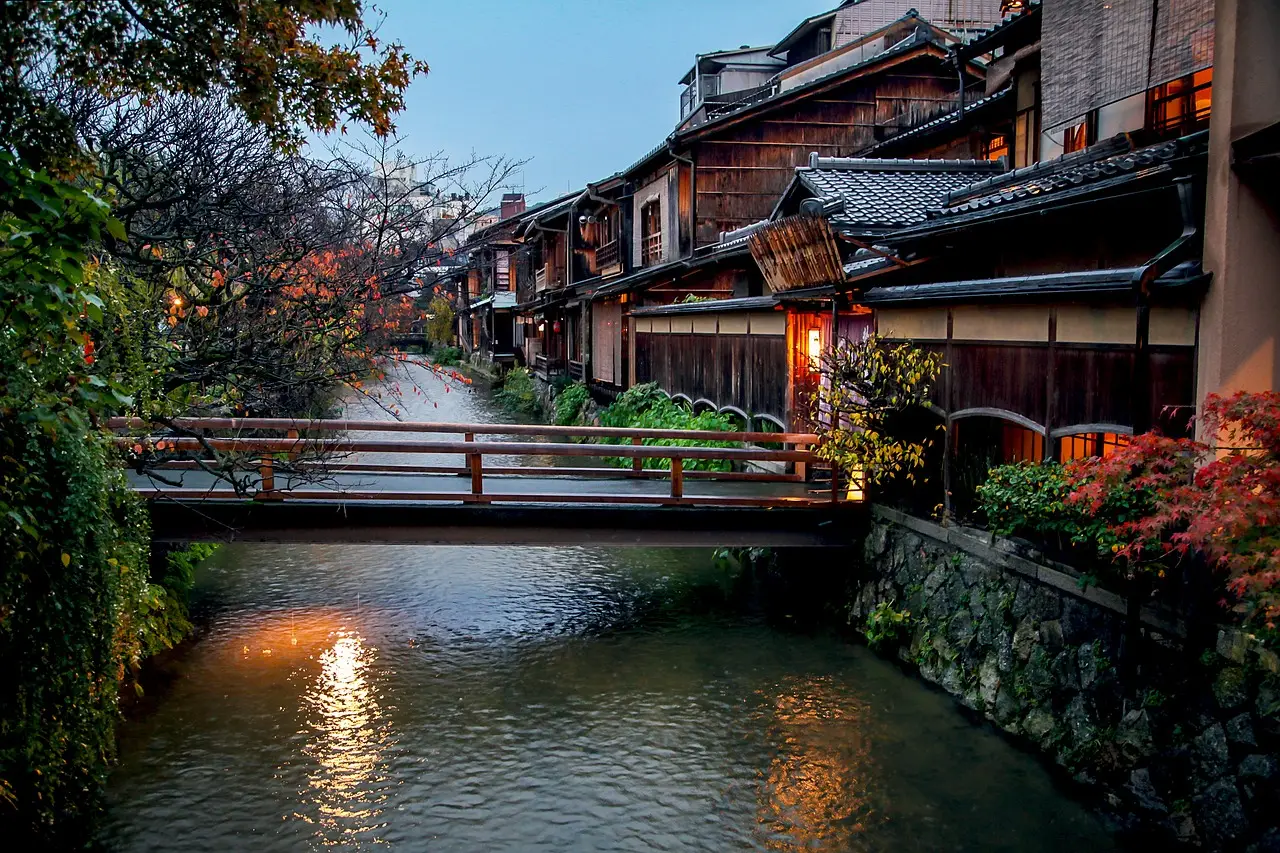
Shirakawa Canal — A smaller, quieter canal north of Gion lined with willow trees and, in spring, weeping cherry trees that hang directly over the water. It's less visited than Hanamikoji, which means you actually have room to shoot. The reflection of a kimono in the canal water, with lanterns above and blossoms overhead, is one of the most specific Kyoto images that exists.
Pontocho Alley (North End) — The south end of Pontocho gets busy with tourists. The north end, heading toward Sanjo, is narrower and quieter. The walls are close, the textures are old, and the light that falls through the gap between buildings creates a natural softbox effect. Good for close shots and detail work.
Yasaka Shrine Approach — Walking east along Shijo-dori toward Yasaka, the wide stone-paved approach with the orange torii gate at the end is a strong architectural backdrop. Best in the morning before the vendors set up. The shrine interior itself, with stone lanterns and the main hall behind, is worth exploring on foot in kimono.
Ninenzaka and Sannenzaka — A 20-minute walk east from the shop, these stone-paved pedestrian streets are steep, narrow, and surrounded by traditional wooden shops. One of the most photographed areas in Kyoto for good reason. Worth the extra walking time if you have a full day and a photographer who knows the good angles.
Which Season Makes the Best Kimono Photos Near Shijo
The honest answer is that every season works, but each one produces a completely different image. Here's what each one actually gives you.
Spring (late March–April) is the season most people picture. Sakura along the Shirakawa Canal, soft pink light, pale blossoms against kimono fabric. It's genuinely beautiful and the photos reflect that. It's also the most crowded season in Kyoto, which means some of the best photo spots require early starts to get clear shots. If cherry blossom photos are the goal, arrive early and book your rental slot for 9am.
Summer (June–August) brings the Gion Matsuri in July — one of Japan's largest festivals — and the option of lighter yukata styles that handle the heat better than full kimono. Festival season in this neighborhood has a specific energy: decorated floats, lantern-lit streets, locals and visitors both dressed up. The photos look like a festival, not a tourist activity. That's a different kind of image, and for some people, a better one.
Autumn (October–November) is the season photographers tend to prefer for kimono shoots. Deep-colored maple leaves against dark wood architecture, warm afternoon light, slightly cooler temperatures that make a long day of walking comfortable. Late November specifically — when the leaves peak in the Gion area — produces the most dramatic color contrast. A deep burgundy furisode against red maple trees is the kind of image that doesn't need any editing to look right.
Winter (December–February) is the season for people who want something different. Clean, quiet streets, minimal crowds, and the low winter light that falls across Hanamikoji in the early afternoon is flat and even — actually good for photography in a way harsh summer light isn't. If there's frost or a cold mist in the morning, the atmosphere is unlike any other season. Less dramatic, more intimate.
One thing that doesn't change by season: Kimono no Obebe's pricing stays flat year-round. No cherry blossom surcharge, no autumn peak rate. The plans page shows the same prices in April as in January — plans start from ¥1,900 and the furisode option is ¥15,000. Pick the season that works for you, not the one that avoids a pricing spike.
A Realistic Photo Day — What It Looks Like in Practice
Here's a fictional but realistic version of how a kimono photo day near Shijo Karasuma actually unfolds.
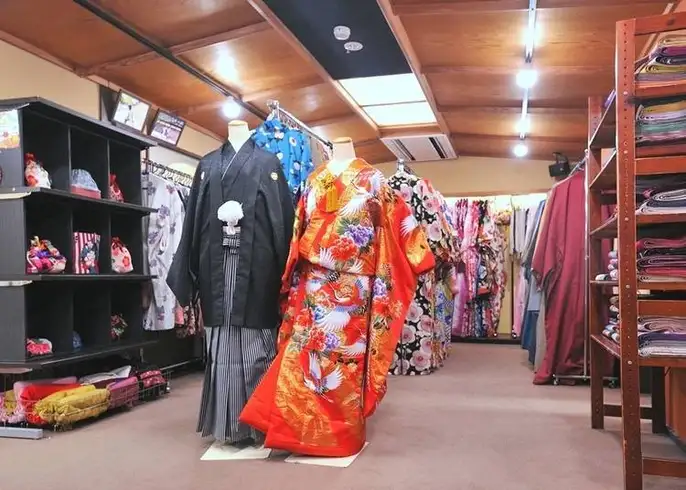
Imagine a couple visiting Kyoto in late October. They've booked a 9am slot to get the most out of the morning light. They arrive, choose their kimonos — she picks a deep indigo furisode with gold embroidery, he goes with a classic charcoal haori set. Hair and makeup takes about 20 minutes. They step outside at 9:35. The photographer takes them east toward the Shirakawa Canal first — the light hits the water at this hour and the maple trees are mid-color change, still holding some orange. Then Hanamikoji before the crowds. Then a quieter lane the photographer knows, between two old wooden buildings, where the compressed perspective makes everything look like it belongs in a Meiji-era woodblock print. By noon they're at Yasaka Shrine. By 2pm they're walking through Ninenzaka with a bag of mitarashi dango. They return at 5:30. The photos are on their phone by the next morning.
(This is a fictional scenario — not a real customer account — but it's the kind of day the location and photography service are designed to make possible.)
Booking and Getting Here
Kimono no Obebe is a 2-minute walk from Shijo Station on the Hankyu Kyoto or Keihan Main Line. Five minutes from Kyoto Station via the Karasuma subway line to Shijo. English-speaking staff, multi-language support, and an efficient dressing process that gets you outside and shooting without burning your morning.
For availability and photography session bookings, reach the team through the contact page here. For location-scouting inspiration and real guest photos across all seasons, @kyoto_kimonorental_noobebe on Instagram is the most honest preview available.
The photos you're picturing from Kyoto are genuinely achievable. You just need the right outfit, the right location, and someone behind the camera who knows what they're doing. All three of those are available in the same place.