You Are Doing Kyoto Solo. The Kimono Rental Question Is Slightly Different for You.
Solo travel in Japan is genuinely excellent. You move at your own pace, you make every decision yourself, you spend entire days following your instincts without negotiating with anyone else. Most of the time, traveling alone in Japan is easier and more enjoyable than people expect before they go.
But kimono rental as a solo traveler has one specific challenge that nobody mentions upfront.
The photos.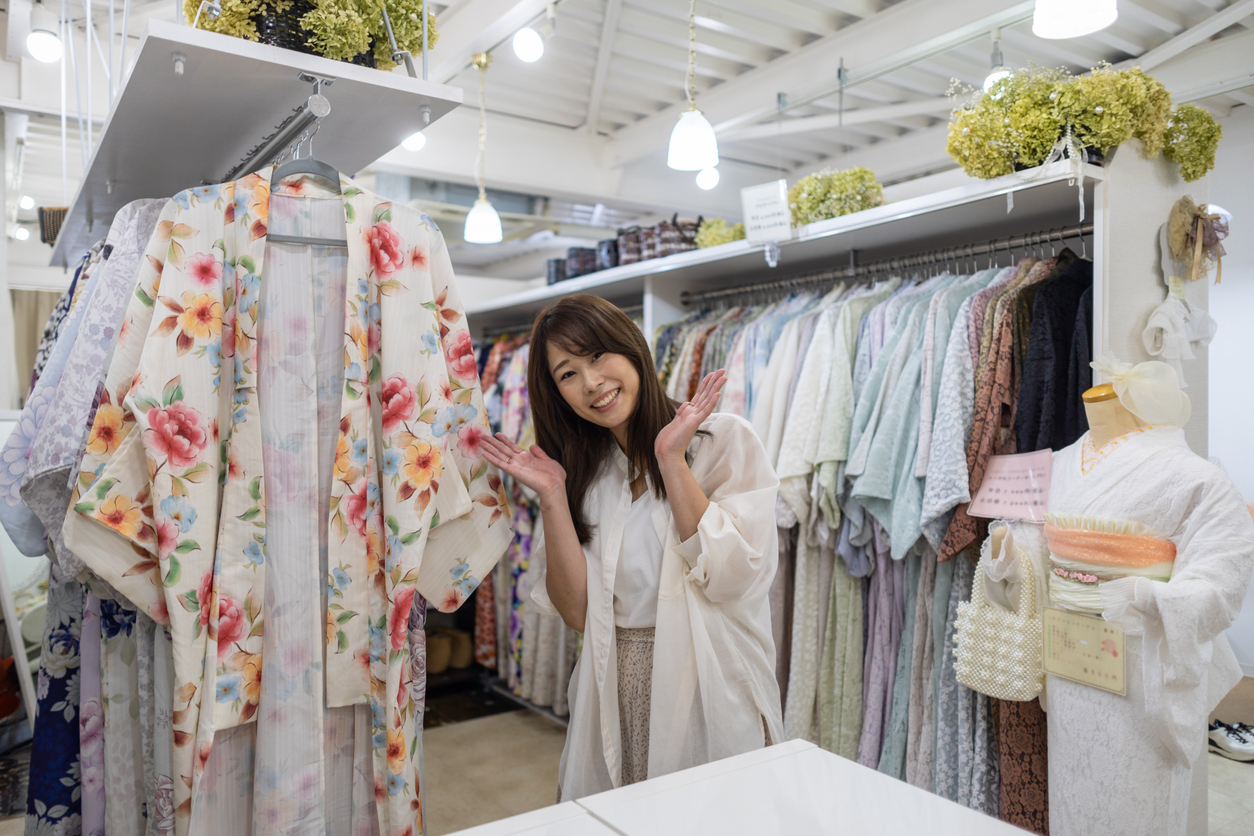
When you are traveling with someone, one of you takes photos of the other. When you are alone, you are either handing your phone to strangers and hoping for the best, using a tripod you packed specifically for this, or scrolling through a camera roll of arm-extended selfies that do not capture what the experience actually looked like from the outside. None of those options are particularly good.
That is the central problem this post addresses. But it also covers everything else that matters for solo kimono rental in Kyoto — where to go, how to navigate the experience without a language barrier, what to expect at Kimono no Obebe near Shijo Station, and how each season changes what a solo kimono day actually looks and feels like. By the end, you will have a complete picture of how to do this well on your own.
Why Location Matters More When You Are Traveling Solo
When you are with a group, logistical friction gets distributed. Someone figures out the bus route. Someone else navigates. Someone holds the bags while you sort out the train card. When you are solo, all of that is on you — and in Kyoto, where navigating while dressed in a kimono and sandals is already slightly awkward, the less transit you need the better.
This is why walking distance from your rental shop to the sightseeing areas is particularly important for solo travelers.
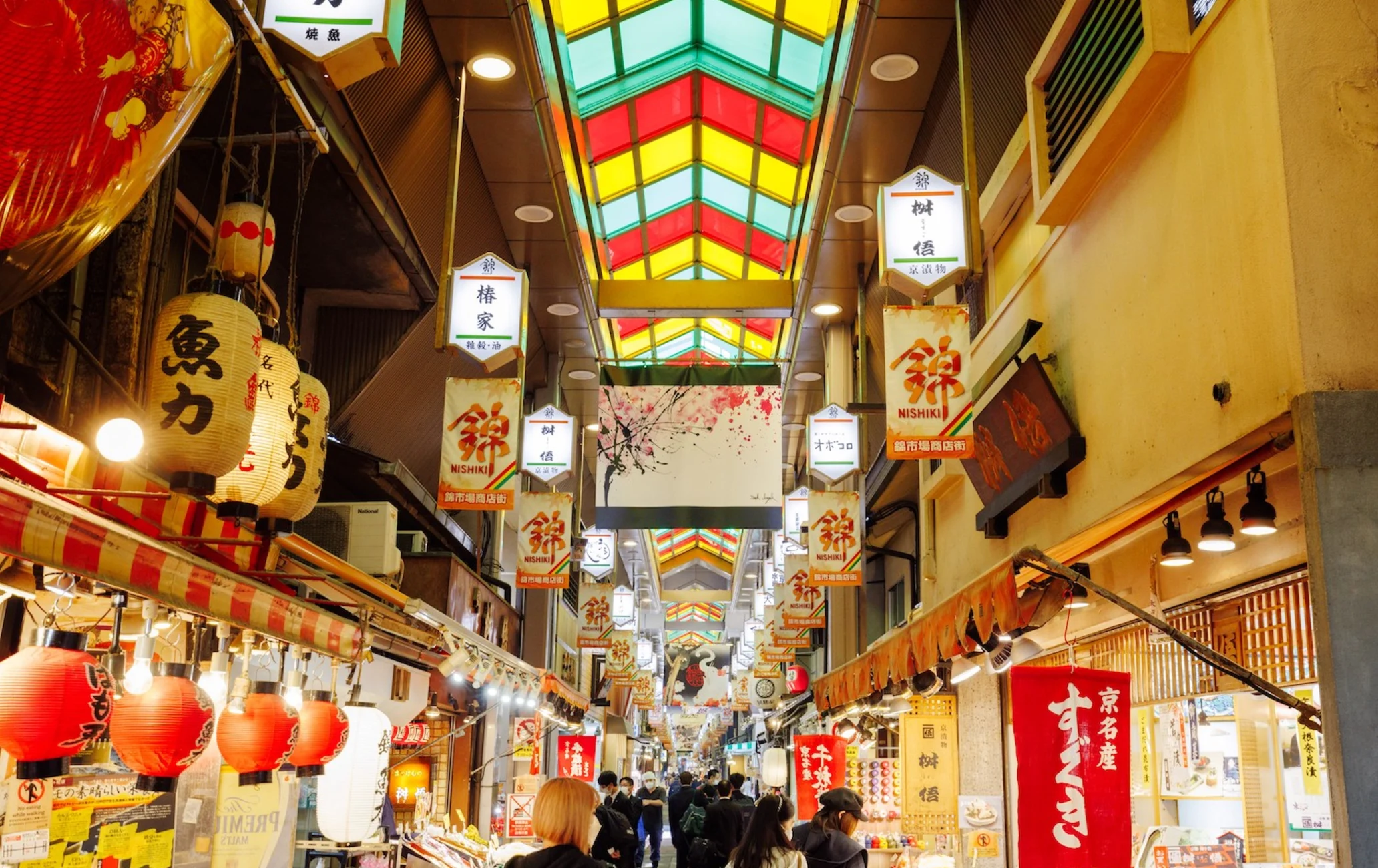
Kimono no Obebe is a 2-minute walk from Shijo Station on the Hankyu Kyoto Line and the Keihan Main Line. From Kyoto Station, it is five minutes on the Karasuma subway line. And from the shop, everything worth walking to is already close: Gion in 10 minutes, Pontocho in 5, Nishiki Market in 5, Yasaka Shrine in 15, the Shirakawa Canal in 12. You arrive, get dressed, and step into the neighborhood you came to see. No bus connections in a kimono. No standing on a platform in zori sandals checking your phone for the next departure.
For solo travelers especially, that simplicity is worth choosing deliberately.
The Photography Problem — and the Actual Solution
Let's be direct about this because it is the thing solo travelers think about most when it comes to kimono rental.
You are going to be wearing something that looks extraordinary. You are going to be in one of the most beautiful neighborhoods in Japan. And without someone to take photos of you, the documentary evidence of that experience is going to be significantly worse than the experience itself.
There are two approaches most solo travelers use, and both have significant limitations.
The first is asking strangers to take photos. This works sometimes. More often you get an awkward shot taken from the wrong angle by someone who handed your phone back within five seconds. The kindness of the stranger does not make up for the fact that they have no idea what they are doing with your camera.
The second is a phone tripod. It produces photos that look like you set up a phone tripod, which is to say: technically present, compositionally flat, and missing every natural moment of movement.
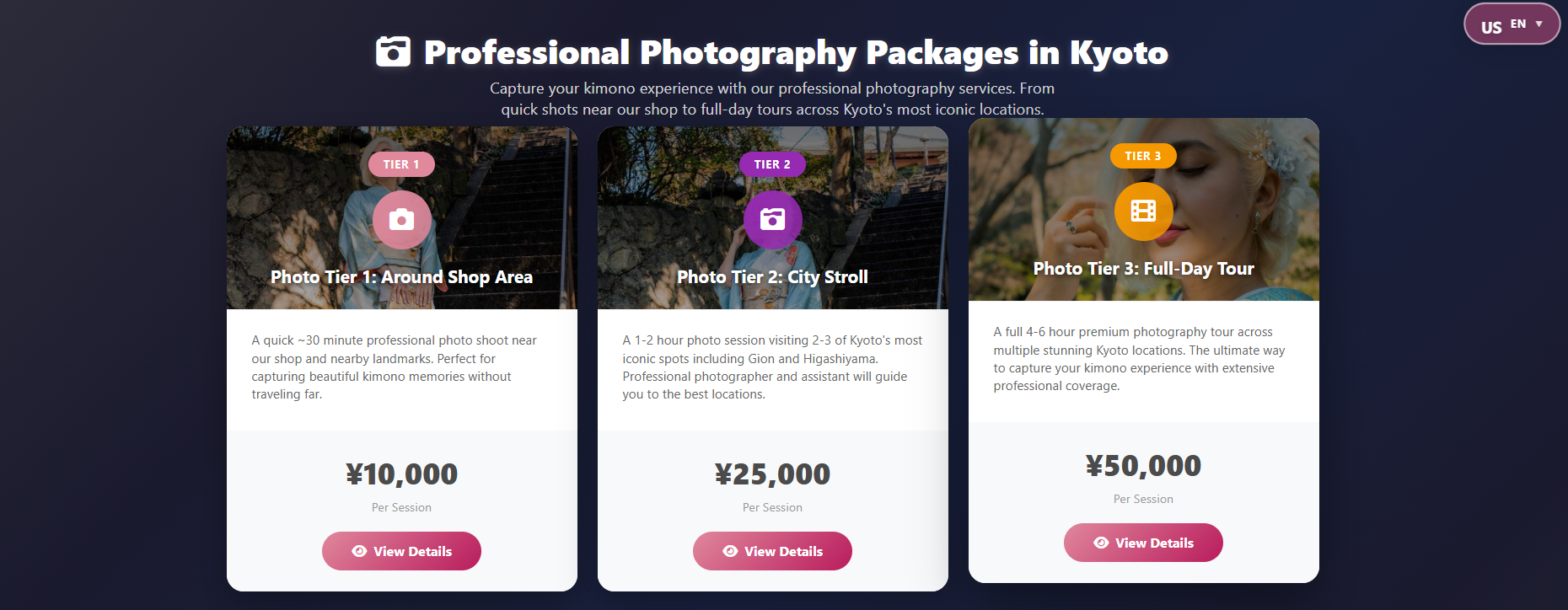
The actual solution is a photography session. Kimono no Obebe offers professional photography sessions starting from 10,000 yen. A photographer joins you after you are dressed and takes you through Gion and the surrounding area for a set period — knowing which alleys have the right light at which time of day, how to frame a kimono against the specific architecture of the neighborhood, and how to shoot while you are actually walking and experiencing the place rather than posing awkwardly for a camera.
For solo travelers, this is the difference between photos that look like a travel document and photos that look like the day actually happened. It is genuinely worth considering. Browse the guest gallery here to see solo guest photography results specifically.
Language Support: Non-Negotiable for Solo Travel

When you are with a group, one person with functional Japanese or enough patience to use a translation app can bridge most language gaps. When you are solo, that falls entirely on you — and a kimono dressing process involves a lot of small decisions and adjustments that are hard to navigate through gesture alone.
Which obi pattern matches your kimono? How tight is the obi supposed to feel? What are the different hair styling options? Can they adjust the collar slightly? These are not complicated questions, but they are very difficult to communicate without a shared language.
At Kimono no Obebe, English-speaking staff are part of the standard experience. Multi-language support is also available. For solo travelers who are already navigating an unfamiliar city without a travel companion to help troubleshoot, having a rental shop where you can actually communicate is not a nice-to-have. It is the baseline.
When comparing rental shops as a solo traveler, look for reviews from other solo international visitors that specifically mention language — not just overall star ratings. A five-star review from someone who came as part of a Japanese tour group tells you very little about what the experience is like when you walk in alone and need to communicate specifics.
What the Solo Kimono Day Actually Looks Like
Here is a fictional but realistic picture of how a solo kimono day near Shijo Station tends to unfold when it is handled well.
Imagine a woman traveling through Japan for three weeks alone. She has been to Tokyo, Osaka, Hiroshima. Kyoto is her last major stop, and she has specifically saved the kimono rental for this city. She books a 9:30am slot at Kimono no Obebe and adds the photography session. She arrives alone, slightly nervous — she has never done anything like this. The staff greets her in English and walks her through the kimono options without making her feel rushed. She picks a deep forest green furisode. The dressing takes 30 minutes. Hair is styled with gold kanzashi pins. By 10:05am she is outside with a photographer. They spend 90 minutes in Gion — the Shirakawa Canal first while the light is still soft, then the quieter backstreets of Hanamikoji before the tour groups arrive. She walks by herself through Pontocho after, stops for matcha at a tiny counter shop she finds down a side alley, and makes her way to Nishiki Market for lunch. She returns to the shop at 4:30pm. The photos arrive the next day. They look like the trip she wanted to have.
(This is a fictional example — not a real account — but it captures what a well-planned solo kimono day is designed to feel like.)
Planning Your Route: The Best Solo Walking Circuit from Shijo
One of the underrated advantages of solo travel is that you can structure your route exactly how you want it — no compromises, no waiting. Here is a good solo kimono circuit from the shop that covers the best areas without being rushed.
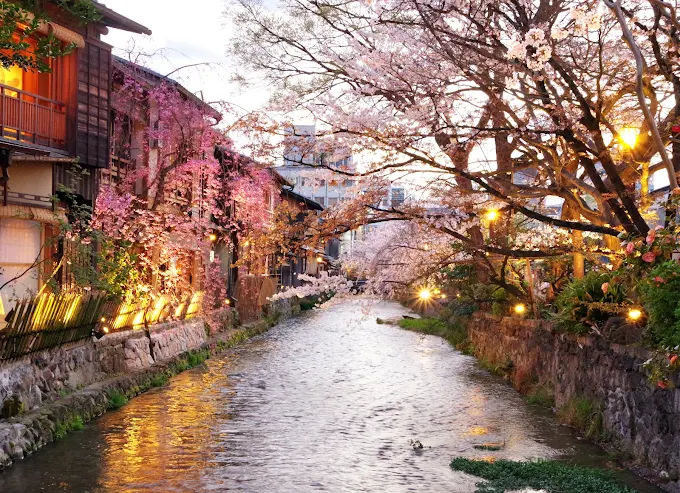
Start: Shirakawa Canal (12 min east) — the quietest and most intimate of the main photo locations. Go here first before the crowds build up. Weeping willows and stone bridges, lanterns over the water, traditional houses along the bank.
Then: Hanamikoji Street, Gion (10 min from shop, or a short walk from the canal) — the iconic Gion lane. Quieter before 10am. Walk the full length and explore the side streets off the main path — some of the best architecture is one alley removed from the main tourist flow.
Then: Pontocho Alley (5 min from shop) — walk north to south or south to north. Stop wherever looks interesting. The narrow compressed space makes solo navigation actually easier than group navigation here.
Then: Nishiki Market (5 min northwest of shop) — the covered food market. Perfect for a solo lunch stop. Walking it alone means you can slow down at every stall without coordinating with anyone else.
Optional extension: Yasaka Shrine and Maruyama Park (15-20 min east) — adds another hour to the circuit and is worth it if you have the time and energy.
That is a full day within a compact, walkable area. No transport required. You return to the shop, change, and you are back at Shijo Station in two minutes.
Season Makes a Difference for Solo Photography
The best photos from a solo kimono day change significantly depending on when you visit — and this matters more for solo travelers because the backdrop is doing more of the compositional work when there is only one subject in the frame.
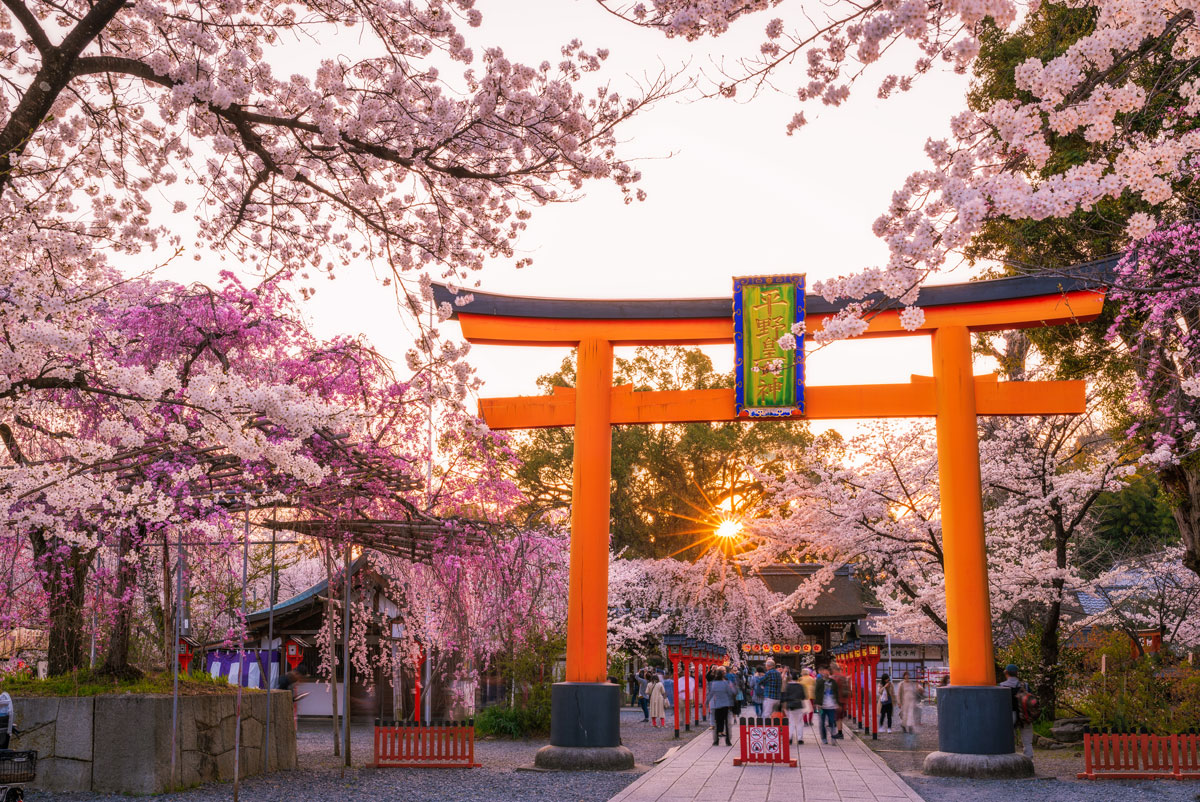
Spring (March-May) gives you cherry blossoms as a natural backdrop. The Shirakawa Canal lined with sakura, petals drifting over the stone pavement of Hanamikoji, Maruyama Park under the weeping cherry at its peak — these are the strongest solo portrait backdrops in Kyoto. Book early for April. Morning slots go first.
Autumn (October-November) produces the most dramatic color contrast for solo photography — deep kimono colors against red and gold maple leaves. For solo travelers specifically, autumn is often the better season for the photography add-on because the subjects and the backdrop contrast clearly rather than blending together as spring palettes sometimes do.
Summer (June-August) brings lighter yukata options and the Gion Matsuri in July. Solo travel during Gion Matsuri is a particular kind of Kyoto experience — you can move through the festival crowds at your own pace, stop when something interests you, leave when you want. Wearing yukata during the festival feels natural rather than performative.
Winter (December-February) is the solo traveler's secret season in Kyoto. The crowds thin out dramatically. Hanamikoji is walkable without dodging tour groups. The atmosphere in Gion on a quiet winter morning — lanterns still lit against cold air, stone pavement slightly damp, almost no other tourists — is one of the most genuinely atmospheric versions of the neighborhood you can experience. Harder to capture in photos, but unforgettable in person.
Pricing at Kimono no Obebe is flat year-round — no seasonal surcharge in spring or autumn. The plans page here shows consistent pricing from 1,900 yen to 15,000 yen for the furisode, regardless of when you visit.
Booking as a Solo Traveler
For solo bookings, reach the team through the contact page here. It is worth mentioning that you are traveling solo when you book — the staff can factor that into recommendations, particularly around the photography session, and can ensure your dressing slot has enough time for the full experience without a rushed handoff.
For a real look at solo guest experiences across different seasons and kimono styles, @kyoto_kimonorental_noobebe on Instagram is the most useful preview. The guest gallery at kimononoobebe.love/our_guests.php includes solo guests across different plans.
Solo travel in Kyoto in a kimono is one of those experiences that is better than it sounds even when it already sounds good. You do not need anyone else to make it work. You just need the right shop, a photographer who knows the neighborhood, and a morning in Gion to yourself.